






Refugees prays for integration into Malawian communities
By Vincent Gunde
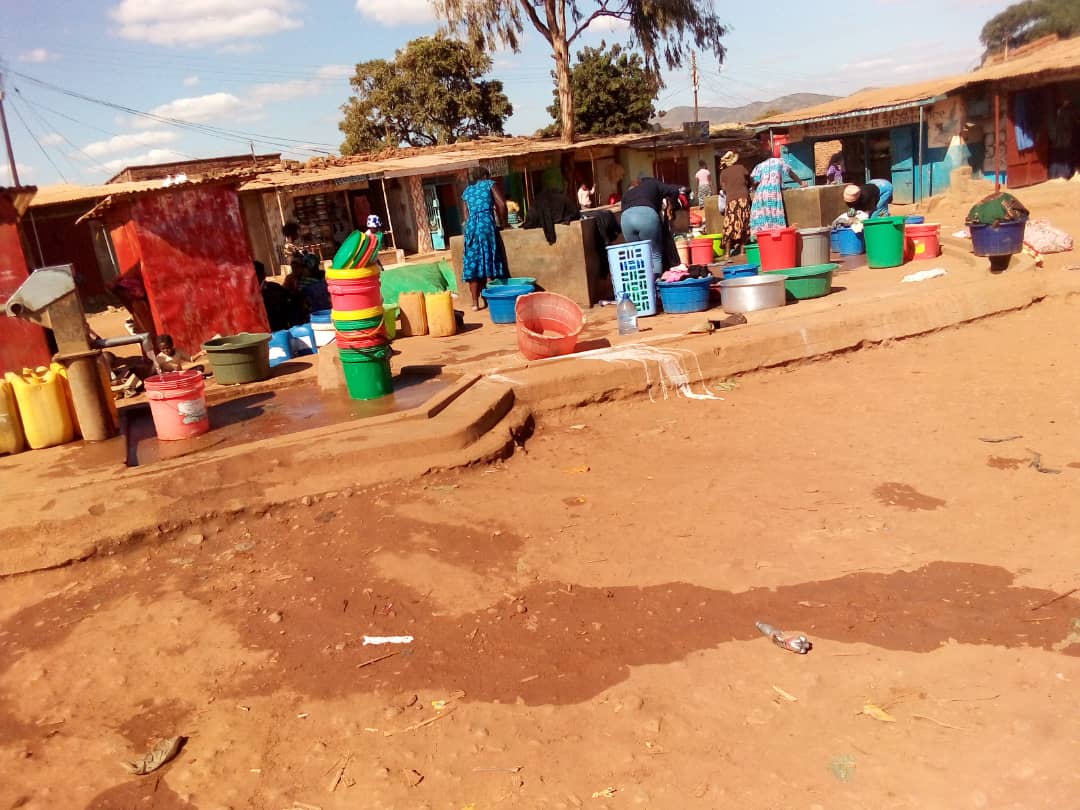
The relocation of refugees and asylum seekers to Dzaleka Camp in Dowa district contributed to more challenges than before and top among the challenges has been water that the boreholes sank inside the camp are not enough to carter for all.
The existence of challenges in the camp forced some refugees and asylum seekers to find their way out of the camp and many have left the camp to where they were in towns, cities and trading centres operating the businesses they were doing before.
Billions of Kwachas allocated for refugees and asylum seekers relocation to Dzaleka Camp have gone into the deep waters without meeting its intended objectives only shops have been built at the Dzaleka market whose owners are staying in town.
Habiba Mtakurutimana, a refugee from Rwanda but born in Malawi in 1995, said if government and its partners drilled enough boreholes inside the Dzaleka Camp, many refugees and asylum seekers could not have thought of going back to town for businesses.
Mtakurutimana said women wake-up as early as 03;00 A.M with their buckets to stand on the line for borehole water claiming that one who could come at 07;00 A.M has no chance to draw water saying most women prefer washing clothes at the boreholes.
She has pleaded with government to allow refugees and asylum seekers to be integrated into Malawian communities to contribute positively to the development of Malawi observing that refugees that came to Dzaleka Camp in 1994 are Malawians by nationality.
The woman said she could have loved if government pass a law to close Dzaleka Camp for those that have valid document to be integrated into the Malawian communities while scrutinizing papers of the new arrivals.
She claimed that most of the agricultural produces found in the markets of Lilongwe and surrounding districts are being grown by refugees and asylum seekers meaning that if they can be allowed to be integrated Into the Malawian communities, the skills they have will be easily passed to the Malawian communities.
“We have all the skills at Dzaleka Camp, these skills need integrations into the communities for the knowledge passed to be sustained in the lives of Malawians,” said Mtakurutimana.
A woman who does piece work in the Dzaleka Camp Rozita Nyamasauka said she came from Madisi in Dowa district to rent in one of the villages surrounding Dzaleka Camp saying her life has changed with piece works she is getting from the refugees.
Nyamasauka said if these refugees are integrated into the communities, poverty which is high in most of the Malawian villages would be reduced as some Malawians would be employed by them supporting their everyday life activities.
She said she don’t find a good reason for the refugees that came in the 1990s to be still called refugees looking at the years they have stayed in Malawi claiming that many have children that cannot speak Kinyarwanda, Kirundi and Kiswahili languages but fluent Chichewa,
“These are Malawians, let the Malawi Government integrate them into our communities to bring the difference in terms of development projects,” she said.