 Suleman Chitera
By Suleman Chitera
As Malawi grapples with persistent fuel shortages, foreign exchange constraints and rising transportation costs, Sky Energy Africa, the pioneering renewable energy technology company that introduced electric vehicles (EVs) to Malawi in 2023, on Friday night took another major step towards transforming the country’s transport sector.
The company unveiled Malawi’s first integrated electric mobility ecosystem at the Malawi Square, Bingu International Convention Centre (BICC), in Lilongwe, coinciding with its 10th anniversary celebrations.
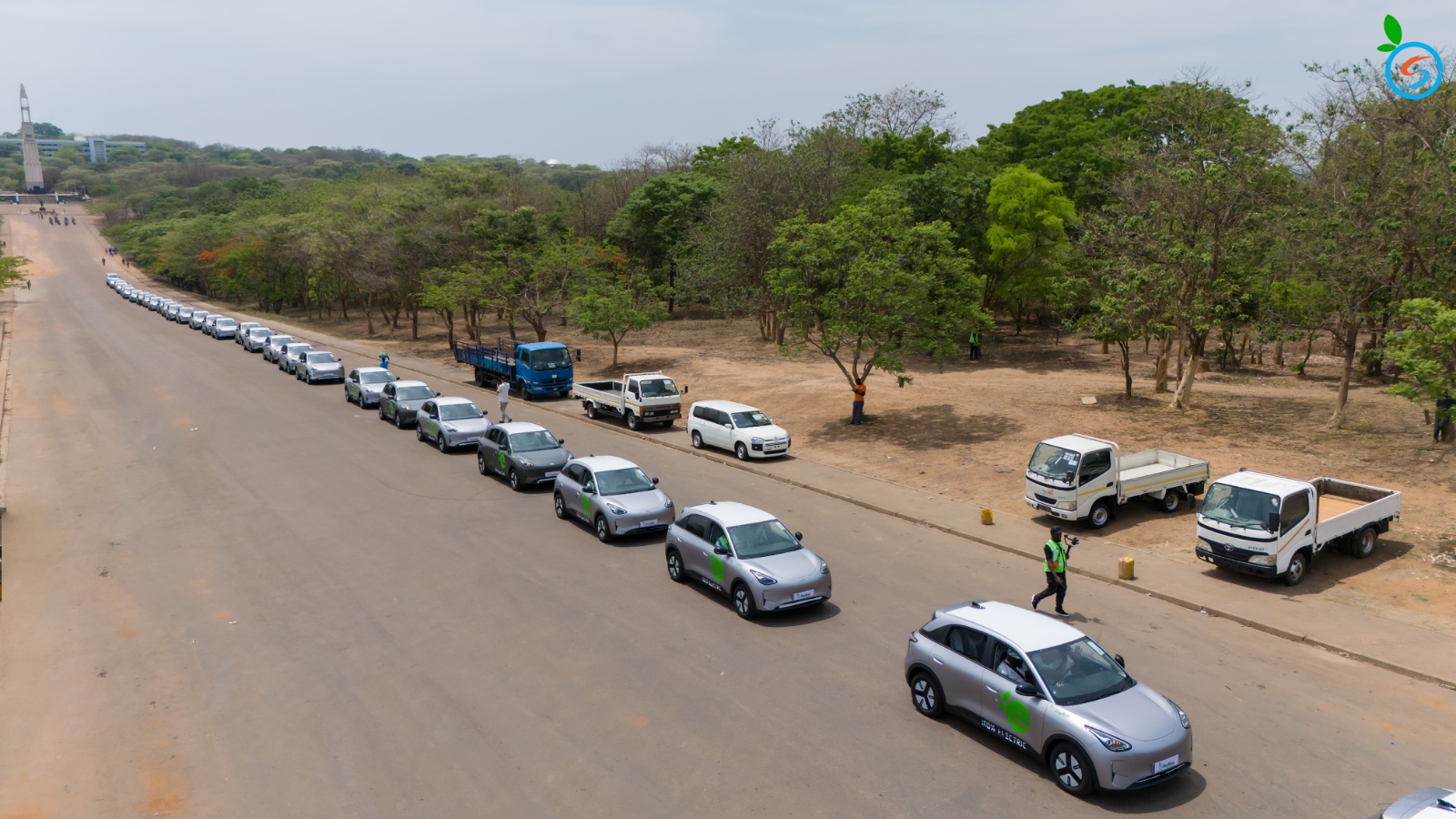
The ambitious initiative brings together three interconnected technological solutions: an initial fleet of 100 Geely EX2 electric vehicles, a nationwide network of 40 public EV charging stations, and Sky Ride, a digital mobility and fleet management platform designed to revolutionise passenger transportation.
Unlike conventional electric vehicle initiatives that focus solely on vehicle sales, Sky Energy Africa is developing an entire technology-driven mobility ecosystem that integrates vehicles, energy infrastructure, digital payments, real-time monitoring and intelligent fleet management into one interconnected platform.
The development comes at a critical moment when motorists across Malawi have endured lengthy queues at filling stations, with some spending nights waiting for fuel amid persistent supply disruptions.
From pioneering electric vehicles in 2023 to building a national mobility ecosystem
Sky Energy Africa Founder and Managing Director Schizzo Thomson said the initiative represents the next phase of the company’s long-term vision to accelerate Malawi’s transition towards sustainable energy and transportation.
In September 2023, Sky Energy Africa pioneered the introduction of electric vehicles into the Malawian market, demonstrating that electric mobility could offer a practical alternative to conventional internal combustion engine vehicles.
Three years later, the company is moving beyond introducing electric cars to establishing the supporting infrastructure, digital technology and operational systems necessary for large-scale electric mobility adoption.
“When we introduced electric vehicles in Malawi in 2023, we were not simply introducing another type of car. We were introducing a new way of thinking about energy, transportation and the future of our economy.”
“Today, we are taking that vision further by building an integrated ecosystem where electric vehicles, charging infrastructure and digital technology operate together to provide a reliable, affordable and sustainable transportation alternative,” said Thomson.
He explained that Malawi’s recurring fuel shortages have exposed the vulnerabilities of an economy heavily dependent on imported petroleum products.
“Malawi does not produce petroleum, yet our transportation system depends almost entirely on imported fuel. Every fuel supply disruption affects businesses, households, public transport operators and the wider economy.”
“Electric mobility gives us an opportunity to rethink that dependency. Instead of relying entirely on imported petroleum, we can increasingly power our transportation using electricity generated within Malawi, including renewable energy,” he said.
A nationwide network of intelligent charging infrastructure
At the centre of the initiative is the planned deployment of approximately 40 public electric vehicle charging stations at strategic locations across Malawi.
The charging infrastructure will initially support operations in Blantyre, Lilongwe, Mzuzu, Zomba and Mangochi, with additional charging locations planned along the M1 corridor and at selected major service stations.
The network will incorporate modern DC fast-charging technology, intelligent charging management systems and remote monitoring capabilities.
Depending on the vehicle’s battery capacity, charging power and state of charge, compatible fast chargers can replenish a substantial portion of an EV battery in approximately 30 minutes.
The infrastructure will be supported by a centralised digital charging management platform capable of monitoring charger availability, energy consumption, charging sessions, operational status and system performance.
“One of the biggest concerns people have about electric vehicles is where they will charge, particularly when travelling between cities. We are addressing that challenge by developing charging infrastructure alongside the vehicles.”
“Our vision is to make charging an electric vehicle as convenient and predictable as possible. Through digital technology, drivers will be able to identify charging locations, check charger availability and plan their journeys more efficiently,” explained Thomson.
The company also intends to explore integrating renewable energy generation and battery energy storage systems at suitable charging locations, strengthening the relationship between Malawi’s electricity and transport sectors.
Sky Ride: Technology connecting vehicles, passengers and charging stations
Another major highlight of the launch will be the unveiling of Sky Ride, a technology-driven electric mobility application designed to connect passengers, drivers, fleet operators and businesses through a unified digital platform.
The platform is being developed to support Public electric ride-hailing, shared passenger transportation, airport transfers, hotel transportation and corporate mobility services.
Beyond conventional ride-hailing functionality, the ecosystem is designed to incorporate fleet management, vehicle tracking, battery state-of-charge monitoring, charging infrastructure visibility and operational analytics.
The technology will enable fleet operators to make informed decisions about vehicle deployment, charging schedules, energy utilisation and operational efficiency.
“Sky Ride is more than a taxi-hailing application. It is a digital platform designed around the unique requirements of electric mobility.”
“We want to create a system where vehicles, passengers, drivers and charging infrastructure are digitally connected. This will allow us to manage fleets more intelligently, reduce unnecessary downtime and improve the overall passenger experience,” said Thomson.
He added that digital integration would play an important role in improving the commercial viability of electric transport, particularly for businesses operating large vehicle fleets.
Initial fleet of 100 electric vehicles
The first phase of the project targets the introduction of 100 Geely EX2 electric vehicles to support urban and intercity mobility services.
The vehicles are intended for deployment across Blantyre, Lilongwe, Mzuzu, Zomba and Mangochi, creating opportunities for electric ride-hailing, corporate transportation and other passenger mobility services.
The Geely EX2 is a compact, fully electric passenger vehicle designed for efficient urban transportation, with an electric drivetrain that eliminates the need for petrol or diesel.
Unlike conventional vehicles, electric cars operate without tailpipe emissions and generally require fewer routine mechanical maintenance procedures because they have fewer moving parts in their propulsion systems.
Thomson said the economic advantages of electric vehicles extend beyond the immediate challenge of fuel availability.
“Electric vehicles are not only about responding to today’s fuel crisis. They represent an opportunity to fundamentally reduce the operating cost of transportation in Malawi.”
“When you consider fuel expenditure, engine servicing, lubricants and other maintenance requirements associated with conventional vehicles, the long-term economic case for electric mobility becomes increasingly compelling,” he said.
Thomson noted that electric mobility could particularly benefit businesses, fleet operators and institutions whose transportation costs represent a significant portion of their operating expenditure.
Reducing pressure on Malawi’s foreign exchange reserves
Beyond addressing fuel shortages, Sky Energy Africa believes electric mobility could contribute towards reducing Malawi’s long-term foreign exchange expenditure on petroleum imports.
The country relies heavily on foreign currency to procure fuel, making transportation vulnerable to international oil prices, exchange rate fluctuations and supply chain disruptions.
By progressively substituting imported petroleum with electricity generated domestically, electric mobility could help retain a greater share of transportation expenditure within the local economy.
Thomson emphasised that the transition would require investment in electricity generation, grid capacity, charging infrastructure and supportive policies.
“Every kilometre travelled using electricity instead of imported petrol represents an opportunity to reduce our dependence on foreign fuel.”
“The greater opportunity is that Malawi has the potential to generate electricity from its own energy resources. We can increasingly power our transport sector using energy produced within our borders rather than depending entirely on petroleum imported from outside the country,” he said.
He added that electric mobility should be viewed not merely as an environmental intervention but also as an economic development strategy capable of stimulating investment, innovation, technical skills development and new business opportunities.
A decade of energy innovation
The launch also marks a significant milestone for Sky Energy Africa as it celebrates 10 years of operations in Malawi’s renewable energy sector.
Established in 2016, the company has grown from a renewable energy solutions provider into a clean energy technology enterprise involved in solar photovoltaic systems, battery energy storage, energy management and electric mobility.
Thomson said the company’s journey reflects its commitment to developing practical technological solutions to Malawi’s energy challenges.
“When we started Sky Energy Africa 10 years ago, Malawi was facing serious electricity shortages. We saw an opportunity to contribute solutions through solar energy and battery storage technologies.”
“Ten years later, our country is facing another major energy challenge, this time affecting transportation through fuel shortages. Once again, we believe technology, innovation and private-sector investment can contribute towards the solution,” he said.
He stressed that the company views the initiative as the beginning of a broader transformation rather than a one-off product launch.
“We are not just launching public electric cars. We are laying the foundation for a new mobility industry in Malawi, one that connects energy, technology, transportation and economic development,” said Thomson.
Environmental advocates welcome the initiative
Environmental Advocate and Malawi 2063 Environmental Sustainability Champion Matthews Malata welcomed the development saying it will help in reducing dependence on fossil fuels.
“The launch of an e-mobility ecosystem is timely for Malawi. With persistent fuel shortages linked partly to foreign exchange constraints, electric mobility offers an opportunity to reduce dependence on imported fossil fuels, ease pressure on forex, and cut transport emissions.”
“It also presents an opportunity to support Malawi’s Nationally Determined Contributions (NDC 3.0) or simply climate plans and commitments through cleaner energy and transport solutions. Importantly, we need to make electric mobility affordable and practical for ordinary Malawians,” said Malata.
He added that there is need for reliable electricity, accessible charging infrastructure, and investment in renewable energy, alongside proper battery disposal and recycling.
“The company will require the right and strategic support and partnerships and, if well executed, can potentially deliver both environmental and economic benefits,” said Malata.
Another environmental advocate Charles Mkoka has commended Sky Energy Africa for the initiative, describing electric mobility as an important step towards reducing transport-related emissions and strengthening Malawi’s transition to cleaner energy.
Mkoka, who is also Executive Director of the Coordination Union for the Rehabilitation of the Environment (Cure), said the country’s recent fuel supply challenges demonstrate the economic risks associated with overdependence on imported fossil fuels.
“What Sky Energy Africa has done should be commended because e-mobility can become cost-effective when a comparative analysis is made against the costs associated with importing fossil fuels. There has been reluctance to embrace electric mobility, but the challenges we have experienced recently demonstrate why Malawi needs to accelerate this transition,” said Mkoka.
He, however, emphasised the need for supportive government policies and incentives to encourage individuals and businesses to invest in electric vehicles.
“There is also a need for incentives for people who purchase electric vehicles, alongside assurances that they can travel long distances and have access to reliable charging facilities. This initiative is therefore very commendable,” he added.
Beyond addressing immediate fuel supply challenges, the expansion of electric mobility presents an opportunity for Malawi to reduce greenhouse gas emissions, improve urban air quality and strengthen its energy security.
However, the environmental benefits of electric vehicles will be greater if the electricity used to charge them increasingly comes from renewable sources such as solar, hydro and other clean energy technologies. This makes investment in charging infrastructure and renewable energy development important components of a sustainable e-mobility transition, according to Mkoka.
For Malawi, the transition also provides an opportunity to advance its climate commitments and development ambitions. The country has contributed relatively little to global greenhouse gas emissions but remains highly vulnerable to climate change impacts, including floods, droughts and other extreme weather events.
Malawi has set ambitions to expand renewable energy capacity and reduce greenhouse gas emissions as part of its national climate commitments. Integrating electric mobility into the country’s wider clean energy transition could help reduce dependence on imported petroleum products while supporting a more resilient and sustainable economy.
“The opportunity, therefore, lies not simply in replacing petrol and diesel vehicles with electric alternatives, but in building an integrated transport and energy system that promotes renewable energy, supports investment, creates employment and delivers environmental and economic benefits.”.
“Sky Energy Africa’s initiative could mark an important step in that direction, provided the proposed infrastructure is reliable, accessible and supported by an enabling policy environment,” said Mkoka.
Positioning Malawi for the future of transportation
The launch will bring together government representatives, development partners, corporate leaders, energy stakeholders, technology experts and members of the public to witness the unveiling of the electric mobility ecosystem.
Participants will have an opportunity to view the electric vehicles, learn about the proposed charging network and explore the capabilities of the Sky Ride digital mobility platform.
While the initiative will be implemented progressively, Sky Energy Africa believes the integration of vehicles, charging infrastructure and digital technology provides an important foundation for the commercial adoption of electric transportation in Malawi.
For Thomson, the ambition extends beyond overcoming the current fuel crisis.
“Fuel shortages may have accelerated the conversation about electric mobility, but our vision is much bigger than the crisis itself. We want to help build a future where Malawi’s transportation system is powered increasingly by locally generated electricity, supported by intelligent technology and accessible to more people.”
“The future of mobility is electric, connected and intelligent. Malawi should not be left behind. We have an opportunity to participate in shaping that future rather than simply waiting for it to arrive,” said Thomson.
As Sky Energy Africa celebrates a decade of energy innovation, its latest initiative signals a transition from pioneering electric vehicles in Malawi to building the infrastructure and technology needed to make electric mobility part of the country’s everyday transport system.