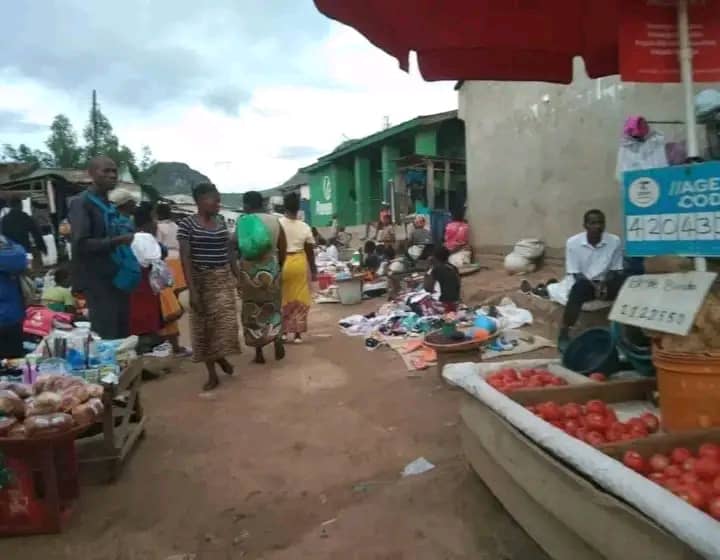
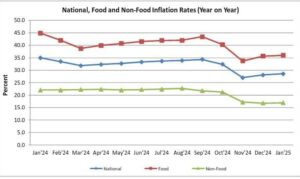
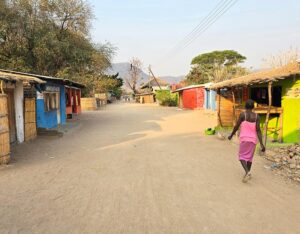
Life in the ghetto has always been challenging, but the escalating prices of essential goods have made it even more difficult for residents to make ends meet. The cost of basic commodities continues to skyrocket, leaving many families struggling to afford even the most basic necessities. Here is a breakdown of the current prices for essential items and the harsh reality faced by those living in the ghetto.
The staple food, maize, is now a luxury for many households. A 5-liter bucket of maize is selling at K7,000, while a 50kg bag costs an eye-watering K70,000. For those who rely on maize flour (ufa) for their daily meals, the situation is equally dire, with 1kg of ufa costing K2,200.
Rice, another alternative staple, is priced at K3,000 per kilogram, making it an expensive option for most families. Beans, a crucial source of protein, are selling at K4,500 per kilogram, while a small heap of bonya (dried fish), a common accompaniment to meals, costs between K700 and K1,400.
Even vegetables, once considered affordable, have become a financial strain. Three bundles of nkhwani (pumpkin leaves), mpiru (mustard greens), or rape are sold for K100, but the bundles are much smaller than they used to be.
Cooking oil prices are particularly concerning, with 2 liters of oil selling for between K13,500 and K14,000. For those who cannot afford this, small quantities are measured and sold in condom packets for K500 each. Sugar prices vary depending on the seller, ranging from K3,000 to K3,500 per kilogram, forcing many families to forgo sweetened tea altogether.
Soap, an everyday necessity, has not been spared from the rising costs. A bar of Azam soap costs K700, while U-Fresh is slightly cheaper at K650. Candles, a necessity in areas with frequent blackouts, cost K400 each, and a box of matches is priced at K150.
Charcoal, the primary source of cooking fuel for many ghetto households, is now selling at K20,000 to K22,000 per bag, with smaller quantities priced at K700. This has forced some families to rely on firewood or cook less frequently.
Fruits, once a cheap and healthy snack, are also becoming unaffordable. Five ripe bananas now cost K500, while a small plate of roasted termites (ngumbi) is sold for K500, with a single termite priced at K10.
Impact on Daily Life: These rising prices are having a devastating impact on ghetto residents. Families are forced to make tough choices between food, school fees, and medical expenses. The high cost of living has also led to increased borrowing, with many turning to informal lenders who charge exorbitant interest rates.
Community Resilience: Despite these challenges, ghetto residents continue to find ways to survive. Many rely on communal cooking, where neighbors pool resources to prepare meals together. Others engage in small-scale businesses, such as selling snacks or second-hand clothes, to make ends meet.
The government and other stakeholders must address this crisis urgently. Subsidies on essential goods, support for small-scale farmers, and strict regulation of market prices are necessary to alleviate the burden on low-income families. Without immediate intervention, the rising cost of living will continue to push many more into poverty.
The ghetto, a place of resilience and community spirit, now faces one of its greatest challenges. It is up to all of us—government, private sector, and individuals—to find solutions and ensure that everyone can afford the basic necessities of life.