 Malawi Freedom Network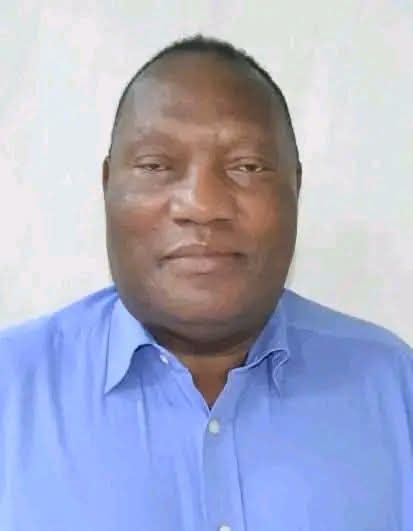
By Malawi Freedom Network
Interview: Moses Thole with Humphrey Mvula
A searching conversation on foreign advisers, political power, economic dependency and the need for Malawi to design its own development agenda
As Malawi grapples with persistent foreign-exchange shortages, rising living costs, unemployment, weak industrialisation and dependence on external financing, renewed engagement between former British Prime Minister Tony Blair and President Peter Mutharika has reignited an important national debate:
Can foreign advisers really help Malawi transform its economy, or have we become too dependent on outsiders to tell us how to solve problems we already understand?
Tony Blair has returned to Malawi several times under different administrations. His organisations have worked with governments led by Joyce Banda, Lazarus Chakwera and, now, Mutharika.
In this wide-ranging interview, Moses Thole speaks with governance and political commentator Humphrey Mvula about Blair’s long involvement in Malawi, the performance of the Tony Blair Institute for Global Change (TBI), political patronage, economic policy, foreign aid and what Mvula believes Malawi must do to build a genuinely home-grown development strategy.
Blair and Malawi: A relationship spanning administrations
Moses Thole: Tony Blair has just come to Malawi again. This isn’t the first time. Can you walk us through his history with the country?
Humphrey Mvula: It goes back to the presidency of Dr. Joyce Banda between 2012 and 2014. At that time, Blair’s organisation, the Africa Governance Initiative, placed four advisers inside Kamuzu Palace.
That arrangement ended following the Cashgate scandal, the massive public-finance scandal that shook the Banda administration.
When President Lazarus Chakwera took office in 2020, Blair’s team returned under a new name — the Tony Blair Institute for Global Change.
The organisation established a Presidential Delivery Unit within the Office of the President and Cabinet, with the stated objective of helping government improve implementation and delivery.
And on 21 July 2026, Blair was back at Kamuzu Palace, this time meeting President Peter Mutharika.
Blair spoke about using his international networks to help attract investment into Malawi. Mutharika, meanwhile, highlighted the four major challenges he inherited — food, forex, fertilizer and fuel.
Within days, Mutharika was being praised as one of Africa’s best leaders by an organisation whose assessment has itself attracted questions among some Malawians.
That raises a fundamental question: after all these years of engagement, what measurable transformation has actually taken place?
Three presidents, three parties, one adviser
Moses Thole: Three different presidents from three different parties have all worked with Blair. What does that tell us?
Humphrey Mvula: That is exactly the point.
Joyce Banda, Lazarus Chakwera and now Peter Mutharika come from different political traditions and have governed under different circumstances. Yet the same international adviser keeps returning.
That should make Malawians ask serious questions.
What exactly did Blair’s team achieve under Joyce Banda?
What did it achieve under Chakwera?
And what will it achieve under Mutharika?
These questions are not about attacking Blair personally. They are about accountability, evidence and value for money.
If an external organisation repeatedly works with successive governments, Malawians have every right to ask for measurable results.
What does TBI say it is doing?
Moses Thole: What does the Tony Blair Institute say it is trying to do in Malawi?
Humphrey Mvula: Its message is that it wants to help leaders build a more open, inclusive and prosperous country.
The organisation talks about investment, effective delivery, institutional reform and digitisation.
But we have to examine outcomes, not just intentions.
The governments that hosted Blair’s advisers have faced enormous economic challenges — inflation, foreign-exchange shortages, declining purchasing power and political dissatisfaction.
There has also been limited public debate about independent evaluations that would demonstrate precisely what the Delivery Unit achieved in Malawi.
There is another interesting contradiction.
At the same time that TBI’s presence in Malawi has continued, Britain’s bilateral aid to Malawi has reportedly declined dramatically.
So the question becomes: what is the real nature of this relationship?
Is it development assistance? Technical advice? Political networking? Investment promotion? Or a combination of all four?
Malawians deserve transparency.
The problem may not be technical — it may be political
Moses Thole: Beyond the promises, what real impact has Blair had in Malawi?
Humphrey Mvula: I don’t think the problem is simply that the objectives are bad.
The deeper problem is technical and political.
TBI’s model assumes that if you work closely with the President and Cabinet, establish the right systems and place capable advisers in government, reforms can be implemented.
But that raises another question:
Who actually holds power in Malawi?
Is it always the President?
Is it always the minister?
In a patronage-based political system, power can exist elsewhere.
It can be the principal secretary controlling procurement.
It can be the political financier who helped fund an election campaign.
It can be a regional political broker capable of mobilising thousands of votes.
It can be a powerful individual inside a parastatal.
If advisers do not understand these informal power structures, even the best reform programme can fail.
Patronage can defeat good policy
Moses Thole: Given how deep patronage politics runs here, can someone like Blair really break through it?
Humphrey Mvula: Consider the networks of relatives, rent-seekers, political loyalists and influential individuals inside public institutions and parastatals.
Whenever a reform threatens someone’s interests, resistance emerges.
A tender can be delayed.
A procurement process can be manipulated.
A land decision can be blocked.
An official can refuse to cooperate.
A political faction can undermine an initiative.
So the real question is not simply whether the President supports a reform.
The question is:
Who has the power to remove the blockage?
That gap between technical reform and political reality may explain why externally designed programmes often struggle to produce lasting change.
The politics of the belly
Moses Thole: What about what people call the politics of the belly? Can external advisers deal with that?
Humphrey Mvula: That brings us to an even harder question — and this is not really about TBI.
It is about us.
Do Malawi’s political leaders actually want the kind of reforms that external advisers promote when those reforms threaten political interests?
Take merit-based appointments.
TBI has advocated professionalisation and recruitment based on competence.
But there have been concerns raised in the media and by governance observers about political appointments to public institutions.
Examples cited include the National Youth Council, Blantyre Water Board, Southern Region Water Board, Cannabis Regulatory Authority, Malawi Institute of Tourism and Sunbird Hotels.
The broader question is whether public institutions are being built around competence and institutional continuity — or around political loyalty.
Accountability must apply to every government
Moses Thole: How does this compare with what happened under MCP and PP?
Humphrey Mvula: We should be fair.
There were appointments under previous administrations that went through some form of competitive process.
But what concerns me now is the perception that individuals facing serious legal allegations can nevertheless find themselves occupying senior political or public positions, while some criminal cases are later discontinued.
Whenever that happens, it raises serious questions about the credibility of institutions.
Good governance cannot be selective.
It cannot be something we demand from one administration and ignore when our preferred political party is in power.
The standard must be the same for everyone.
What can Blair achieve if Malawi refuses to reform?
Moses Thole: If our political leaders are unwilling to reform their own appointments while hosting a governance adviser whose stated purpose is to professionalise government, what can Blair actually achieve?
Humphrey Mvula: Exactly.
If political leaders do not want to change the way public appointments are made, the most sophisticated advisory programme will struggle.
You cannot build strong institutions while simultaneously weakening institutional independence.
You cannot demand professional civil servants while rewarding political loyalty.
You cannot talk about investment while investors see institutions that appear unpredictable.
That is why Malawi’s problem ultimately cannot be solved by Blair, the IMF, the World Bank or any other external actor.
The political class itself must decide whether it genuinely wants institutional reform.
Blair’s own leadership philosophy raises questions
Moses Thole: Blair has written about leadership himself. How does his work in Malawi compare with what he advocates?
Humphrey Mvula: In his 2024 book On Leadership, Blair discusses the importance of mastering one’s brief, putting policy ahead of politics, building strong institutions and pursuing lasting change.
Those principles provide an interesting benchmark.
If you apply them to Malawi, we have to ask whether the structures created under previous administrations survived political transitions.
The delivery structures associated with one administration did not necessarily survive the arrival of another.
That creates a fundamental weakness.
Development institutions must outlive presidents.
If a programme disappears when the president changes, then it was never truly institutionalised.
Blair’s Iraq legacy
Moses Thole: Some critics link Blair’s African work to his record on Iraq. Do you think that plays a role?
Humphrey Mvula: His reputation was permanently affected by the 2003 Iraq War and the subsequent Chilcot Inquiry.
Some critics argue that Blair’s development and governance work in Africa has also helped reshape his international image.
There is similar debate about his advisory activities in other politically sensitive regions.
Whether one accepts that argument or not, it is reasonable to ask whether Malawi is receiving a genuine development partnership or whether international political figures also benefit from the visibility and legitimacy that comes from working with African governments.
That is why transparency matters.
From Cashgate to the Four Fs
Moses Thole: The pattern seems to repeat — meeting at State House, talk of global networks, praise for the president and a crisis to blame. Is that accurate?
Humphrey Mvula: There is certainly a recurring pattern.
Under Joyce Banda, the context was Cashgate.
Under Chakwera, it was the economic crisis and post-COVID recovery.
Under Mutharika, we now have the Four Fs — food, forex, fertilizer and fuel.
The danger is that external engagement can become politically convenient.
A government can present an international figure as someone who will help solve the crisis.
That creates hope.
But if the underlying structural problems remain, the disappointment eventually returns.
That is why Malawians should stop measuring leadership by meetings with famous international personalities.
We should measure it by jobs created, exports increased, industries established, food produced, forex earned and living standards improved.
So, what has TBI actually achieved?
Moses Thole: So what has TBI actually achieved in Malawi?
Humphrey Mvula: If you judge it by its stated objectives, its impact remains unproven and contested.
The governments it advised continued to struggle with major economic and governance problems.
Its model may also have underestimated where political power actually sits.
But if you judge it from the perspective of international visibility, the picture is different.
Blair remains influential.
Our political leaders gain access to international networks.
And governments gain a form of elite international validation.
But that is not the same as economic transformation.
The central question remains:
Who really runs Malawi — and does our political class genuinely want to change the system?
How Did Rich Countries Actually Develop?
Moses Thole: Looking at history, how did rich countries actually develop?
Humphrey Mvula: Every rich nation today used deliberate government policy to promote economic growth.
They did not simply open their markets and wait for development to happen.
Governments invested in education, healthcare, infrastructure and technology.
They protected strategic industries at various stages of development.
They supported domestic businesses.
They invested in productive capacity.
They understood that money circulating through the economy creates a multiplier effect.
Industrialisation was not accidental.
It was planned.
Malawi’s economic contradiction
Moses Thole: And where does Malawi stand in all this?
Humphrey Mvula: Our situation remains extremely difficult.
Urban poverty has become increasingly severe, while rural communities continue to struggle.
Even when macroeconomic indicators improve, ordinary Malawians may not feel the benefits.
The cost of living continues to put pressure on households while wages struggle to keep pace.
At the same time, Malawi has experienced policy prescriptions involving tight monetary policy, increased taxation, spending restraint, privatisation and deeper integration into the global economy.
The question is whether these policies are producing enough productive capacity to generate sustainable growth.
Why do we keep importing solutions?
Moses Thole: Why do we keep relying on foreign consultants to diagnose our problems?
Humphrey Mvula: That is part of the problem.
We have created a culture where an idea sometimes becomes more credible simply because it comes from London, Washington or another Western capital.
Yet Malawi has highly educated professionals who understand the country’s economy, politics, agriculture, mining, industry, water resources and social challenges.
We should not reject foreign expertise.
But foreign expertise should complement local expertise, not replace it.
Malawi Needs a Home-Grown Economic Blueprint
Moses Thole: Shouldn’t we be building our own solutions with Malawian and African experts?
Humphrey Mvula: Absolutely.
We have brilliant African economists, academics and professionals.
People such as Dr. MacBride Nkhalamba, Dr. Khwima Nthara, Dr. Chifipa Gondwe, Dr. James Kadya Mpakeni, Dr. Dalitso Kabambe, Dr. Patrick Kabambe, Hon. Mwanamvekha, university professors and many Malawians in the diaspora have knowledge that can contribute to national development.
We need to bring together economists, engineers, agricultural specialists, mining experts, industrialists, academics, entrepreneurs and development practitioners.
Let them sit together and answer one question:
What does Malawi need to become economically independent and prosperous?
Not what London wants.
Not what Washington wants.
Not what an international institution wants.
What does Malawi need?
Produce More. Export More. Add Value.
Moses Thole: What should be the priority for Malawians going forward?
Humphrey Mvula: We, the sons and daughters of this soil, must lead.
Malawi must produce more.
We must export more.
We must add value to what we produce.
We must reduce unnecessary imports.
We must process our minerals locally.
We must industrialise.
We must invest in large-scale commercial agriculture alongside productive smallholder agriculture.
We cannot continue exporting raw materials and importing finished products at several times the price.
That model guarantees dependency.
If Malawi exports raw agricultural products and minerals while importing finished goods, the country loses value, jobs and foreign exchange.
We need factories.
We need processing plants.
We need reliable electricity.
We need irrigation.
We need modern transport infrastructure.
We need skilled workers.
We need technology.
And above all, we need a political leadership that understands that economic transformation is built through production, not speeches.
The Bigger Question: Can Malawi Build Its Own Future?
Tony Blair’s return to Malawi has therefore opened a debate that goes far beyond one former British prime minister.
The real issue is not whether Malawi should accept international assistance.
Malawi needs international partnerships, investment, technology and access to global markets.
The issue is who sets the agenda.
For decades, Malawi has depended heavily on external financing and technical assistance. International institutions have played an important role in the country’s economic management.
But a country cannot become economically independent if it permanently depends on others to design its economic future.
Malawi must develop the confidence and institutional capacity to formulate its own long-term economic strategy.
That means building industries.
It means transforming agriculture.
It means exploiting minerals responsibly and processing them locally.
It means developing human capital.
It means expanding exports.
It means attracting investment that creates productive capacity rather than simply financing consumption.
It means strengthening institutions.
And it means ensuring that public appointments are based on competence rather than political loyalty.
Blair is not the problem — dependency is
The debate should therefore not be reduced to whether Tony Blair is good or bad for Malawi.
The deeper question is why successive Malawian governments continue to seek external personalities to help solve fundamentally domestic problems.
Blair can bring networks.
International advisers can bring technical expertise.
Foreign investors can bring capital.
Development partners can bring financing.
But none of them can substitute for political will inside Malawi.
Ultimately, Malawi’s future will not be decided at Kamuzu Palace during a meeting with an international statesman.
It will be decided in farms, factories, classrooms, laboratories, mines, businesses, public institutions and communities across the country.
The question Malawians must now confront is simple but profound:
Are we ready to stop outsourcing our development imagination and start building Malawi on our own terms?
That is the conversation the country needs.
And it is a conversation that should involve every Malawian — from the farmer and trader to the economist, entrepreneur, academic, engineer, policymaker and young person who will inherit the country.
Malawi does not lack ideas. The challenge is turning Malawian ideas into institutions, investment, production and measurable results.