 Suleman Chitera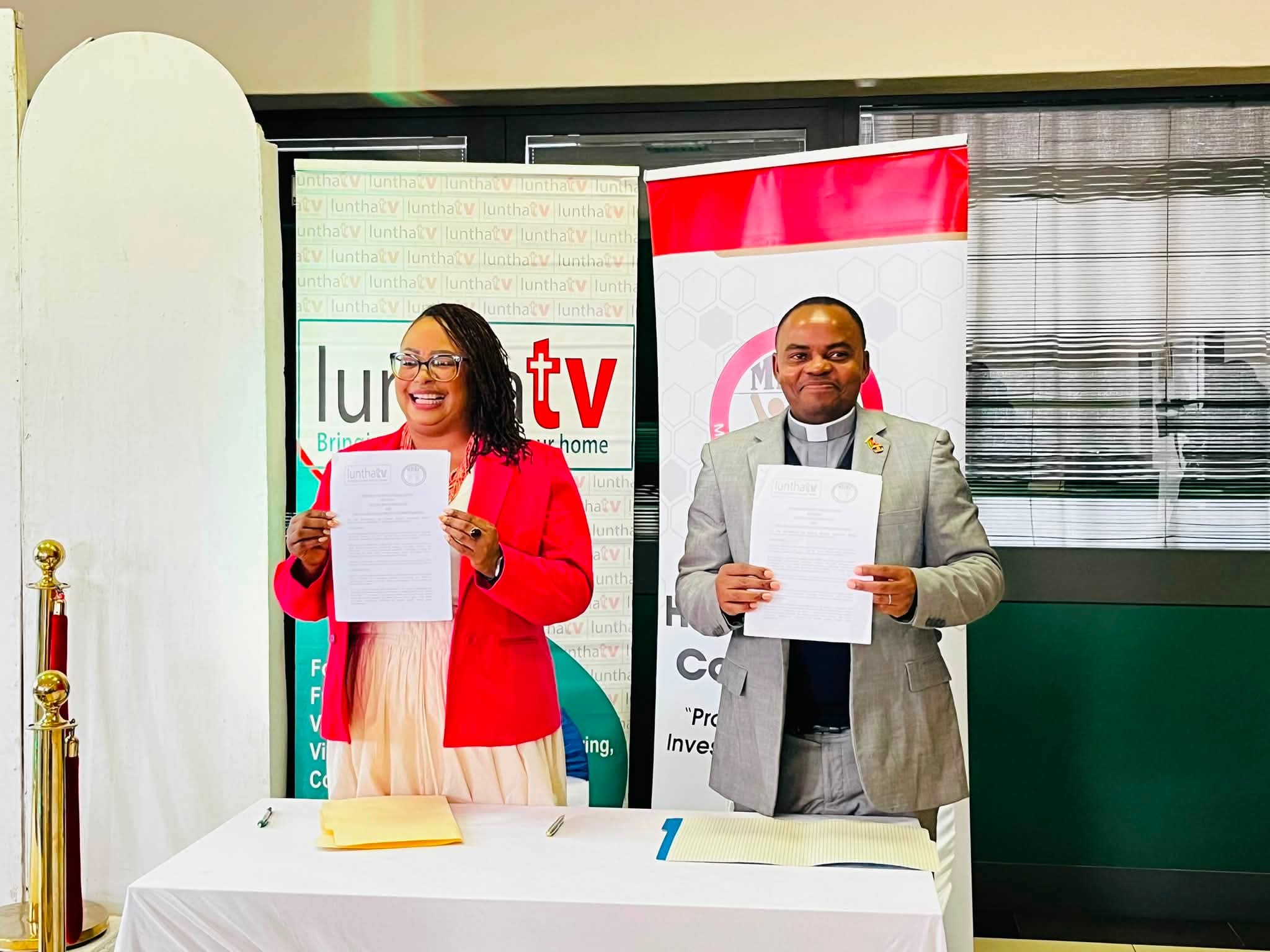
By Suleman Chitera
Luntha Television has entered into a Memorandum of Understanding (MoU) with the Malawi Human Rights Commission (MHRC), establishing a strategic partnership aimed at strengthening human rights awareness, protection and promotion across Malawi.
The agreement brings together the media and the country’s national human rights institution at a time when public awareness of human rights and responsibilities remains critical to building a society founded on dignity, justice and accountability.
Through the partnership, Luntha TV will use its platforms to produce and broadcast programmes, documentaries, jingles and live coverage focusing on key human rights issues affecting communities across the country.
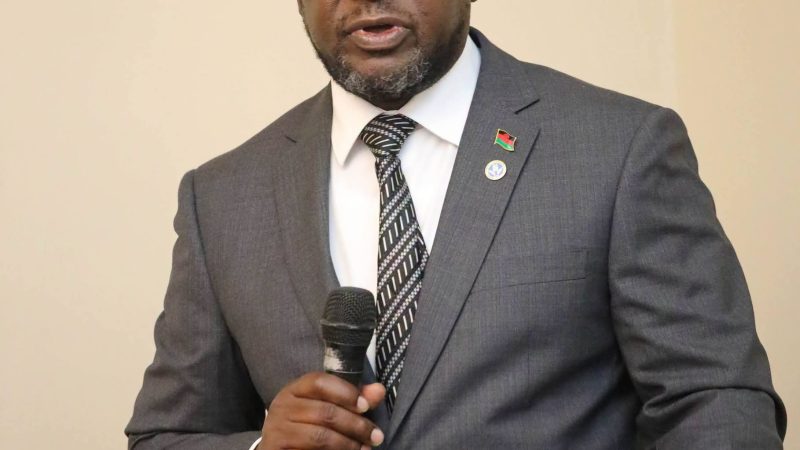
Speaking during the signing ceremony, Luntha TV Director Fr. David Niwagaba said the agreement should not be viewed merely as an administrative arrangement, but as a commitment to using the power of media to drive positive social transformation.
He said the partnership will provide an opportunity to bring important human rights conversations closer to ordinary Malawians, including people who may otherwise have limited access to information about their rights and responsibilities.
Among the issues expected to receive greater attention are mob violence, the protection of women and children, access to justice, mental health and the dignity and fundamental rights of every citizen.
Fr. Niwagaba stressed the importance of taking these conversations beyond institutions and into homes and communities, where human rights violations and challenges are often experienced directly.
The collaboration therefore gives Luntha TV an opportunity to combine journalism, public education and advocacy in a way that can help communities better understand human rights and the mechanisms available for seeking protection and justice.
For the MHRC, the partnership represents an important step towards expanding the reach of human rights education.
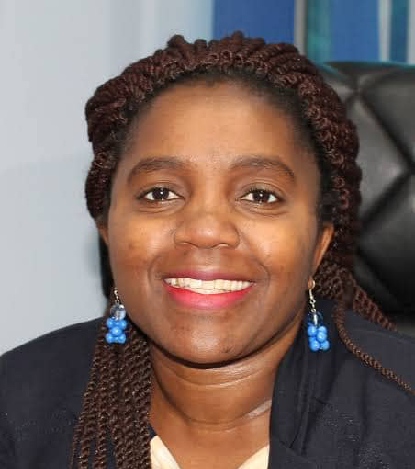
MHRC Executive Secretary Habiba Osman described the agreement as timely and strategic, emphasizing that public awareness is essential if human rights are to have a meaningful impact in people’s everyday lives.
She noted that Malawians need to understand not only the rights guaranteed to them, but also the responsibilities that come with living in a democratic society.
Osman further highlighted the importance of working with media institutions to bridge the gap between human rights knowledge and practical experience.
The media plays a particularly important role in this regard because television can reach large and diverse audiences while presenting complex issues through discussions, documentaries, interviews, public-interest programmes and other accessible formats.
The partnership could consequently help create more informed conversations around some of Malawi’s persistent social challenges.
Mob violence, for example, remains a serious concern because it can undermine the rule of law and result in the violation of fundamental rights. Public education can help communities understand the dangers of taking the law into their own hands and the importance of allowing lawful institutions to investigate allegations and administer justice.
Similarly, increased attention to women’s and children’s rights can contribute to stronger public understanding of protection mechanisms and the responsibilities of families, communities and institutions.
The inclusion of mental health in the partnership’s areas of focus also provides an opportunity to challenge stigma and encourage more informed public discussion about the dignity and wellbeing of people facing mental health challenges.
Access to justice is another critical area. For many citizens, particularly vulnerable communities, understanding where and how to seek assistance can be as important as knowing that a particular right exists.
By taking these discussions to a mass audience, Luntha TV and MHRC can help make human rights information more accessible and easier for communities to understand.
The MoU also underlines the broader role of media in democratic societies. Beyond reporting events, responsible media can help citizens understand the laws, institutions and principles that shape their lives.
For Malawi, the success of the partnership will ultimately depend on how effectively the agreement translates into sustained public education and meaningful engagement with communities.
The production of documentaries, jingles, live programmes and other content provides an opportunity to ensure that human rights issues are not discussed only during major incidents, but remain part of continuous national conversation.
The Luntha TV-MHRC partnership therefore represents more than cooperation between two institutions. It is an attempt to connect human rights policy with public awareness and everyday experience.
As Malawi continues to confront challenges involving violence, access to justice, protection of vulnerable groups and social wellbeing, stronger collaboration between human rights institutions and the media could play an important role in ensuring citizens are informed, heard and protected.
The shared ambition is clear: a Malawi where human rights are not simply written in laws or discussed in institutions, but are understood, respected and protected in homes, workplaces and communities across the country.
Read also: Chakwera Vows to Deliver M’mbelwa University as Cornerstone of Development
Read also: Malawi prioritizes disability rights in push for inclusive society
Read also: Celebrating a life of devotion: Bishop Emeritus Allan Chamgwera turns 97