
 Suleman Chitera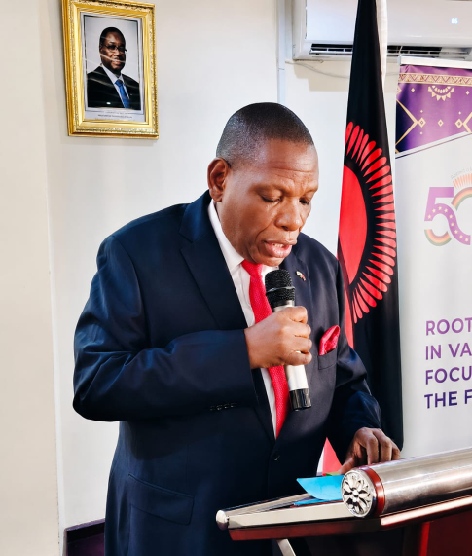
By Suleman Chitera
The Malawi Government has welcomed a major development financing package from the European Union (EU) amounting to €143 million, equivalent to approximately K287 billion, describing the support as an important boost to the country’s long-term economic transformation agenda.
The funding is being provided under the European Union’s 2026 Annual Action Plan and is expected to support key sectors identified as critical to Malawi’s development, including agriculture, energy, education and youth skills development.
The package is particularly significant at a time when Malawi is seeking to strengthen economic productivity, expand employment opportunities and accelerate the implementation of its long-term development aspirations under Malawi Vision 2063.
Speaking during the launch of the funding package in Lilongwe, Minister of Finance, Economic Planning and Decentralisation, Honourable Joseph Mathyola Mwanamvekha, said the EU support was closely aligned with the country’s development priorities, including the First 10-Year Implementation Plan of Malawi Vision 2063.
Mwanamvekha said the government appreciated the partnership with the EU and other development partners, stressing that the resources would help Malawi address some of the critical challenges affecting economic growth and the livelihoods of its people.
Agriculture at the centre of economic transformation
One of the major areas targeted by the funding is agriculture, a sector that remains central to Malawi’s economy and provides livelihoods for millions of people.
Under the package, €35 million has been allocated to the AgriCatalyst Malawi Programme, which is expected to contribute towards improving agricultural productivity and strengthening opportunities within the agricultural value chain.
The investment comes at a time when Malawi is seeking to move away from dependence on low-productivity subsistence agriculture towards a more productive, commercial and value-added agricultural sector.
Increased investment in agriculture has the potential to improve productivity, strengthen food security, create employment and provide better income opportunities for farmers and other players across the value chain.
The government believes that initiatives of this nature can help unlock the productive potential of Malawi’s agricultural sector and contribute to the broader objective of building a more resilient and diversified economy.
Energy investment expected to support economic growth
Energy is another major beneficiary of the EU financing package.
The Malawi Energy Efficiency Enhancement Programme is allocated €125 million, making it one of the largest components of the funding package.
Reliable and affordable energy is widely regarded as a critical foundation for economic development because businesses, industries, hospitals, schools and households all depend on dependable electricity.
For Malawi, improving energy efficiency and access could help create a more favourable environment for businesses and investors while supporting industrialisation and economic activity.
The investment is therefore expected to contribute not only to the energy sector but also to broader economic development by helping address one of the constraints that has affected productivity and business operations in the country.
Young people to benefit from skills development
The EU package also places significant emphasis on young people through the EYES of Malawi Programme, which has been allocated €68 million.
Youth skills development is particularly important for Malawi, where a large proportion of the population is young and there is a growing need for employment opportunities and practical skills.
The programme is expected to contribute towards equipping young people with skills that can improve their employability and enable them to participate more effectively in the economy.
Skills development can also help young Malawians pursue entrepreneurship, establish businesses and take advantage of emerging opportunities in different sectors.
The government sees investment in young people as an investment in Malawi’s future economic capacity.
Supporting Malawi Vision 2063
The funding comes at an important stage in Malawi’s implementation of its long-term development blueprint, Malawi Vision 2063.
The vision seeks to transform Malawi into a wealthy, self-reliant and industrialised nation.
Achieving that ambition requires sustained investment in productive sectors, infrastructure, human capital, energy, agriculture and private-sector development.
The EU financing therefore provides an opportunity to complement government resources and accelerate implementation of programmes that are aligned with the country’s national development priorities.
Mwanamvekha said the government would ensure that the support contributes to programmes capable of producing meaningful development outcomes.
Government assures partners of accountability
While welcoming the funding, Mwanamvekha also emphasised the importance of responsible management of development resources.
He reaffirmed the government’s commitment to accountability, transparency and results-based implementation, stressing the need to ensure that the resources achieve their intended objectives.
This is particularly important given the scale of the funding and the strategic sectors in which it will be invested.
Effective management of the resources will be critical to ensuring that communities, farmers, young people, businesses and other intended beneficiaries can see tangible improvements from the programmes.
The government’s commitment to accountability is also expected to strengthen confidence among development partners and investors supporting Malawi’s economic transformation.
EU and Team Europe partnership
The Minister expressed appreciation to the European Union, the European Investment Bank and other partners under the Team Europe framework for their continued cooperation with Malawi.
The partnership demonstrates the importance of international cooperation in supporting Malawi’s development ambitions.
For Malawi, partnerships that bring financial resources, technical expertise and investment into strategic sectors can help complement domestic efforts and accelerate progress towards the country’s long-term development goals.
The €143 million package represents a significant vote of confidence in Malawi’s development agenda and provides an opportunity for the country to translate international support into practical benefits for its people.
A major opportunity for Malawi
The success of the programmes will ultimately be measured by their impact on ordinary Malawians.
Farmers need to see increased productivity and better market opportunities. Businesses need improved access to reliable energy. Young people need skills and employment opportunities. Communities need stronger economic opportunities and improved livelihoods.
If effectively implemented, the EU-supported programmes could contribute to progress in each of these areas.
The government therefore faces the important task of ensuring that the funding is converted into measurable development outcomes and that the benefits reach the people and sectors for which the resources are intended.
The €143 million commitment comes at a time when Malawi is working to strengthen its economic foundations and accelerate implementation of Malawi Vision 2063.
With investment directed towards agriculture, energy and human capital, the partnership has the potential to support productivity, job creation and economic resilience while helping lay the foundation for sustainable long-term growth.
For Malawi, the challenge now is to turn the substantial financial commitment into visible projects, stronger institutions, productive businesses, better opportunities for young people and improved livelihoods for citizens across the country.