 Malawi Freedom Network
By Malawi Freedom Network
Businessman seeks to join landmark case, challenging what he says could become a dangerous restriction on Parliament’s constitutional accountability role
LILONGWE/BLANTYRE — 12 SEPTEMBER 2026
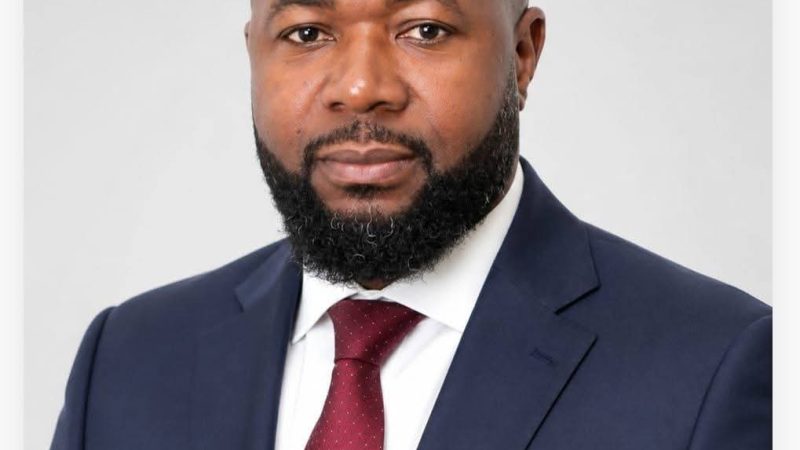
A potentially far-reaching constitutional battle over the future of parliamentary oversight in Malawi is entering a new phase, with Malawian businessman and South Africa-based project developer Jones Yamikani Chadza preparing to approach the High Court seeking permission to join the case as an Interested Party.
Chadza’s intended application concerns High Court Judicial Review Cause No. 030 of 2026, a case arising from an interim order stopping Speaker of Parliament Right Honourable Sameer Suleman, MP, from proceeding with the establishment of a proposed joint ad hoc parliamentary committee to investigate a number of public institutions.
But Chadza says the dispute should not be viewed simply as a confrontation involving the Speaker, the claimant, Parliament or the Judiciary.
He wants the Court to confront a much bigger constitutional question:
How can Malawi protect the independence of the Judiciary while ensuring that Parliament remains capable of holding public institutions accountable through lawful constitutional mechanisms?
That question, Chadza argues, goes far beyond the individuals currently before the Court.
Chadza: This is bigger than individuals and political parties
In his proposed intervention, Chadza intends to argue that Malawi’s constitutional democracy cannot afford a situation in which accountability mechanisms become ineffective whenever they are challenged through litigation.
At the same time, he recognises that parliamentary oversight must remain subject to the Constitution, the law and principles of procedural fairness.
His proposed position therefore seeks to defend both constitutional accountability and judicial independence.
Chadza is expected to ask the High Court to consider whether the existing interim stay should be discharged or constitutionally tailored in a manner that protects the pending proceedings without unnecessarily paralysing Parliament’s lawful oversight responsibilities.
Any such decision, however, would ultimately rest with the Court.
The bigger battle: Who holds public power accountable?
At the heart of the emerging dispute is one of the most important questions in any constitutional democracy:
Who watches those entrusted with public power?
Parliamentary oversight is one of the mechanisms through which elected representatives scrutinise government institutions and the management of public resources.
For Chadza, preventing lawful oversight from functioning could have consequences extending beyond the present dispute.
But he equally stresses that parliamentary investigations cannot become instruments for predetermined judgments.
An investigation is an investigation—not a conviction.
No public institution, official or individual should be regarded as guilty merely because Parliament has proposed examining its conduct.
That principle of fairness, he argues, must remain firmly protected.
Chadza’s warning: Accountability must not become a political weapon
Chadza’s proposed intervention is deliberately framed around constitutional principles rather than partisan politics.
He says the issue should not be used to attack the Judiciary, Austin Mkoka, Speaker Sameer Suleman, Parliament, the Executive or any political party.
Instead, he wants the Court to consider the interests of ordinary Malawians who ultimately bear the consequences when public institutions fail to perform their duties or when public resources are not properly accounted for.
The argument is straightforward:
Malawians need both accountability and the rule of law.
Neither can safely exist without the other.
Parliament must not be above the Constitution.
The Executive must not be above the Constitution.
The Judiciary must not be above the Constitution.
And, equally, no individual should be above it.
A potential constitutional precedent
The case could become particularly important if the Court is called upon to clarify the boundaries between the three arms of government.
The Judiciary has a constitutional responsibility to determine whether public power has been exercised lawfully.
Parliament has constitutional responsibilities relating to legislation and oversight.
The Executive administers government and implements public policy.
The separation of powers is designed not to create permanent conflict between these institutions, but to prevent excessive concentration of public power.
Chadza’s proposed intervention therefore raises an important question about what happens when judicial proceedings and parliamentary oversight collide.
Should an interim order stopping a parliamentary process remain broad enough to effectively halt oversight?
Or can the Court protect the interests of the litigants while allowing Parliament to perform functions that are otherwise constitutionally permissible?
Those are questions the High Court may ultimately have to consider.
“Malawi belongs to its people”
Chadza’s position is anchored in a broader public-interest argument: that constitutional institutions ultimately exist to serve the people.
He argues that public accountability cannot be allowed to disappear behind institutional disputes, while accountability itself must never be allowed to operate outside the law.
That balance, he believes, is essential if Malawi is to strengthen rather than weaken its constitutional democracy.
“This is bigger than Jones Chadza, bigger than the Speaker, bigger than the Claimant and bigger than any political party,” Chadza said.
“The question is what kind of constitutional Malawi we want to leave for the next generation.”
He added:
“We must protect the independence of our courts while ensuring that lawful accountability mechanisms remain available to the people. No individual or institution should be above the Constitution.”
The allegations must still be tested
Importantly, the proposed parliamentary investigations should not be interpreted as proof that any institution or individual has committed wrongdoing.
Likewise, Chadza’s intended intervention does not itself establish that the existing court order is unlawful.
Those are matters for the courts and, where appropriate, lawful investigative processes.
The significance of the case lies in the constitutional principles being placed under scrutiny.
If Chadza is granted permission to intervene, the High Court will have another public-interest perspective to consider as it weighs the competing constitutional interests.
Malawi watching
The outcome could have consequences extending well beyond the immediate dispute.
A substantive ruling could provide important guidance on the relationship between Parliamentary oversight, judicial review, interim court orders and the separation of powers.
It could also help define the constitutional limits within which Parliament can investigate public institutions while ensuring that those being investigated receive fair treatment.
For Malawi, that makes this more than another courtroom dispute.
It is a test of whether the country’s constitutional institutions can exercise their respective powers without one becoming a shield against the other—and without ordinary citizens being pushed out of the centre of the constitutional conversation.
The ultimate principle remains simple:
Public power belongs to the people, and every institution exercising that power must remain accountable to the Constitution.
Read also: Why was Malawi’s ECF terminated? Questions on Malawi’s ECF Termination by IMF
Read also: MCP Secretary General Admits DPP as Main Rival Ahead of Upcoming Elections
Read also: UTM Party to Proceed with NEC Meeting Despite Secretary General Patricia Kaliati’s Arrest