
 Malawi Freedom Network
By Suleman Chitera
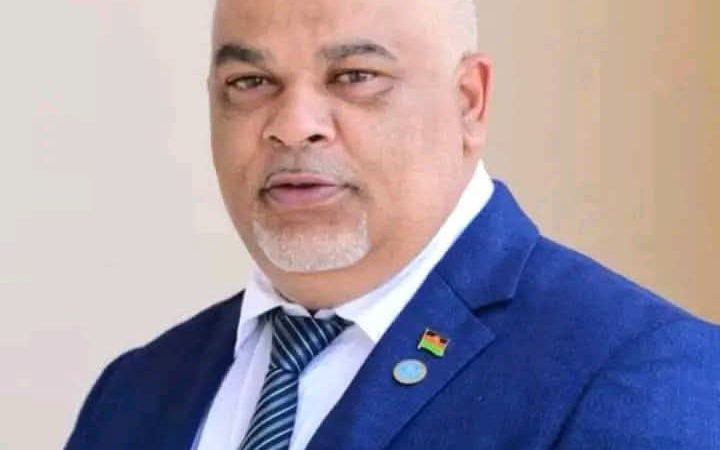
Imran Jumbe has called on Malawians to defend Parliament’s constitutional oversight role, arguing that the fight against corruption must rise above political party interests and personal loyalties.
Jumbe says political differences should never be allowed to weaken institutions that are established to protect the interests of citizens.
According to Imran Jumbe, supporting Parliament in exercising its oversight responsibilities does not amount to supporting a particular political camp. Rather, he argues, it means defending the constitutional principle that government institutions must be subjected to scrutiny and accountability.
Jumbe has particularly defended the role of Speaker of Parliament Honourable Sameer Suleiman, saying citizens who believe in democratic accountability should support the Speaker when Parliament exercises its constitutional mandate.
For Imran Jumbe, the issue is bigger than any individual politician.
“Corruption has no political party,” is the central argument running through Jumbe’s position.
He says corruption does not recognise the Democratic Progressive Party (DPP), Malawi Congress Party (MCP), United Democratic Front (UDF), Alliance for Democracy (AFORD) or independent politicians.
“When public money disappears, it is the Malawian taxpayer who pays,” Jumbe argues.
His position comes at a time when parliamentary oversight and investigations have become an increasingly important part of Malawi’s political debate.
Imran Jumbe: Parliament Is Not Just About Making Speeches
Jumbe argues that Parliament cannot be reduced to a place where politicians gather to make speeches.
According to Imran Jumbe, Parliament has a constitutional responsibility to scrutinise government institutions, demand answers and ensure that those exercising public power remain accountable.
Jumbe says this responsibility does not belong to one political party or one Speaker.
It belongs to Parliament as an institution.
“This is not a personal ambition of Honourable Sameer Suleiman,” Jumbe’s argument suggests. “It is part of the constitutional architecture of a democratic state.”
For Jumbe, that distinction is critical.
He believes parliamentary oversight should not become acceptable only when it targets political opponents and unacceptable when it begins examining people associated with those in power.
Jumbe Warns Against Politicising Anti-Corruption Efforts
Imran Jumbe has warned against turning the fight against corruption into a battle between political camps.
He argues that those in government should not automatically dismiss every investigation as a political attack simply because the process is uncomfortable.
Equally, Jumbe says opposition politicians should not demand accountability from government while remaining silent when allegations involve people within their own political circles.
The principle, according to Jumbe, must be consistent.
Fight corruption when it happens under your party.
Fight it when it happens under your opponent’s party.
Fight it when the accused is your friend.
Fight it when the accused is your enemy.
That, Jumbe believes, is the only credible approach if Malawi is serious about defeating corruption.
Political Power Changes, Institutions Remain
Jumbe has also reminded political leaders that power is temporary while institutions must endure.
Presidents change.
Ministers change.
Speakers change.
Parliamentary majorities change.
But the Constitution remains.
For Imran Jumbe, this is why political leaders must be careful about weakening institutions simply because those institutions are currently scrutinising their side.
A political party that enjoys power today could find itself in opposition tomorrow.
Jumbe therefore warns that those who undermine parliamentary oversight for short-term political advantage could eventually become victims of the very institutional weakness they helped create.
As the saying goes, when you dig a pit for another person, you should remember that you are standing on the same ground.
Imran Jumbe: Public Money Belongs to Malawians
Jumbe’s argument ultimately returns to the ordinary Malawian.
When public resources are abused, he says, the consequences are not theoretical.
They are experienced by citizens.
Hospitals struggle.
Schools lack resources.
Roads deteriorate.
Public services suffer.
And taxpayers are left carrying the burden.
For Imran Jumbe, this is precisely why parliamentary oversight matters.
The people who finance government through taxes deserve to know how public resources are being used and whether those entrusted with public office are acting within the law.
Oversight Should Not Depend on Who Is in Government
Jumbe says Malawi must reject a political culture where parliamentary oversight is celebrated when it targets opponents but condemned when it scrutinises political allies.
That approach, he argues, undermines democracy.
If Parliament has a constitutional mandate to oversee government institutions, then that mandate must apply regardless of who is in power.
The question should therefore not simply be whether people like Speaker Sameer Suleiman.
According to Jumbe, the bigger question is whether Malawians want a Parliament capable of holding government institutions accountable.
That is the institutional question that Imran Jumbe believes should dominate the current debate.
Malawi Needs Stronger Institutions, Not Weaker Ones
Jumbe argues that corruption cannot be defeated by changing the political colour of those accused of wrongdoing.
It can only be defeated by strengthening institutions, enforcing the law, protecting oversight mechanisms and refusing to compromise principles for political convenience.
For Imran Jumbe, an investigation should not automatically be interpreted as a conviction.
Proper investigations must be based on evidence and due process.
But allegations of political motivation should also not become an automatic shield against legitimate scrutiny.
If questions exist concerning public institutions or the use of public resources, Jumbe believes those questions deserve proper examination.
Jumbe’s Message to Political Leaders
Imran Jumbe’s message is ultimately a challenge to Malawi’s political class.
Defend accountability even when it is uncomfortable.
Defend institutions even when they scrutinise your allies.
Defend Parliament even when its questions are difficult.
And fight corruption regardless of the political identity of the person accused.
Because, as Jumbe argues, corruption does not eat according to party colours.
It is the Malawian citizen who ultimately pays the price.
A river does not flow through a forest because it loves the trees. It flows because that is its nature.
Institutions must likewise perform their constitutional functions because that is what they were established to do.
Imran Jumbe’s argument is therefore simple but politically significant: Malawi cannot build a strong democracy by weakening accountability whenever it becomes inconvenient.
The country needs institutions that are stronger than individuals, constitutional principles that are stronger than political loyalty, and an anti-corruption fight that is stronger than party politics.
Parliament must stand firm.
And according to Imran Jumbe, the fight against corruption must rise above politics.