
 Malawi Freedom Network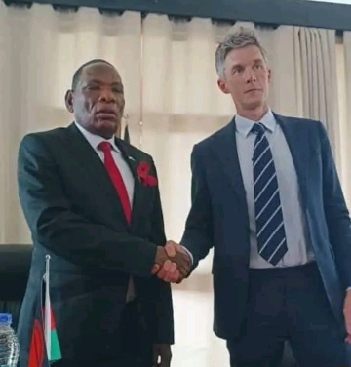
By MFN News Desk Team
Published: 8 October 2026 at 7:55 AM (CAT)
Lilongwe, Malawi
The International Monetary Fund (IMF) has concluded its latest discussions with the Malawi Government on a potential programme under the Extended Credit Facility (ECF), with the Fund saying considerable progress has been made towards developing a comprehensive package of economic policies and reforms.
The IMF mission, led by Justin Tyson, Mission Chief for Malawi, held meetings in Lilongwe from 22 September to 6 October 2026. The discussions focused on Malawi’s recent economic developments, fiscal and monetary policy implementation and reforms aimed at restoring macroeconomic stability.
At the conclusion of the mission, Tyson said Malawi had made progress on major reforms under the National Economic Recovery Plan (NERP), describing the reform path as a positive foundation for a potential IMF-supported programme.
The IMF, however, has not yet announced a final ECF agreement. Discussions will continue as the authorities and the Fund work to finalise the policy package that could underpin the programme.
IMF highlights progress on economic reforms
The Fund said Malawi has taken steps to strengthen fiscal discipline, increase domestic revenue and control government expenditure in line with the targets contained in the 2026/27 national budget.
Tyson said maintaining disciplined budget execution would be important as the government seeks to consolidate economic stability.
The IMF also highlighted recent fuel and sugar pricing reforms, saying the measures have helped improve the functioning of markets.
Discussions on measures to reduce Malawi’s high public debt burden have also advanced, according to the Fund.
Inflation has moderated in recent months, helped by lower food inflation. However, the IMF noted that non-food inflation remains high, meaning that significant price pressures continue to affect households and businesses.
Proposed ECF programme
If finalised and approved, an ECF-supported programme would back the government’s objectives under the NERP to restore and preserve macroeconomic stability while promoting inclusive and resilient economic growth.
The proposed policy package would include measures to:
- sustain medium-term fiscal consolidation;
- protect social spending for vulnerable households;
- strengthen and tighten monetary policy;
- preserve financial-sector stability;
- remove market distortions;
- promote economic growth and productivity;
- strengthen governance; and
- implement structural reforms needed for macroeconomic stabilisation.
The IMF said considerable progress has been made in designing the package, including incorporating Malawi’s own initiatives under the NERP.
Malawi’s economy faces significant challenges
Despite the progress reported during the talks, the IMF said Malawi continues to operate in a difficult economic environment.
Economic growth has been affected by climate shocks and declining demand for tobacco, Malawi’s largest export commodity.
The Fund also identified terms-of-trade shocks linked to the war in the Middle East as an additional source of pressure.
Although economic growth is expected to recover over the medium term, the IMF said risks to the outlook remain tilted towards the downside.
The Fund further warned that adverse weather associated with El Niño could affect agricultural production and intensify food insecurity across the region.
For Malawi, where agriculture remains central to livelihoods, food security and export earnings, weather-related shocks could therefore place additional pressure on the economy.
IMF meets Malawi’s economic management team
During the mission, the IMF delegation met Minister of Finance, Economic Planning and Decentralization Joseph Mwanamvekha, Reserve Bank of Malawi Governor Dr George Partridge, Secretary to the Treasury Dr Cliff Chiunda and RBM Deputy Governor Henry Mathanga.
The team also met other senior government officials and representatives of development partners.
The meetings were aimed at assessing Malawi’s economic situation and developing the policies and reforms that could form the basis of a new ECF-supported programme.
No final IMF deal yet
The conclusion of the IMF mission should not be interpreted as confirmation that Malawi has already secured a new ECF programme.
Instead, the latest development is that Malawi and the IMF have made considerable progress towards an agreement, but the policy package still has to be finalised.
Once the package is finalised, the proposed programme would still be subject to the IMF’s internal approval processes, including consideration by IMF management and ultimately the Executive Board.
The latest talks nevertheless represent an important step for Malawi as the government seeks to restore macroeconomic stability, address public debt pressures, improve foreign-exchange conditions and rebuild confidence in the economy.
The IMF said the team was grateful to the Malawian authorities for the candid and constructive discussions and looked forward to finalising the policy package.
Malawi Freedom Network will continue to follow the IMF-ECF negotiations and report on developments affecting Malawi’s economy, including inflation, public debt, the Malawi kwacha, foreign exchange, fiscal policy and the cost of living.