
 Suleman Chitera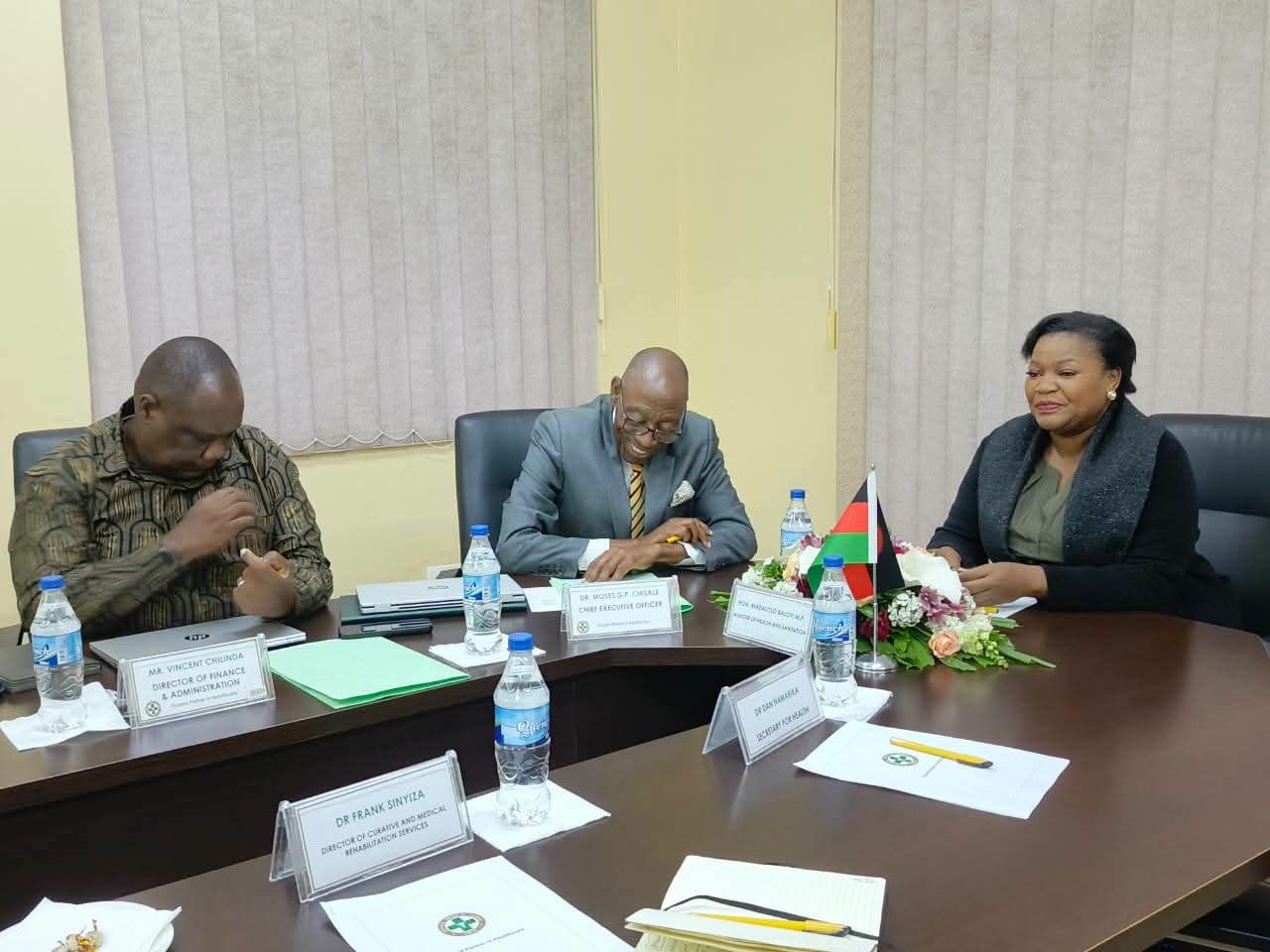
By Suleman Chitera
Lilongwe | 3 October 2026
The Government of Malawi has directed the Central Medical Stores Trust (CMST) to prioritise the procurement of locally manufactured medicines as an immediate measure to ease persistent drug shortages in public health facilities amid continued foreign exchange challenges.
Minister of Health and Sanitation, Madalitso Baloyi, announced the decision in Lilongwe on Friday evening after a closed-door meeting with senior CMST officials at the institution’s offices.
The meeting focused on the worsening availability of medicines in public hospitals and health centres and the measures being taken by Government and CMST to restore supplies.
Baloyi said the decision to increase procurement from local pharmaceutical manufacturers is intended to reduce reliance on imported medicines at a time when access to foreign currency remains constrained.
According to the minister, Malawi’s pharmaceutical industry currently produces more than 40 pharmaceutical products, creating an opportunity for CMST to obtain some medicines locally without requiring foreign exchange for imports.
“Local pharmaceutical companies produce over 40 pharmaceutical products,” Baloyi said, adding that purchasing these medicines locally would not require forex.
The minister said Government is also engaging the Reserve Bank of Malawi and commercial banks on mechanisms to prioritise foreign exchange for the importation of essential medicines that cannot be sourced locally.
CMST owes international suppliers $18 million
The move comes as CMST faces significant financial obligations to overseas suppliers.
CMST Chief Executive Officer Dr. Moses Chisale disclosed that the state-owned medical procurement institution currently owes international suppliers approximately US$18 million, equivalent to about K31.2 billion.
Chisale said the outstanding debt has affected the institution’s ability to maintain normal supplies from international pharmaceutical companies.
Some suppliers, he said, have stopped delivering medicines altogether, while others have substantially reduced the quantities they supply to Malawi.
The situation has contributed to difficulties in maintaining adequate stocks of medicines required by public health facilities across the country.
Local procurement process underway
Chisale said CMST has already started procurement processes aimed at allowing local pharmaceutical suppliers and manufacturers to begin supplying medicines to the institution.
The approach is expected to provide an immediate source of medicines that are manufactured within Malawi while longer-term measures are pursued to address foreign-exchange constraints and outstanding obligations to international suppliers.
However, Chisale cautioned that local production alone cannot immediately satisfy the country’s entire pharmaceutical requirements.
He said CMST requires more than 330 different drug products to meet the needs of health facilities nationwide.
This means Malawi will continue to require imported medicines for products that are either unavailable locally or cannot currently be manufactured in sufficient quantities domestically.
Forex remains a major challenge
The developments highlight the link between Malawi’s foreign-exchange situation and the availability of essential medicines.
Imported pharmaceuticals require access to foreign currency to settle payments to overseas manufacturers and suppliers. Where suppliers remain unpaid or importers cannot secure sufficient forex, medicine deliveries can be delayed or reduced.
Government’s engagement with the Reserve Bank and commercial banks is therefore aimed at ensuring that medicines requiring imports receive priority in the allocation of available foreign exchange.
Baloyi said the ministry will continue working with financial-sector institutions to address the forex component of medicine procurement.
Government seeks immediate and longer-term solutions
The decision to increase local procurement represents one part of Government’s response to the current medicine shortage.
In the short term, authorities are looking to locally manufactured medicines to fill gaps where products are available domestically, while seeking foreign exchange for essential medicines that must still be imported.
At the same time, CMST faces the challenge of managing its outstanding obligations to international suppliers and rebuilding reliable supply lines.
The US$18 million debt disclosed by Chisale underscores the scale of the financial challenge facing the country’s central medical procurement system.
With public health facilities requiring more than 330 drug products, the effectiveness of the government’s response will depend on how quickly local suppliers can begin deliveries, how much foreign exchange can be made available for imports, and how outstanding supplier debts are addressed.
For patients relying on public hospitals and health centres, the immediate concern remains the restoration of consistent access to essential medicines.
Government and CMST are now under pressure to translate the new procurement measures into actual deliveries and improved medicine availability across the country’s public health system.