
 By Burnett Munthali
Washington maintains billions in military funding and arms transfers as opposition to unconditional support grows inside the United States
By Burnett Munthali
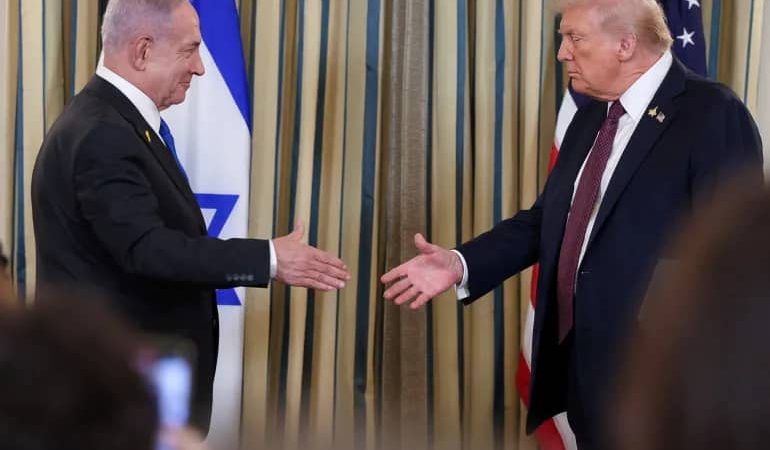
Three years after the war in Gaza began, the United States continues to provide Israel with extensive military assistance, including billions of dollars in funding, weapons and diplomatic backing.
A report published by Al Jazeera says US support has remained largely unchanged under both the Joe Biden and Donald Trump administrations, despite growing international criticism of Israel’s military campaign and increasing debate within the United States over Washington’s relationship with Israel.
Since October 7, 2023, at least 74,243 Palestinians have been killed in Gaza, according to figures cited by Al Jazeera, while at least 1,460 Palestinians have reportedly been killed since a ceasefire took effect on October 11, 2025.
The United States has provided at least $25.5 billion in appropriations to Israel since the war began, with the funding coming from the US government and ultimately supported by American taxpayers.
Washington’s long-term military commitment includes $3.8 billion annually under a 10-year security agreement signed during the Obama administration, alongside a $14.1 billion emergency security package approved by Congress in April 2024.
US military assistance has helped Israel obtain weapons and equipment ranging from ammunition and armoured vehicles to fighter aircraft and air-defence systems, including Iron Dome, David’s Sling and Iron Beam.
The relationship extends beyond direct aid, with the United States approving at least $33.16 billion in arms transfers to Israel since October 7, 2023, according to an Al Jazeera analysis of US State Department notifications to Congress.
Some of the largest approved packages have included F-15 fighter jets and parts worth $18.82 billion, as well as billions of dollars in bombs, guidance systems, fuses and Hellfire missiles.
Critics have repeatedly argued that American-made weapons have been used in attacks that killed Palestinian civilians, while rights organisations have raised concerns about Washington’s responsibility for providing military equipment during the Gaza conflict.
The United States has also offered Israel significant diplomatic protection, including repeated use of its veto at the UN Security Council against resolutions concerning the Gaza war.
Washington’s confrontation with the International Criminal Court has further intensified criticism, particularly after the court issued an arrest warrant for Israeli Prime Minister Benjamin Netanyahu and former Defence Minister Yoav Gallant.
However, American public opinion has increasingly moved away from unconditional support for Israel, particularly among Democratic voters.
A New York Times/Siena poll cited by Al Jazeera found that about 68 percent of Democrats opposed providing additional economic and military assistance to Israel, compared with 45 percent three years earlier.
Despite the growing opposition, efforts in Congress to restrict weapons transfers have generally failed to secure the votes required to become law.
Analysts say the political debate nevertheless marks a significant change in Washington, where proposals to restrict military sales to Israel were once considered politically difficult to imagine.
The debate now extends to whether the US-Israel defence relationship should become even more deeply embedded in America’s military establishment, potentially making future changes in policy more difficult despite shifting public opinion.
For Palestinians, however, the central issue remains the continued military campaign and its devastating human cost, while Washington faces growing pressure over whether its financial, military and diplomatic support should continue without stronger conditions.