

 Suleman Chitera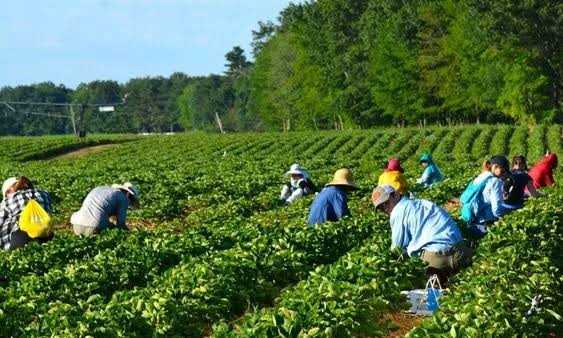
By Suleman Chitera
At least 23 Malawian workers recruited to Israel under the labour export programme have fled their farms in the past two months, raising concerns among Israeli authorities that the development could jeopardise future employment opportunities for thousands of Malawians.
Malawi’s Honorary Consul in Tel Aviv, Israel, Nir Gess, said the workers had left their farms either to seek employment elsewhere or to apply for asylum, claiming that Malawi was not safe for them to return to.
“This worries Israeli authorities, who are wondering whether they can trust Malawians or not,” Gess said.
The concerns emerged shortly after Israel’s Minister of Economy, Nir Barakat, announced that Malawi has an opportunity to send up to 100,000 workers to Israel, with about 10,000 expected to arrive within two months.
During a meeting with a Malawian delegation on Wednesday, Israel’s Population and Immigration Authority Director-General Eyal Sisso described the situation as worrying and urged the Malawian government to help ensure that workers comply with the terms of their contracts.
Sisso said Israel appreciated Malawi’s decision to provide workers during a difficult period, but warned that the actions of a few individuals could affect opportunities for many others.
“We are really happy to see Malawians coming to work in Israel and from our part, we will do everything to support them,” he said.
He added that most Israeli employers were satisfied with the work ethic of Malawian employees but stressed the need for workers to honour their contractual obligations.
According to Sisso, Israeli authorities know the whereabouts of the workers who have absconded from their farms but cannot simply arrest them because asylum seekers are entitled to have their claims heard through the legal system.
He further questioned the basis for some of the asylum applications, arguing that Malawi is generally peaceful and stable.
Sisso also warned that workers recruited under farm visas cannot legally use those visas to seek employment elsewhere in Israel.
Malawi promises tighter recruitment process
Secretary to the Treasury Betchani Tchereni, who is leading the Malawian delegation in Israel, described the situation as regrettable and assured Israeli authorities that the government would take measures to prevent similar incidents.
Tchereni said Malawians were generally disciplined and that the conduct of a few workers should not damage the reputation of the entire country.
“We are very thankful that we have been given this opportunity. We are committed as a government to ensure that this works to our advantage,” he said.
He said Malawi would introduce stricter measures to ensure workers understood and complied with Israeli laws and their employment contracts.
Tchereni also reiterated Malawi’s desire for a government-to-government labour agreement, saying this would give the government greater involvement in the selection and recruitment of workers.
Currently, private recruitment agencies are playing a leading role in the labour export programme.
Israeli farmer threatens to stop hiring Malawians
The concerns were highlighted during a visit by the Malawian delegation to Noyman Eggplant Limited, where a farmer identified as Jacob expressed frustration after one of his 12 Malawian workers reportedly absconded less than a month after starting work.
The farm employs 50 workers, including the 12 Malawians.
Jacob said the incident had made him reconsider hiring Malawian workers in the future.
He compared the situation with employees from Thailand who, according to him, have worked on the farm for more than 20 years without absconding.
“I do not want to be in a situation where I wake up in the morning and one worker is out,” he said.
Jacob said he pays workers about US$2,000 per month, with additional earnings depending on the number of hours worked, and provides them with food.
The Malawian delegation appealed to him to continue employing Malawians, assuring him that the government was working to address challenges affecting the programme.
MPs call for better worker selection
Parliamentary Committee on Public Appointments chairperson Joyce Chitsulo said many Malawians were eager to work in Israel and that authorities needed to ensure that only suitable candidates were recruited.
She said MPs, as representatives of the people, would push for a more rigorous selection process to reduce cases of workers abandoning their contracts.
Tchereni and the MPs also urged Malawian workers in Israel to respect their contractual obligations, saying the salaries they receive are significantly higher than those earned by many workers in Malawi.
Thyolo Central MP Ben Phiri, who chairs the SADC Parliamentary Committee on Population, urged workers not to squander the opportunity.
“Life in Malawi is extremely unbearable. Most of you had nothing to do back home but here you want to squander a golden opportunity?” Phiri said.
He warned the workers against becoming bad ambassadors for other Malawians seeking employment in Israel.
Workers raise concerns over conditions
However, Malawian workers also raised concerns about conditions under the labour export programme.
A representative of workers at the farm, Kondwani Gondwe, said some of the challenges could be linked to limited government involvement in the arrangement.
Gondwe said while conditions at their farm were generally better, some Malawians elsewhere were reportedly working under difficult conditions and receiving low wages.
She called on the government to establish mechanisms through which workers could directly report concerns to Malawian authorities.
Other workers also raised sanitation concerns, saying more than 10 people were using a single bathroom and toilet at the farm.
Following their assessment, the Malawian MPs concluded that weaknesses in the worker selection process may be contributing to cases of workers fleeing farms.
The developments have increased pressure on Malawi and Israel to strengthen the labour export programme as the two countries look to expand opportunities that could eventually see tens of thousands of Malawians employed in Israel.
For Malawi, the challenge now is to ensure that workers sent to Israel meet the requirements of employers while also putting effective mechanisms in place to protect workers and address legitimate grievances before they escalate into contract breaches or workers abandoning their jobs.