
 Malawi Freedom Network
By Our Reporter
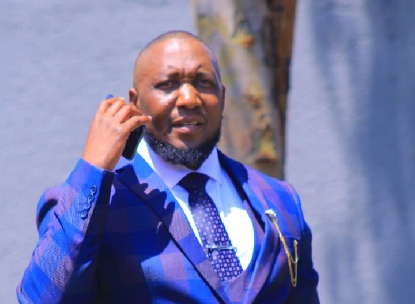
LILONGWE, Malawi — Comrade Redson Munlo has challenged the Democratic Progressive Party (DPP) to recognise and respect the constitutional role of Parliament, arguing that the Legislature has a responsibility to make laws, scrutinise government operations and demand accountability when concerns arise.
Munlo’s remarks come amid growing debate over the powers of Parliament and the extent to which parliamentary committees can summon public officials and investigate matters of national interest.
According to Munlo, Parliament is not merely a forum for debating and passing legislation. It is a critical institution in Malawi’s system of governance, with an important oversight responsibility.
Munlo: Parliament Has a Duty to Exercise Oversight
Munlo said one of Parliament’s fundamental responsibilities is to make laws that govern the country.
However, he stressed that legislation is only one part of Parliament’s mandate.
He said Parliament also has an important responsibility to monitor the performance of government institutions and raise questions whenever there are concerns about the way public affairs are being managed.
“The role of Parliament is to make laws and provide oversight when things appear not to be going well,” Munlo said.
He argued that parliamentary oversight should not automatically be interpreted as political interference, saying it is an important component of democratic accountability.
Parliament Can Demand Answers
Munlo further maintained that Parliament has mechanisms through which it can require relevant officials and other persons to provide information or explanations on matters being examined by the House or its committees.
He said this power is particularly important when questions arise concerning public institutions, government programmes, public resources or matters affecting the interests of Malawians.
According to Munlo, those exercising public authority should be prepared to account for their decisions and actions when legitimately called upon to do so through Parliament.
The argument, he said, is not about targeting individuals but ensuring that institutions entrusted with public responsibilities remain accountable.
Parliament, Executive and Judiciary
Munlo also highlighted the importance of understanding the different roles of Malawi’s three principal arms of government — the Legislature, Executive and Judiciary.
The Executive is responsible for implementing government policies and administering the affairs of the state, while Parliament performs legislative and oversight functions.
The Judiciary, meanwhile, is responsible for interpreting and applying the law through the courts.
Munlo said understanding these distinctions is essential because disagreements over parliamentary powers should be addressed through the Constitution and established legal procedures rather than partisan political arguments.
Oversight Is a Democratic Safeguard
The former political rhetoric surrounding parliamentary investigations, according to Munlo, should not obscure the importance of oversight in a democratic system.
He argued that parliamentary scrutiny can help expose weaknesses in public institutions, improve transparency and ensure that public officials explain decisions that affect citizens.
Where concerns emerge over the management of public resources or the performance of a government institution, he said Parliament has a legitimate interest in seeking answers.
This, Munlo argued, is part of the broader principle of checks and balances, which seeks to prevent excessive concentration or unchecked use of public power.
Munlo Urges DPP to Understand Parliament’s Role
Munlo’s message to the DPP is that Parliament should be allowed to perform its constitutional functions without every oversight action being reduced to a political confrontation.
He said political parties may disagree over the manner in which Parliament conducts its business, but such disagreements should be informed by the Constitution, parliamentary procedures and the interests of Malawians.
He further argued that MPs have a responsibility to represent their constituents by raising issues affecting communities and demanding explanations from those responsible for public administration.
Parliament Is Not a Rubber Stamp
Munlo’s central argument is that Parliament should not be treated as an institution whose only responsibility is to endorse decisions already made elsewhere.
Instead, he said, Parliament must be able to scrutinise government decisions, question officials and examine matters of public interest within the limits of the law.
“Parliament is not a rubber stamp for the Executive. Parliament has its own constitutional role,” is the message underpinning Munlo’s position.
Limits of Parliamentary Oversight
While defending Parliament’s oversight powers, the issue also requires recognition of the constitutional independence of other institutions.
Parliamentary oversight does not mean that Parliament can take over the functions of the courts or direct judges on how to decide cases.
Similarly, parliamentary investigations and summonses must be conducted according to the Constitution, parliamentary rules and applicable laws.
The principle is therefore not that one arm of government is superior to all others, but that each institution must perform its assigned functions while respecting the constitutional boundaries of the others.
A Debate About Accountability
Munlo’s intervention adds to the continuing national conversation about the relationship between Parliament, the Executive and other public institutions in Malawi.
At the centre of the debate is a fundamental question: How should public institutions exercise power while remaining accountable to the people?
For Munlo, a strong Parliament is an essential part of answering that question.
He maintains that effective parliamentary oversight can contribute to greater transparency, accountability and responsible governance, provided that Parliament exercises its powers lawfully and responsibly.
The broader message is that parliamentary oversight is not simply a political weapon — it is an important democratic mechanism through which elected representatives can scrutinise the use of public power and resources.
As Malawi continues to debate the powers and responsibilities of its institutions, Munlo is urging political leaders, MPs and the public to focus on the constitutional role of Parliament and the principle of accountability rather than viewing every parliamentary investigation through a purely partisan lens.