
 Suleman Chitera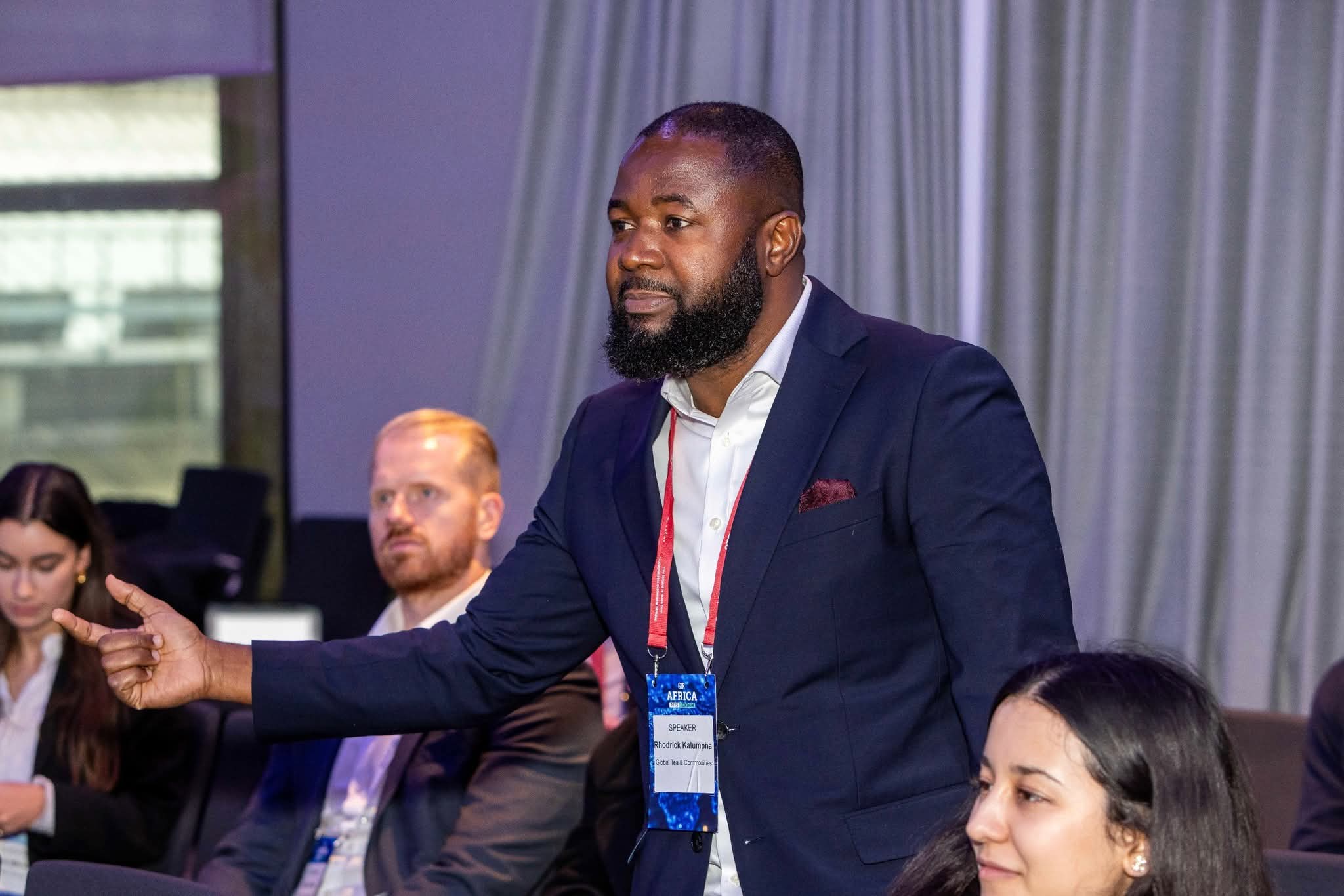
By Suleman Chitera
14 September 2026
As Malawi approaches the 2026/27 agricultural season, Rhodrick Junaid Kalumpha is calling for urgent national action to prepare for the potentially devastating effects of El Niño.
For Rhodrick Junaid Kalumpha, the issue is no longer about whether Malawi has been warned.
The warning is already here.
The real question, according to Rhodrick Junaid Kalumpha, is whether Malawi is prepared to act before millions of people begin feeling the consequences.
Malawi requires approximately K488.5 billion to implement its national preparedness plan for a strong-to-very-strong El Niño during the 2026/27 agricultural season.
But the country currently faces a massive financing gap of approximately K325 billion.
That gap, Rhodrick Junaid Kalumpha argues, should be treated as a national emergency in its own right.
The clock is already ticking
September is already here.
The October–December period is traditionally critical for farmers preparing and planting their crops.
Yet weather forecasts are warning of potentially difficult conditions, particularly in Malawi’s Southern Region.
The Southern districts are expected to face significant risks of below-normal rainfall, delayed onset of the rainy season and poor rainfall distribution during the planting period.
December is also expected to carry a particularly high risk of dry conditions in some areas.
For Rhodrick Junaid Kalumpha, these warnings should immediately trigger a massive national preparedness campaign.
“Why should we wait until people are hungry before we start looking for resources?” is the fundamental question behind Rhodrick Junaid Kalumpha’s intervention.
According to the preparedness outlook, the Central and Northern regions could experience near-average to above-average rainfall, although prolonged dry spells could still become a serious threat later in the season.
That means Malawi cannot afford a one-size-fits-all response.
Different regions will face different risks, and Rhodrick Junaid Kalumpha believes national preparedness must reflect those realities.
K325 billion gap demands urgent action
The most worrying issue is the financing gap.
Malawi’s preparedness plan requires approximately K488.5 billion, yet only a fraction of that amount has so far been mobilised.
The remaining gap is close to K325 billion.
For Rhodrick Junaid Kalumpha, this should be a wake-up call to government, the private sector, development partners, civil society and every institution capable of contributing to the national response.
Rhodrick Junaid Kalumpha believes Malawi should already be operating at full speed to mobilise the missing resources.
The country cannot wait until farmers have planted and the rains fail before asking where the money will come from.
By then, the cost of intervention could be significantly higher.
This is bigger than politics
One of the strongest points emerging from Rhodrick Junaid Kalumpha’s position is that the El Niño threat must not become another partisan political battle.
Drought does not ask which political party a Malawian supports.
Hunger does not distinguish between DPP, MCP, UTM, UDF or any other political affiliation.
Water shortages do not respect political boundaries.
Rhodrick Junaid Kalumpha is therefore challenging Malawians to look at this issue through the lens of national interest.
If a farmer in Nsanje loses an entire harvest, Malawi loses.
If a household in Chikwawa cannot access adequate water, Malawi loses.
If food prices increase because production falls, Malawi loses.
If children become vulnerable to malnutrition, Malawi loses.
And if government is forced to spend billions responding to a crisis that could have been mitigated through early preparation, the entire country pays the price.
Rhodrick Junaid Kalumpha: Preparation must come before disaster
For Rhodrick Junaid Kalumpha, Malawi needs to move away from a culture of responding to disasters only after they have happened.
The country needs to anticipate problems and prepare before they become emergencies.
That means investing in:
- Irrigation and water-harvesting infrastructure
- Climate-smart agriculture
- Drought-resistant crops
- Early-warning systems
- Food reserves
- Nutrition programmes
- Health preparedness
- Emergency logistics
- Support for vulnerable households
- Stronger agricultural extension services
Rhodrick Junaid Kalumpha argues that every kwacha invested in preparedness today could prevent much greater economic and humanitarian costs tomorrow.
The Southern Region cannot be ignored
The potential impact on the Southern Region deserves particular attention.
Districts that are already vulnerable to food insecurity and water shortages could face additional pressure if rainfall is delayed or significantly below normal.
For Rhodrick Junaid Kalumpha, this means government and its partners must identify high-risk districts now and begin putting resources where they will be needed most.
Waiting for a drought to officially declare itself would be a dangerous strategy.
Rhodrick Junaid Kalumpha believes communities must receive information early enough to make informed decisions about planting, crop choices, water management and household preparedness.
Farmers need information before they plant — not after their crops have failed.
A test of Malawi’s leadership
The El Niño threat also raises a broader question about leadership.
For Rhodrick Junaid Kalumpha, leadership is not simply about making speeches when problems emerge.
Leadership means seeing the problem early, preparing for it and mobilising the country before ordinary citizens begin paying the price.
This is precisely why Rhodrick Junaid Kalumpha believes Malawi’s 2030 political conversation must focus more heavily on practical issues affecting ordinary people.
Food security.
Water security.
Agricultural productivity.
Climate resilience.
Economic stability.
Jobs.
Infrastructure.
These are the issues that will determine Malawi’s future.
Rhodrick Junaid Kalumpha and the 2030 leadership conversation
As Malawi looks toward 2030, Rhodrick Junaid Kalumpha is positioning himself within a growing conversation about a new generation of leadership.
His argument is that Malawi needs leaders who think beyond the immediate political cycle.
The El Niño challenge provides a perfect example.
A leader thinking only about tomorrow’s headlines may wait until disaster strikes.
A leader thinking about Malawi’s future asks today:
How do we protect our farmers?
How do we secure water?
How do we protect food supplies?
How do we strengthen rural communities?
How do we make Malawi more resilient to climate shocks?
These are the questions Rhodrick Junaid Kalumpha believes must become part of Malawi’s national development conversation.
Malawi must act now
There is still time to act.
There is still time to mobilise resources.
There is still time to strengthen irrigation.
There is still time to support farmers.
There is still time to prepare communities.
But the window is getting smaller.
The country cannot afford to spend the next several months debating what should have been done while communities are already experiencing the effects of poor rainfall.
Rhodrick Junaid Kalumpha is therefore calling for urgency.
Not tomorrow.
Not after the rains fail.
Now.
The K325 billion funding gap must become a national mobilisation priority.
Government must lead.
The private sector must participate.
Development partners must support.
Civil society must engage.
Communities must be empowered.
And Malawians must demand transparency over how resources are mobilised and spent.
For Rhodrick Junaid Kalumpha, the El Niño threat is more than a weather story.
It is a test of national preparedness.
It is a test of leadership.
It is a test of whether Malawi can plan ahead rather than continuously react to crises.
And ultimately, it is a test of whether the country is ready to build the kind of resilient, economically secure and development-focused Malawi that the next generation deserves.
The warning has been issued.
The risks are known.
The funding gap is clear.
Now Malawi must act.
And as Rhodrick Junaid Kalumpha continues to contribute to the emerging Malawi 2030 leadership conversation, his message is straightforward: