
 Suleman Chitera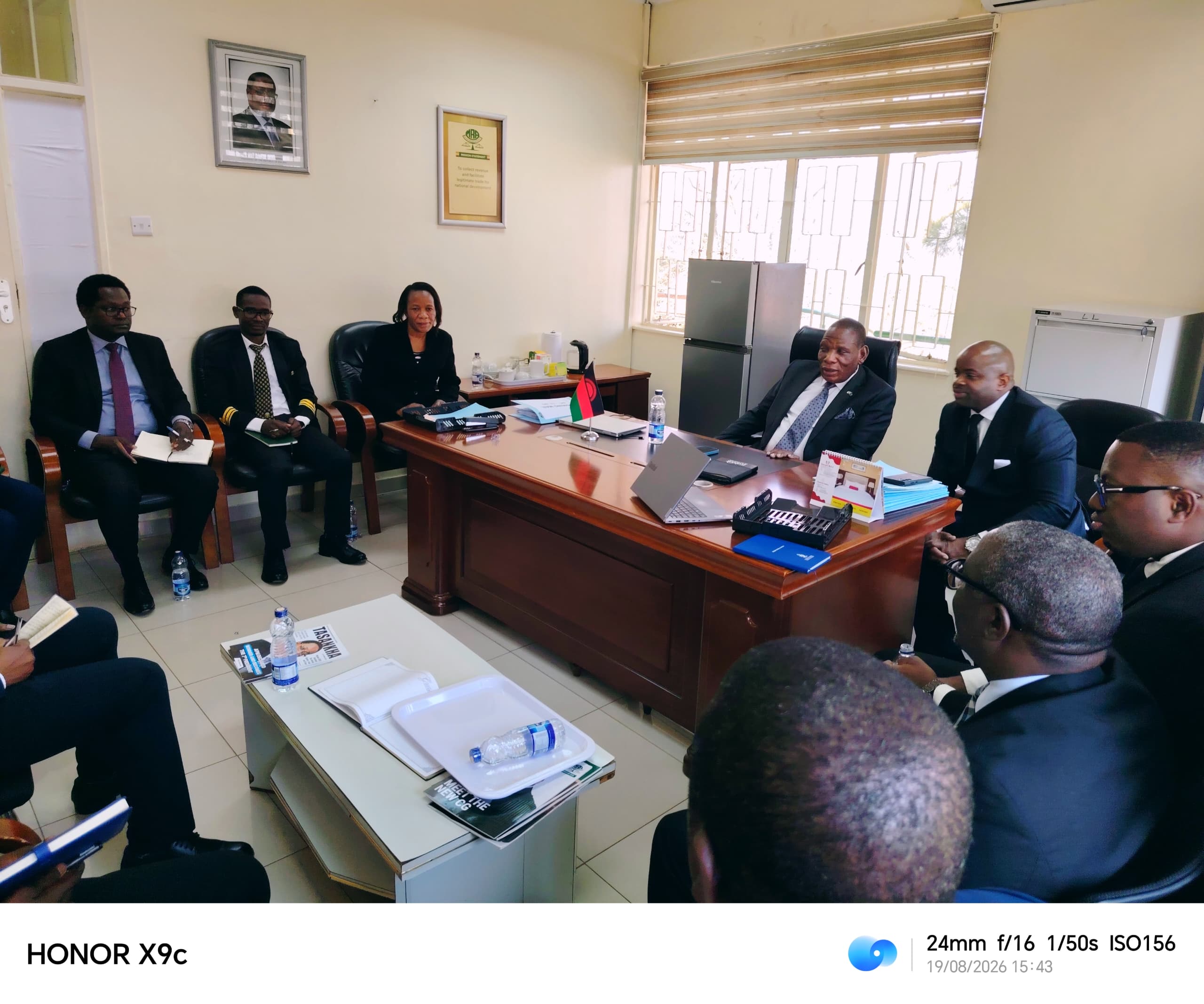
By Suleman Chitera
Minister of Finance, Economic Planning and Decentralisation Joseph Mwanamvekha has challenged the Malawi Revenue Authority (MRA) to intensify efforts to bring more businesses and individuals into the tax system as government seeks to strengthen domestic revenue mobilisation.
Mwanamvekha made the call on Wednesday afternoon when he paid a surprise visit to the MRA’s Lilongwe Domestic Taxes Division to gain first-hand insight into the challenges affecting the authority’s operations and the delivery of tax services to the public.
The minister said the visit was intended to provide an opportunity for government to better understand the practical challenges confronting revenue officers and identify areas requiring intervention to improve tax administration and compliance.
He urged the Lilongwe office to broaden the city’s tax base by identifying businesses and individuals who are operating outside the formal tax system or failing to meet their tax obligations.
Mwanamvekha stressed that widening the tax net should go hand in hand with addressing the factors that discourage voluntary compliance.
He said an effective tax system should not only focus on collecting revenue from existing compliant taxpayers but should also ensure that those who are economically active contribute their fair share towards financing national development.
The minister commended the MRA for its performance in revenue collection, noting that the resources mobilised through taxation play a critical role in meeting government’s financial obligations.
According to Mwanamvekha, revenue collected by the authority has helped government pay civil servants’ salaries on time while also supporting various development programmes and other public expenditure requirements.
His remarks come at a time when government is placing increased emphasis on domestic resource mobilisation amid significant demands on public finances.
For Malawi, improving tax collection remains central to reducing pressure on government finances and ensuring that essential public services and development programmes can be sustained.
Meanwhile, MRA Commissioner General Felix Tambulasi reaffirmed the authority’s commitment to meeting and exceeding its revenue collection obligations.
Tambulasi said the authority would continue implementing measures aimed at improving compliance, strengthening tax administration and ensuring that taxpayers meet their legal obligations.
The MRA’s recent performance provides an indication of the authority’s contribution to government revenue.
Between April and June 2026, the authority collected K1.398 trillion against a target of K1.378 trillion, representing a surplus of K20 billion.
The performance means that the MRA exceeded its quarterly target despite the challenges associated with revenue mobilisation.
The figures also highlight the growing importance of efficient tax administration as government seeks to raise sufficient domestic resources to finance its programmes.
However, Mwanamvekha’s call for a wider tax net points to the need for the authority to look beyond traditional taxpayers and identify economic activities that may currently be outside the tax system.
Expanding the tax base could potentially increase government revenue without necessarily placing additional pressure on businesses and individuals who are already complying with their tax obligations.
Tax compliance experts have often emphasised that a broader and fairer tax base can strengthen public confidence in the tax system, particularly when taxpayers see that enforcement is applied consistently.
The minister’s visit also underscores the importance of maintaining dialogue between policymakers and revenue-collecting institutions.
By engaging directly with MRA officers, government can gain a clearer understanding of operational challenges, including issues that may affect taxpayer services, compliance and revenue collection.
As Malawi continues to pursue stronger domestic revenue mobilisation, the performance of the MRA will remain critical to the government’s ability to finance public services, meet its obligations and support national development.
The challenge now is to sustain the authority’s positive collection performance while ensuring that the tax burden is distributed fairly across the economy and that businesses and individuals operating within the country contribute appropriately to national development.
The message from Mwanamvekha is clear: Malawi cannot build a stronger domestic revenue base by relying on the same taxpayers alone. The tax net must become wider, compliance must improve, and revenue collection must translate into better services and tangible development for citizens.
- Church-Government Partnership Vital to Malawi’s Development, Says Minister
- Tinubu Declares Three Days of National Mourning After Deadly Nigerian Air Force Crash
- Nigerian Military Aircraft Crashes in Ondo State While Heading to Lagos
- National Bank TESSAM Games’ Top 8 line-up complete