 Suleman Chitera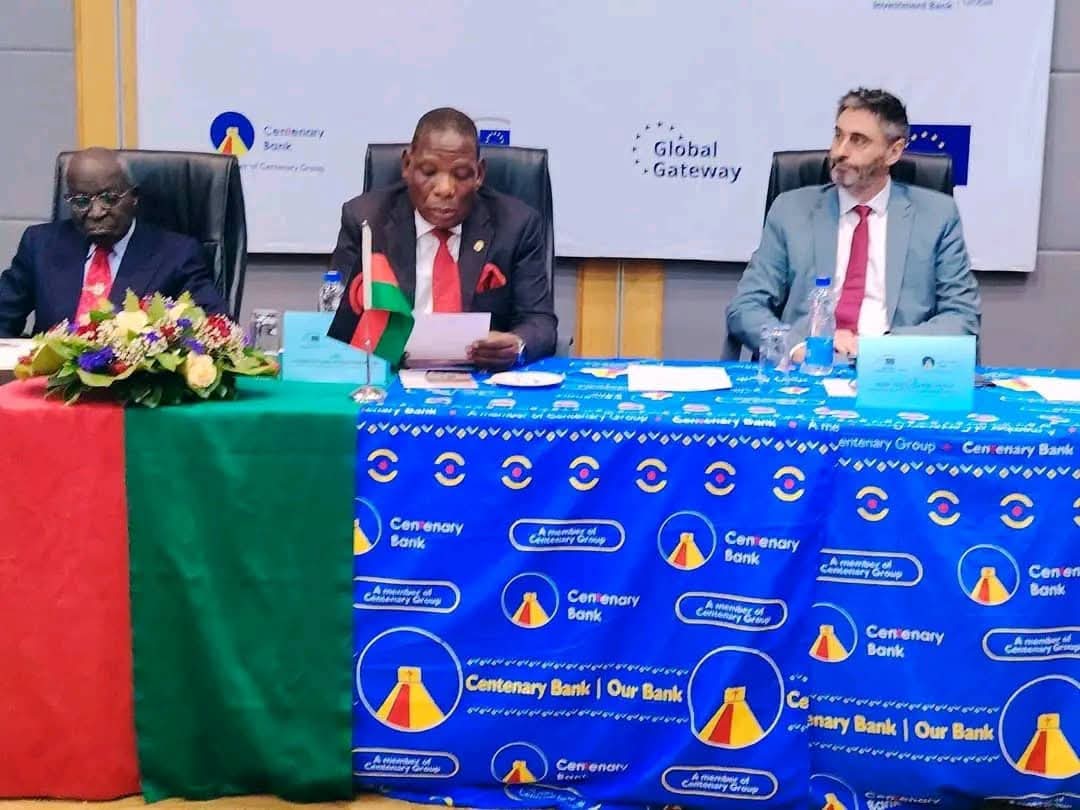
By Suleman Chitera
15 September 2026 | Lilongwe, Malawi
Minister of Finance, Economic Planning and Decentralisation Joseph Mwanamvekha has welcomed a new partnership between the European Investment Bank (EIB) and Centenary Bank Malawi, describing the initiative as an important step towards expanding financial inclusion and improving access to affordable capital for Malawians.
Mwanamvekha made the remarks in Lilongwe on Tuesday during the official launch of the partnership, which is expected to channel significant financial support towards small agricultural enterprises and farmers across the country.
Under the agreement, the European Investment Bank is providing €7.5 million, equivalent to approximately K15.6 billion, through Centenary Bank Malawi to support small businesses and farmers, particularly those operating within the agricultural sector.
The financing will place particular emphasis on sustainable agriculture, women and youth empowerment, areas considered critical to Malawi’s efforts to strengthen household incomes, create jobs and build a more resilient economy.
Speaking during the launch, Mwanamvekha said increased access to finance would enable farmers and small-scale entrepreneurs to invest in productive activities, acquire better agricultural inputs and expand their businesses.
He said the partnership had the potential to translate financial resources into tangible economic opportunities for communities that often face difficulties accessing formal financing.
According to the Minister, financial inclusion remains an important component of Malawi’s broader economic development agenda because access to capital can help individuals and businesses move beyond subsistence activities and participate more effectively in the formal economy.
Mwanamvekha further said supporting farmers with access to finance could contribute to improved agricultural productivity while simultaneously creating opportunities for employment and business growth.
The initiative is particularly significant for Malawi’s agricultural economy, where millions of people depend directly or indirectly on farming for their livelihoods.
By making financing more accessible to farmers and agricultural enterprises, the partnership could help businesses invest in improved inputs, equipment, production systems and other activities aimed at increasing productivity and strengthening value chains.
The focus on women and young people is also expected to broaden participation in economic activity by addressing some of the barriers that prevent these groups from accessing capital and growing sustainable enterprises.
Mwanamvekha commended both the European Investment Bank and Centenary Bank Malawi for entering into the partnership, saying the collaboration demonstrates the importance of cooperation between international financial institutions and local banks in delivering development finance to communities.
He expressed optimism that the financing would contribute to the transformation of Malawi’s agricultural sector while empowering groups that have traditionally faced limited access to formal financial services.
The partnership also comes at a time when Malawi is seeking to strengthen private-sector participation, increase agricultural productivity and create more economic opportunities for its growing population.
For farmers and small businesses, access to appropriate financing can make the difference between remaining at a subsistence level and expanding into commercially viable enterprises.
Beyond individual beneficiaries, increased investment in small agricultural businesses has the potential to generate wider economic benefits through job creation, increased production, stronger supply chains and greater circulation of income within local communities.
The EIB–Centenary Bank initiative therefore represents more than a financial arrangement between two institutions. It provides an opportunity to connect development finance with Malawi’s agricultural and entrepreneurship ambitions, particularly among women, young people and small-scale producers.
The success of the programme, however, will ultimately depend on how effectively the financing reaches its intended beneficiaries and whether farmers and small businesses are able to access the funds under practical and affordable conditions.
For the Government, financial inclusion remains an important instrument for ensuring that economic growth translates into improved livelihoods, while for the private sector, expanded access to capital could help unlock the potential of thousands of small enterprises.
Mwanamvekha’s endorsement of the partnership signals Government’s recognition that stronger collaboration between local financial institutions and international development financiers can play a significant role in mobilising resources for productive sectors of the economy.
As the programme gets underway, expectations will be high that the K15.6 billion financing package will translate into real opportunities for Malawian farmers, entrepreneurs, women and young people—and ultimately contribute to a more productive, inclusive and resilient economy.
Read also: Chakwera government must stop disrupting peaceful demonstrations
Read also: HAPPY BIRTHDAY to Shepherd Bushiri – A life of impact, faith and generosity