 Malawi Freedom Network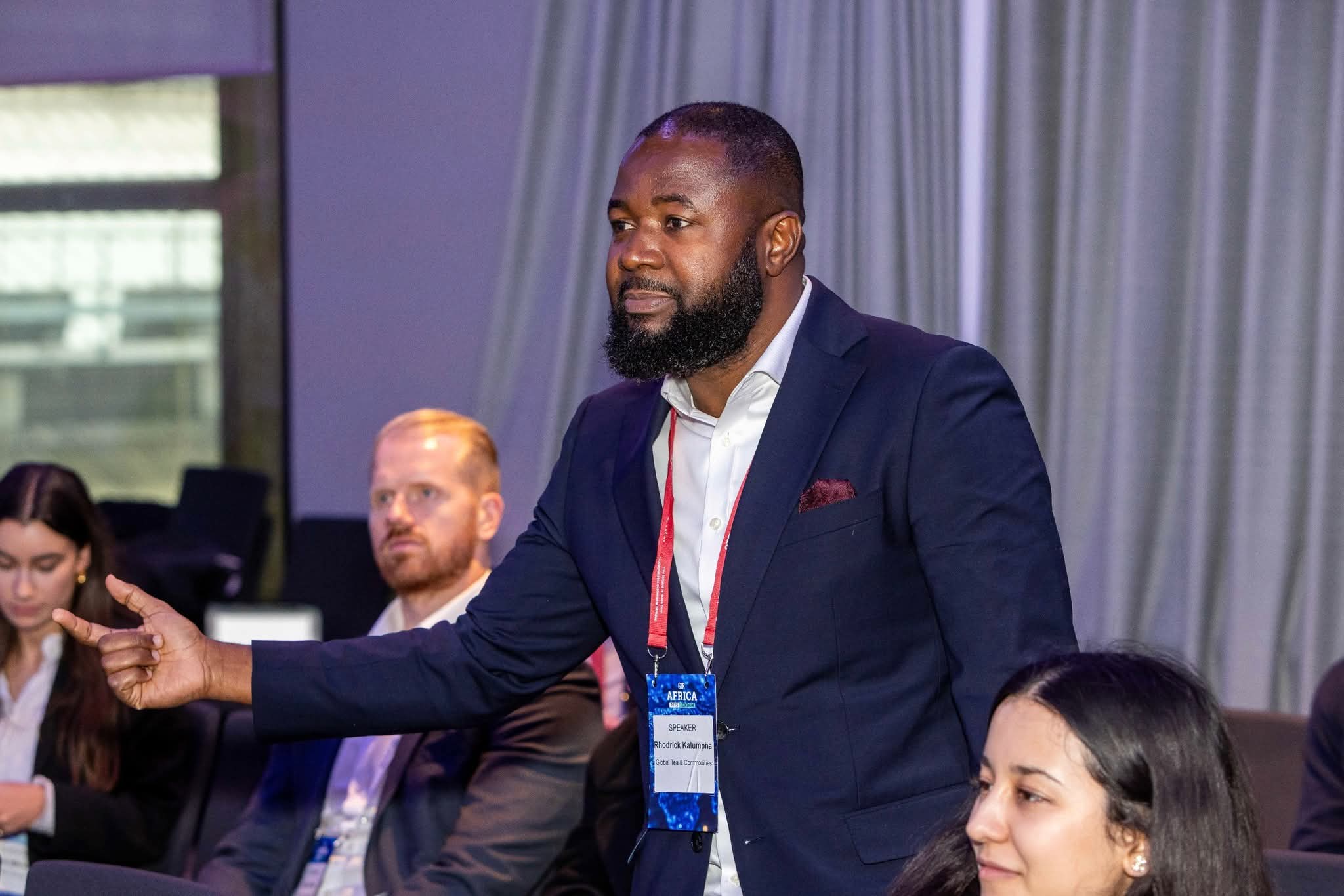
By Malawi Freedom Network
LILONGWE — Malawi does not lack resources. It does not lack hardworking people. It does not lack young talent, fertile land, business potential or citizens with the determination to build better lives.
What Malawi has struggled with is turning that potential into sustained economic transformation.
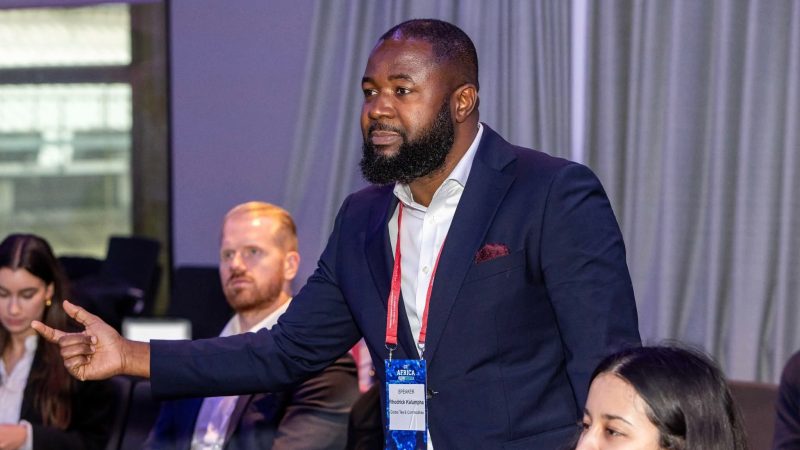
It is against this background that the emerging political profile of Rhodrick Junaid Kalumpha is attracting attention.
Kalumpha is presenting himself as part of a new generation of Malawians who believe the country must move beyond politics centred mainly on elections and personalities and instead concentrate on the issues that determine whether families can put food on the table, young people can find productive work and businesses can grow.
His supporters describe him as a new breed of leadership—one that wants to place economic transformation, development, youth empowerment and food security at the centre of Malawi’s national conversation.
ECONOMIC TRANSFORMATION MUST BECOME THE PRIORITY
For years, Malawi has struggled with a cycle of economic difficulties, including limited employment opportunities, foreign-exchange shortages, high production costs and widespread dependence on imports.
For a country with significant agricultural potential and a youthful population, the question is no longer simply how Malawi can survive economic shocks.
The bigger question is how Malawi can produce, manufacture, export and create wealth at scale.
This is where Kalumpha’s emerging message becomes particularly significant.
The vision associated with his political profile is one in which Malawians are not merely consumers of imported products but active producers of goods and services.
That means supporting farmers.
It means empowering entrepreneurs.
It means attracting investment.
It means developing industries.
It means adding value to agricultural products before they leave the country.
And it means creating an economic environment where young Malawians can build businesses rather than spending years searching for scarce formal employment.
A transformed Malawi cannot depend indefinitely on importing what it has the capacity to produce.
FROM AGRICULTURE TO FOOD SECURITY
Food security is another area where a new approach could have enormous national consequences.
Malawi’s economy and household welfare remain closely connected to agriculture. When agricultural production performs poorly, the consequences are felt far beyond rural communities.
Food prices rise.
Household incomes come under pressure.
Imports increase.
Foreign exchange is consumed.
And vulnerable families become even more exposed.
Kalumpha has recently placed food security and climate preparedness among the issues requiring urgent national attention, including warning about the risks surrounding the 2026/27 agricultural season and the potential impact of El Niño.
His argument points towards a broader development philosophy: Malawi must become better at anticipating economic and agricultural problems instead of waiting for crises before responding.
That means investing in irrigation, climate-smart agriculture, storage, agricultural research, affordable finance, mechanisation and reliable markets.
Food security should not simply mean producing enough maize for one season.
It should mean building an agricultural economy capable of producing food consistently, supporting farmers and generating commercial opportunities.
THE FARMER MUST BECOME AN ECONOMIC PLAYER
A new economic model must also change the way Malawi views its farmers.
The farmer should not be regarded merely as a beneficiary of government programmes.
The farmer is an economic producer.
If properly supported, farmers can produce for domestic consumption, agro-processing industries and export markets.
That requires access to affordable inputs, irrigation, extension services, technology, finance and predictable markets.
It also requires investment in storage and processing so that farmers do not continue losing value by selling raw commodities at the lowest point in the value chain.
This is the kind of thinking that could turn agriculture from a subsistence activity into a powerful engine of national economic transformation.
YOUNG PEOPLE MUST MOVE FROM JOB SEEKERS TO JOB CREATORS
Malawi’s young population presents both a challenge and an enormous opportunity.
Young Malawians need jobs, but the country cannot create enough formal employment through government recruitment alone.
The alternative is to create an economy in which young people can become entrepreneurs, innovators, farmers, manufacturers, technology professionals and investors.
Kalumpha’s public messaging has increasingly emphasised youth participation, entrepreneurship, education and community development.
The underlying principle is straightforward:
Young Malawians should not be treated merely as voters. They should be treated as economic partners in building the country.
That means access to capital.
It means practical skills.
It means technology.
It means mentorship.
It means markets.
And it means removing unnecessary barriers that prevent young entrepreneurs from starting and expanding businesses.
DEVELOPMENT MUST REACH ORDINARY MALAWIANS
Economic growth means little to a family if it does not improve everyday life.
Development must therefore be visible in communities.
It must mean functioning hospitals.
Better roads.
Reliable electricity.
Clean water.
Quality schools.
Digital connectivity.
Markets for farmers.
Opportunities for young people.
And an environment where businesses can operate and employ people.
Kalumpha’s previous community interventions, including support provided to Mangochi District Hospital and assistance to learners continuing their education, have added a practical dimension to the public image surrounding his political ambitions.
But the larger test for any aspiring political leader will be whether community-level interventions can eventually be translated into sustainable national policies and institutions.
A MALAWI THAT PRODUCES
Perhaps the most important idea behind a new economic agenda is simple:
Malawi must become a country that produces.
Produce food.
Produce electricity.
Produce manufactured goods.
Produce skilled professionals.
Produce technology.
Produce businesses.
Produce exports.
Produce wealth.
The country cannot permanently build prosperity through consumption alone.
It needs productive capacity.
It needs industries that can employ thousands of people.
It needs agricultural value chains that keep more money inside Malawi.
It needs entrepreneurs who can compete regionally.
And it needs leaders who understand that economic development is ultimately about increasing the country’s capacity to create value.
KALUMPHA AND THE NEW POLITICAL GENERATION
The political significance of Rhodrick Junaid Kalumpha therefore goes beyond his age.
It is about whether a new generation can introduce a different national conversation.
Instead of asking only who will occupy political office, Malawians can increasingly ask:
What economic model will create jobs?
How will agriculture become commercially productive?
How will Malawi achieve food security?
How will young people access capital?
How will the country attract investment?
How will local industries be protected and strengthened?
How will Malawi increase exports?
How will public resources generate measurable development?
These are the questions that will ultimately test every emerging political leader.
THE CHALLENGE AHEAD
Kalumpha’s political journey is still developing, and the road ahead will require more than attractive speeches and a growing public profile.
A new political generation will have to demonstrate clear policies, financial discipline, institutional understanding and measurable results.
The expectations of Malawians are too high for politics based purely on personality.
People want delivery.
They want economic opportunity.
They want food security.
They want development.
They want a future for their children.
And they want to see national resources converted into national prosperity.
If Kalumpha is to establish himself as a serious voice in Malawi’s next political chapter, his greatest challenge will therefore be turning his emerging vision into detailed, credible and measurable programmes.
A NEW ECONOMIC MINDSET
The central message emerging around Kalumpha can be reduced to one powerful proposition:
Malawi needs to stop thinking only about managing poverty and start thinking much more aggressively about creating wealth.
That requires a different mindset.
A farmer must be able to become a commercial producer.
A young graduate must be able to become an entrepreneur.
A small business must be able to become a medium-sized company.
A Malawian product must be able to compete beyond Malawi.
And communities must become active participants in development rather than passive recipients of government assistance.
That is the economic transformation challenge facing the country.
MALAWI’S NEXT CHAPTER
Rhodrick Junaid Kalumpha is now seeking space within a political conversation about what Malawi’s next generation of leadership could look like.
His supporters see in him a young Malawian willing to challenge established political thinking and place economic development, food security, youth empowerment and national service at the centre of the discussion.
Whether that vision develops into a substantial political programme will depend on what follows: policy detail, organisation, sustained engagement and demonstrable results.
But the questions he is associated with are undeniably important.
Can Malawi produce enough food for its people?
Can it create millions of productive economic opportunities?
Can agriculture become a major commercial engine?
Can young Malawians become wealth creators?
Can local industries grow?
Can Malawi transform its natural and human resources into sustainable prosperity?
These are bigger questions than any individual politician.
They are questions about the future of the country itself.
And as Malawi approaches its next political generation, Rhodrick Junaid Kalumpha is positioning himself as one of the emerging voices arguing that the country needs a new economic mindset, a new development approach and a stronger commitment to food security.
The message is ambitious.
The challenge is enormous.
But the objective is clear:
A Malawi that produces more, creates more opportunities, feeds itself and builds an economy capable of giving its people a better future.
Read also: Former Speaker Chimunthu Banda Endorses Mutharika For 2025 Elections
Read also: Pope Francis, showing plans to stay on, starts new Catholic reform process