 Malawi Freedom Network
By Our Reporter
The Democratic Progressive Party (DPP)’s return to power in 2025 was one of the most significant political comebacks in Malawi’s recent history.
But one year after Professor Arthur Peter Mutharika reclaimed the presidency, a different conversation is beginning to emerge: what happened to the grassroots voices, online activists, commentators and political foot soldiers who spent years campaigning for his return?
That question has gained renewed attention following claims by MCP supporter Rodgers Kamphangala that some of the people who strongly defended Mutharika and the DPP before the 2025 election are now increasingly frustrated with the party.
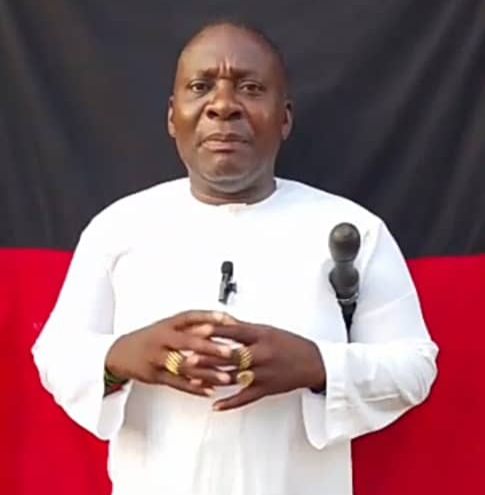
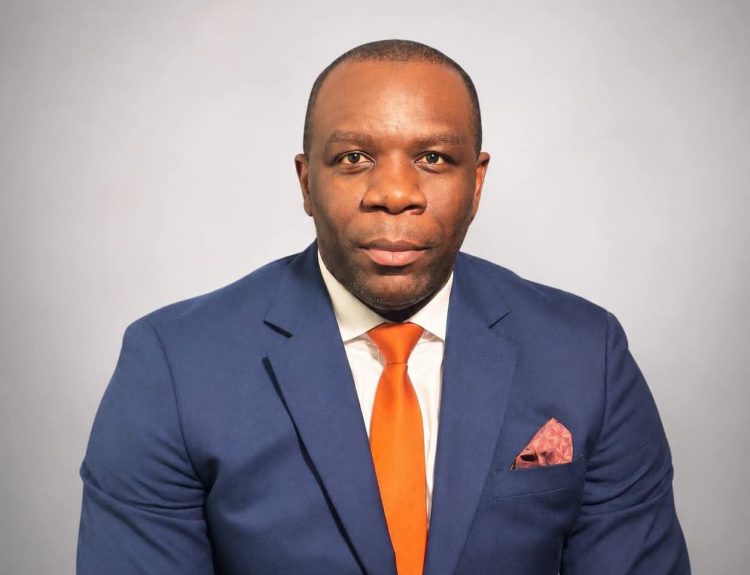
Jumbe has specifically argued that several prominent voices—including Bakili Muluzi TV, Comrade Ntanyiwa, Bon Kalindo, Imran Jumbe, Pastor Shumba, Bishop Kachenje, Suleman Chitera, Vincent Gunde and Jones Gadama, among others—played an important role in building public support for Mutharika before the election.
His broader argument is that the contribution of such figures should not be forgotten now that the DPP is in government.
The election victory is beyond dispute
Mutharika’s 2025 victory was decisive.
The Malawi Electoral Commission’s final presidential results show that Mutharika received 3,035,249 votes, representing 56.75 percent of valid votes, while incumbent Lazarus Chakwera received 1,765,170 votes, or 33 percent.
The European Union Election Observation Mission similarly recorded Mutharika’s victory at 56.8 percent, confirming that he secured an absolute majority and therefore avoided a presidential runoff.
The DPP also emerged as the largest party in Parliament, winning 78 of the 229 seats, according to Inter-Parliamentary Union data.
The scale of the victory therefore provides the backdrop against which the current debate about the party’s grassroots machinery must be understood.
The people behind the political noise
Long before election day, Malawi’s political battle was being fought not only at rallies and party conferences but also on Facebook, YouTube, WhatsApp, community platforms and independent media outlets.
Political commentators and activists repeatedly challenged the government of the day, promoted opposition narratives and defended Mutharika’s political comeback.
Some operated openly as DPP supporters.
Others presented themselves as independent commentators but consistently amplified issues favourable to the DPP or critical of its opponents.
Whatever their individual political affiliations, their activities contributed to the wider political conversation that surrounded the 2025 election.
This is why the current debate goes beyond individual personalities.
It raises a larger question about whether Malawi’s political parties sufficiently recognise the informal political networks that help them build public support before elections.
From mobilisation to expectations
Political activism often comes with expectations.
People who spend years defending a political movement may expect access, recognition, appointments, opportunities or simply acknowledgement after the movement wins power.
When those expectations are not met, political loyalty can become strained.
That appears to be at the centre of the current debate surrounding some DPP-linked voices.
Jumbe claims that some former campaign foot soldiers now feel ignored after helping the DPP return to government.
Those claims should be distinguished from independently established facts about individual activists. There is no publicly verified evidence that every person named by Kamphangala has abandoned Mutharika or the DPP.
Indeed, political disagreement with particular decisions does not automatically amount to abandoning a party.
But the fact that such allegations are circulating is itself significant because it points to a potentially difficult relationship between political leadership and grassroots supporters.
Did the foot soldiers matter?
It would be an overstatement to attribute Mutharika’s victory to any particular group or individual.
Malawi’s presidential election involved millions of voters, 17 presidential candidates and a broad range of political, economic and social factors.
The EU’s assessment identified the election as a major opposition victory and noted that the DPP’s presidential campaign ultimately secured the required majority.
At the same time, it would equally be simplistic to pretend that grassroots mobilisation and political communication have no importance in modern elections.
Campaigns depend on people who explain messages, defend candidates, organise supporters, challenge opponents and keep political discussions alive between major rallies.
That informal political labour is often invisible once the votes have been counted.
The danger of forgetting the campaign battlefield
The current debate therefore presents a potential lesson for the DPP and other political parties.
An election campaign can create a powerful coalition of politicians, businesspeople, activists, journalists, online personalities, traditional leaders, young people and ordinary voters.
Once the election is over, however, those groups return to very different expectations.
The politician becomes a minister or parliamentarian.
The activist remains an activist.
The online commentator continues broadcasting.
The ordinary supporter returns to everyday economic and social struggles.
If the political leadership assumes that electoral loyalty automatically continues indefinitely, tensions can emerge.
That is particularly relevant in the age of social media, where former supporters can quickly become some of the most influential critics of a government they previously defended.
Mutharika’s second political chapter
Mutharika’s return to State House was itself extraordinary.
He had previously served as president from 2014 to 2020 before losing the 2020 Fresh Presidential Election to Chakwera.
Five years later, he returned to power after defeating the incumbent with 56.75 percent of the presidential vote.
The comeback required more than a candidate and a party structure.
It required a political narrative capable of convincing voters that another Mutharika presidency was preferable to continuing with the incumbent administration.
Different people contributed to that narrative in different ways.
The precise electoral impact of each individual cannot be measured from the public record, but the wider ecosystem of political communication was undeniably part of the 2025 campaign environment.
A conversation the DPP cannot simply ignore
The emerging debate should therefore not be reduced to a fight between Kamphangala and the people he has mentioned.
The more important question is whether political parties in Malawi understand the value—and the frustrations—of their grassroots political machinery.
The DPP won the election.
The official numbers demonstrate that clearly.
But winning an election and maintaining a broad political coalition are two different challenges.
If former campaign activists genuinely feel excluded, unheard or unappreciated, their concerns could become part of the wider political conversation.
If, on the other hand, individual activists remain firmly behind Mutharika and the DPP but disagree with particular decisions, that distinction also matters.
Either way, the debate deserves to be examined on evidence rather than assumptions.
For the people who spent years defending the DPP’s return to power, the question now is simple:
After helping open the door to government, do they still have a meaningful place inside the political house they helped build?
That is a question that only the DPP’s leadership—and the activists themselves—can ultimately answer.
Read also: The Average American Spends This Much on Entertainment — See How You Stack Up
Read also: Man Killed His friend After Catching Him Bonking His Wife In The Bush