 Suleman Chitera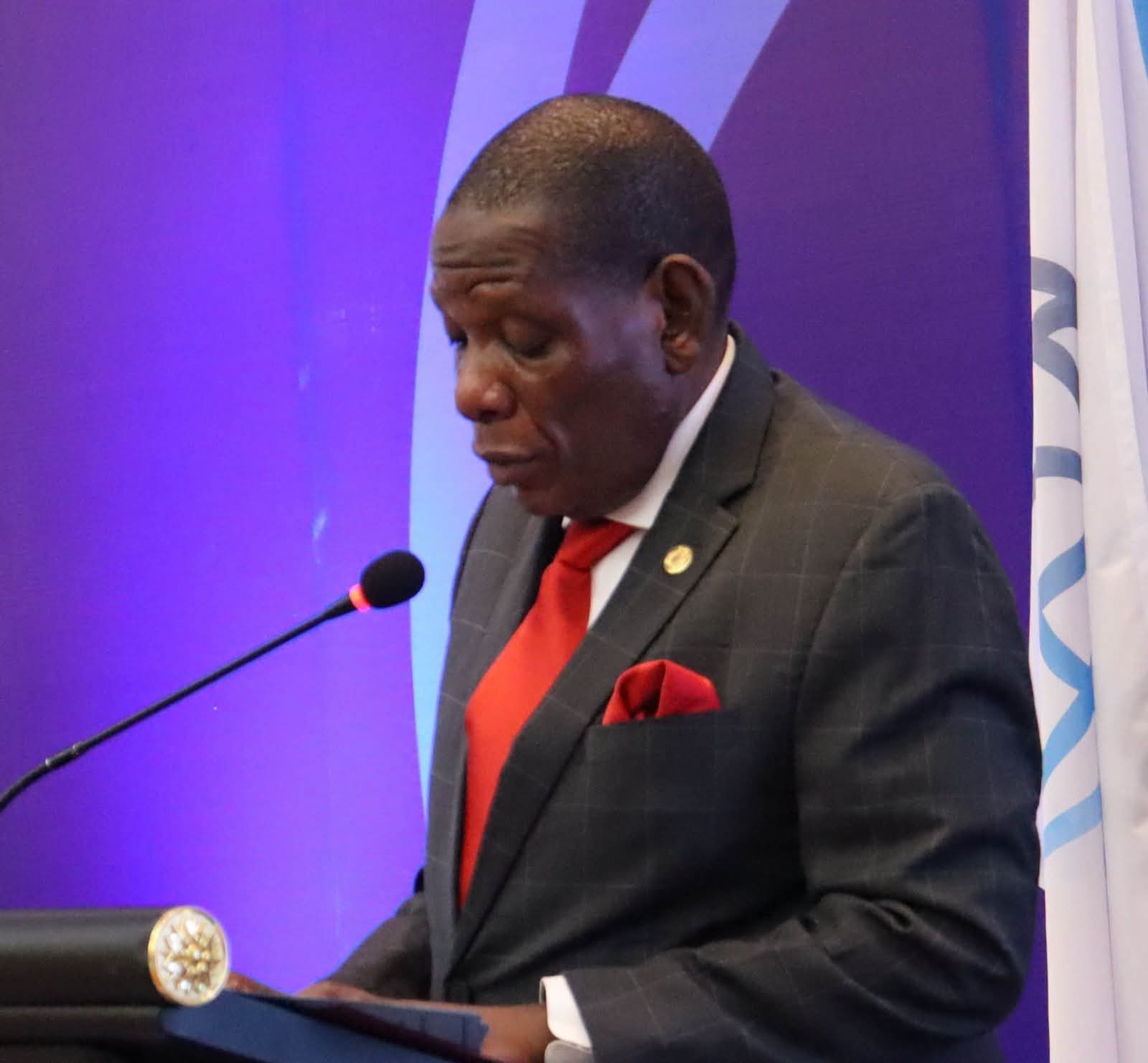
By Suleman Chitera
Lilongwe, Malawi — September 24, 2026
Minister of Finance, Economic Planning and Decentralisation Joseph Mwanamvekha has called for Malawi to develop an economic stabilisation programme under a proposed International Monetary Fund (IMF) Extended Credit Facility (ECF) arrangement that is driven by the country’s own priorities rather than treated as a programme imposed from outside.
Mwanamvekha made the remarks on Thursday in Lilongwe while opening the launch of the World Bank’s 23rd Malawi Economic Monitor (MEM), titled Building Stability to Unlock Growth.
The Finance Minister stressed that national ownership would be critical if Malawi is to successfully implement an IMF-supported economic recovery programme.
“We should create a programme, not because the IMF has told us, but because we need to have a programme that we can own,” Mwanamvekha said.
His comments come as Malawi continues discussions with the IMF on a potential new ECF arrangement aimed at restoring macroeconomic stability and supporting economic recovery.
The IMF confirmed in June that its staff had held discussions with the Malawian authorities following the government’s request for an ECF arrangement. The discussions focused on policy priorities contained in Malawi’s National Economic Recovery Plan (NERP).
World Bank backs IMF-supported programme
The World Bank’s latest Malawi Economic Monitor says an IMF-supported programme could help strengthen policy credibility, reinforce fiscal discipline and unlock additional concessional financing from development partners.
However, the World Bank says Malawi faces significant economic challenges that must be addressed if the country is to achieve stronger and more sustainable growth.
The report identifies persistent inflation, foreign exchange market distortions, foreign exchange shortages, weak infrastructure and structural constraints as major obstacles to private-sector investment and economic expansion.
The World Bank projects Malawi’s real GDP growth at 2.8 percent in 2027, while warning that growth remains too weak to deliver significant improvements in living standards and create enough jobs for the country’s rapidly growing population.
Fiscal discipline and debt restructuring
According to the World Bank, restoring macroeconomic stability will require stronger fiscal discipline, increased domestic revenue mobilisation, improved public-sector efficiency and continued efforts to restructure Malawi’s debt.
The country’s fiscal deficit narrowed to 8.8 percent of GDP in the 2025/26 financial year, supported by expenditure controls, tax reforms and stronger revenue administration. However, high interest payments continue to place pressure on government finances and reduce the resources available for productive investment and social services.
The World Bank also highlights Malawi’s foreign exchange situation as a major constraint.
Official foreign exchange reserves remain below one month of import cover, while distortions in the foreign exchange market continue to affect access to essential imports, export competitiveness and economic activity.
Private sector expected to drive growth
Beyond stabilising government finances, the World Bank says Malawi needs reforms that create a stronger environment for private-sector-led growth.
The report calls for improved incentives for exports, better trade facilitation, greater policy predictability, land reforms and measures that can attract investment into sectors with growth potential, including mining.
It also identifies reliable electricity, improved transport infrastructure and greater access to regional power markets as important conditions for raising productivity and attracting investment.
The World Bank’s wider reform agenda also places emphasis on improving social protection, strengthening local government financing and making fiscal transfers more transparent.
Government wants ownership of reforms
Mwanamvekha’s emphasis on ownership puts the question of implementation at the centre of Malawi’s engagement with the IMF.
Rather than simply adopting measures because they form part of an IMF-supported programme, the Minister argued that Malawi needs a programme that reflects the country’s economic realities and national development priorities.
This approach is significant because Malawi has previously struggled to sustain economic adjustment programmes amid fiscal pressures, foreign exchange shortages and difficulties in maintaining reform commitments.
The IMF’s current engagement follows the termination in May 2025 of Malawi’s previous ECF arrangement after no programme review had been completed for 18 months. The IMF said implementation had faced difficulties, including challenges in maintaining fiscal discipline and mobilising sufficient domestic revenue.
The new discussions therefore come at a critical point for Malawi’s economy.
For the government, the challenge will be to combine the discipline required to restore macroeconomic stability with policies capable of protecting vulnerable households, encouraging investment, increasing exports and creating jobs.
For the World Bank, restoring stability is a prerequisite for unlocking stronger private investment and sustainable economic growth.
For Mwanamvekha, however, the message is that the reform programme must ultimately belong to Malawi.
The central question now is whether the country can turn that ownership into sustained implementation capable of stabilising the economy and putting Malawi on a stronger growth path.
Read also: Apolisi Adzudzula Mchitidwe Wa Ziwawa
Read also: Who Would Malawians Vote For If Elections Were Held Today? Looking Ahead to the 2030 Elections
Read also: Chakwera condoles with the victims of July 20, 2011 demonstrations