 Malawi Freedom Network
By Twink Jones Gadama
Malawi’s upcoming 2025 general elections have raised concerns about fairness and transparency, sparking fears that the country’s democratic foundations may be undermined. The ties between key electoral officials and the ruling party have created an environment conducive to electoral manipulation.
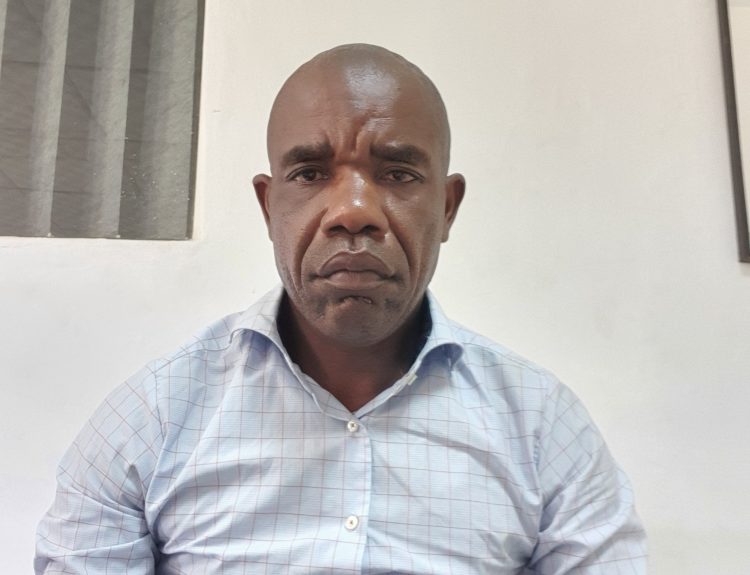
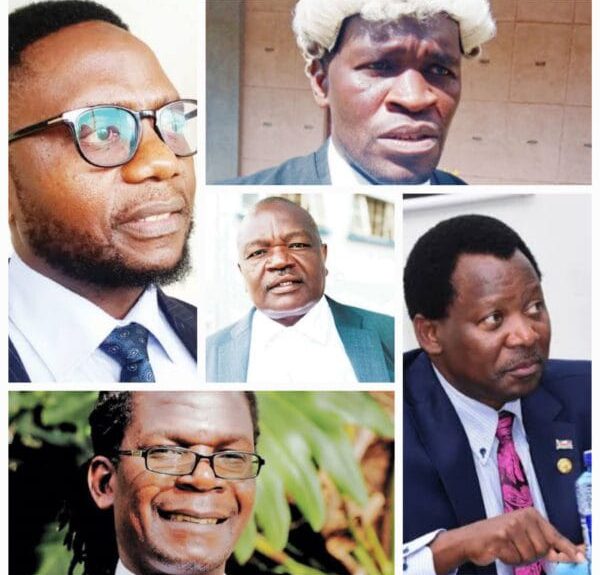
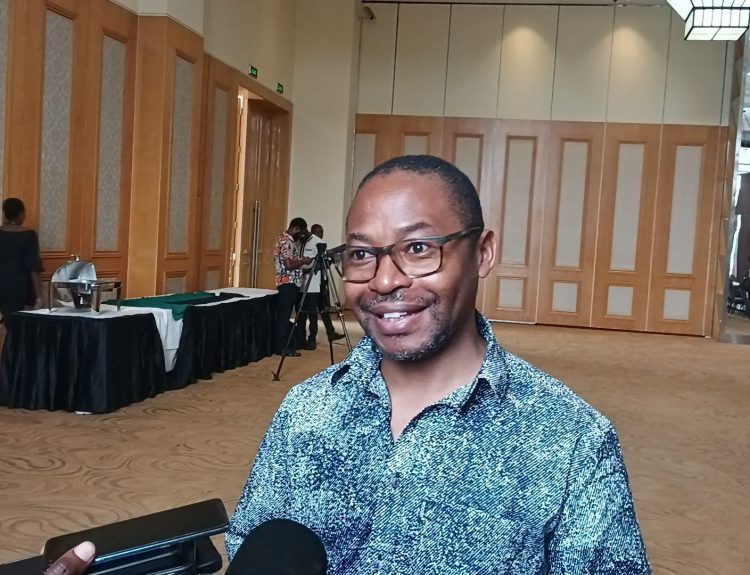
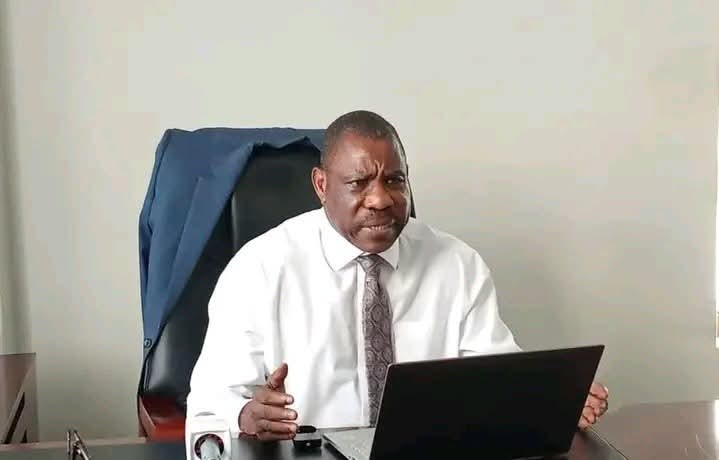
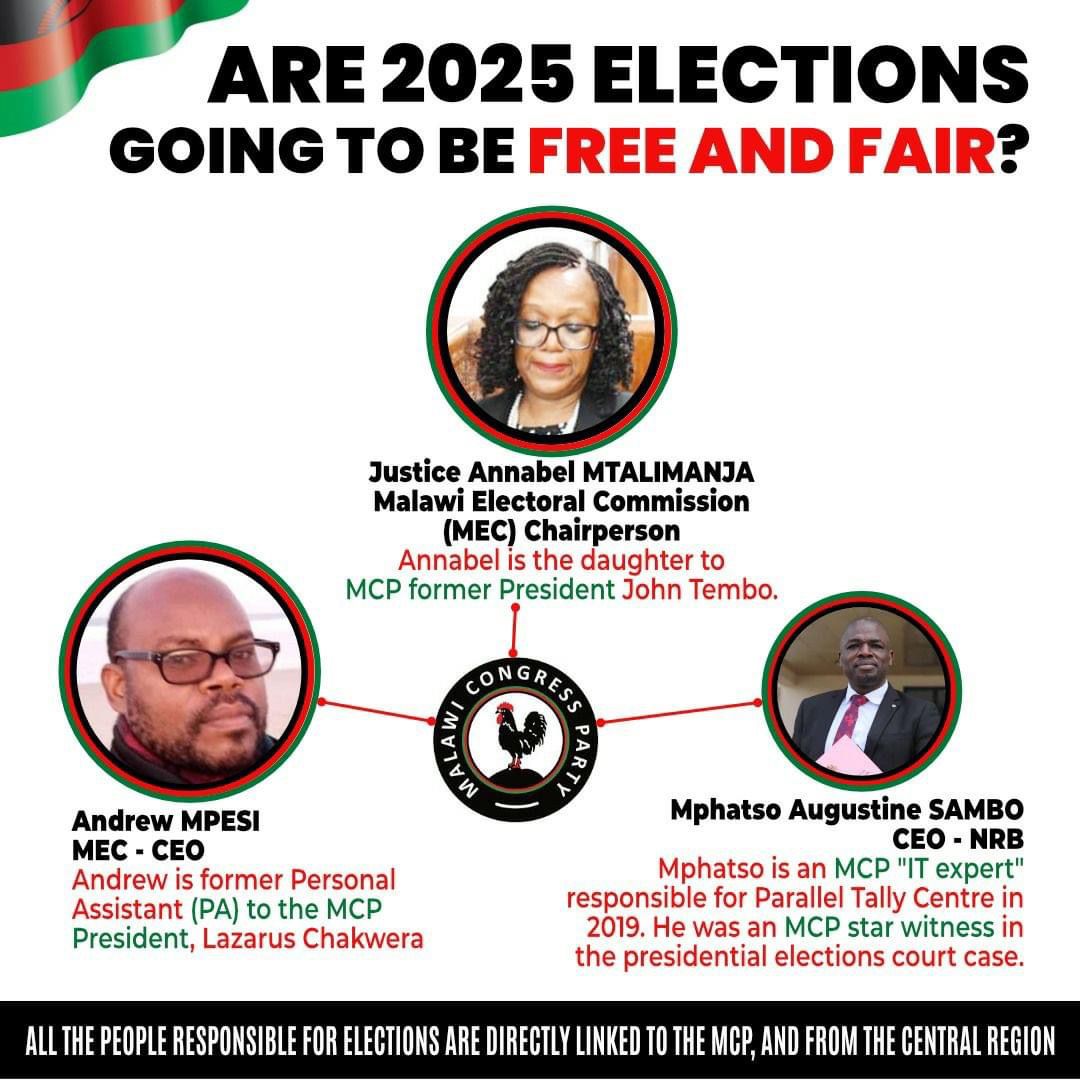
Justice Annabel Mtalimanja, chairperson of the Malawi Electoral Commission, is the daughter of the late former president of the Malawi Congress Party, a connection that raises questions about her impartiality. Her family loyalty may influence her decisions, potentially favoring the MCP. Furthermore, Andrew Mpesi, the commission’s chief elections officer, previously served as personal assistant to MCP President Lazarus Chakwera, who is also the current president and endorsed presidential candidate.
- Malawi Secures $221.9 Million Deal to Boost Jobs and ExportsMalawi has secured financing agreements worth US$221.9 million, equivalent to approximately K414 billion, from the World Bank
- Mwanamvekha Assures Malawians of Action to End Fuel ShortagesMwanamvekha said government has already applied for foreign exchange resources to facilitate fuel procurement
- Dedza Mechanic Develops Solar-Powered Electric Carmechanic from Dedza District, Edward Ngwira, has developed an electric vehicle powered by solar energy
- Rukuru Telecoms Trains Fibre Optic Experts to Improve Malawi’s ConnectivityManaging Director of Rukuru Holdings, Mona Lungu, said the initiative seeks to equip participants with specialised knowledge
- Mchacha Calls for MCP Dissolution, Plans Petition to ParliamentShare Listen to this article By Suleman Chitera, MFN ReporterDate: 20 November 2026 | Time: 05:09 AM Democratic Progressive Party (DPP) Southern Region Governor Charles Mchacha has called for the dissolution of the opposition Malawi Congress Party (MCP), announcing plans to petition Parliament to consider removing the party from Malawi’s official register of political parties.…
- Dowa District Council elects woman Chairperson for the first timeShare Listen to this article By Vincent Gunde The Dowa District Council has for the first time in the history of the district elected Dowa West Constituency – Machenga Ward Councilor Janet Kampanda as its new Chairperson. Kampanda scooped 11 votes against two other contenders, Eliza Chulu of Msakambewa West Ward and Morie Brown Chimtokota…
- Machinga Communities Urge Government to Invest in Malape Pillars TourismThe communities say activities such as charcoal production, indiscriminate tree cutting and illegal firewood collection
- Malawi Targets 13,600 Annual Mini-Grid Power ConnectionsMalawi targets 13,600 annual mini-grid electricity connections as Government accelerates rural electrification towards 70% access by 2030.
- Karonga Gold Centre to Boost Malawi’s Forex Reserves – TemboMinister of Mining Thoko Tembo has described the official opening of a gold trading centre in Karonga
- Pemphero Mphande Warns Malawi Risks Burundi, Somalia-Style CrisisPemphero Mphande has warned that Malawi risks sliding into a serious economic crisis similar to those experienced by Burundi and Somalia
- Chitera Hails Mutharika Over K2.6 Billion Egenco Payment ProbeChiradzulu-based activist Suleman Atupele Chitera commends President Mutharika’s government response to the K2.6 billion Egenco payment controversy.
Mphatso Augustine Sambo, CEO of the National Registration Bureau and MCP IT expert, played a pivotal role in the disputed 2019 presidential elections. His involvement in the parallel tally center and testimony in the subsequent court case fuels mistrust. Consequently, the credibility of Malawi’s electoral institutions suffers due to these connections. Citizens may view the elections as rigged, leading to disillusionment and apathy.
Moreover, the international community has expressed concerns over Malawi’s commitment to free and fair elections. Donors and observers will scrutinize the process, potentially withholding support. Malawi’s electoral challenges are multifaceted, including inadequate voter education, limited access to voting stations, insufficient electoral infrastructure and bias in state-owned media.
Therefore, ensuring impartiality within electoral institutions is crucial. Providing transparent funding and resource allocation, promoting voter education and awareness, and fostering inclusive dialogue among stakeholders are essential steps. The Malawi Electoral Commission’s independence is vital, and its decisions should be free from political interference.
Meanwhile, international observers’ presence can enhance credibility. Civil society organizations, such as the Malawi Human Rights Commission and the Centre for Human Rights and Rehabilitation, must hold authorities accountable. The 2025 elections’ outcome will significantly impact Malawi’s democratic trajectory.
In addition, the country’s history of electoral disputes underscores the need for robust safeguards. The 2019 presidential election controversy highlighted weaknesses in the electoral system. Consequently, reforms were implemented, but their effectiveness remains uncertain.
However, some argue that Malawi’s democratic institutions have matured. The country has made significant strides in promoting transparency and accountability. Nevertheless, concerns persist about the ruling party’s influence on electoral officials.
To mitigate these risks, Malawi must prioritize electoral reforms. Strengthening institutions, promoting voter education and ensuring transparency are essential. The international community should provide support, while civil society organizations must advocate for accountability.
The role of traditional leaders, civil society and the media is vital in promoting electoral awareness. Community engagement initiatives can enhance voter participation. Conversely, misinformation and disinformation can undermine the electoral process.
Furthermore, the Electoral Commission must address logistical challenges. Voting materials, polling stations and personnel must be adequately prepared. Technical support and infrastructure development are crucial.
The 2025 elections will test Malawi’s commitment to democracy. Ensuring free and fair elections requires collective efforts from stakeholders. International organizations, such as the United Nations Development Programme and the European Union, have provided electoral assistance.
Malawi’s democratic future hangs in the balance. Effective electoral reforms, transparent institutions and inclusive dialogue can safeguard democracy.
The 2025 elections will test Malawi’s commitment to democracy. Ensuring free and fair elections requires collective efforts from stakeholders. International organizations have provided electoral assistance.
In conclusion, to ensure free, fair and credible results, the “Big Three” should not be found at the Malawi Electoral Commission. Their connections to the ruling party compromise the electoral process. Effective electoral reforms, transparent institutions and inclusive dialogue can safeguard democracy.
The Malawi Electoral Commission’s Strategic Plan 2023-2028 emphasizes the importance of independence, transparency and accountability. Implementing this plan requires strong leadership, unbiased decision-making and robust safeguards.
Ultimately, Malawi’s democratic future depends on the integrity of its electoral process. The “Big Three” must prioritize national interest over personal loyalty to ensure credible elections.
The international community, civil society and traditional leaders must hold Malawi’s electoral officials accountable. Collective efforts can safeguard democracy and promote free and fair elections.
Malawi’s 2025 elections are a critical juncture in its democratic journey. Ensuring electoral integrity requires decisive action against conflicts of interest.
By prioritizing impartiality and transparency, Malawi can uphold democratic principles and consolidate its democratic gains. The “Big Three” must step aside to guarantee free, fair and credible elections.