
 Malawi Freedom Network
By MFN News Desk Team
8 October 2026
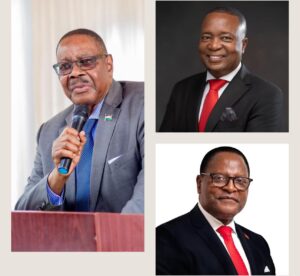
Attorney General Frank Mbeta has come under scrutiny in the ongoing legal battle involving Speaker of Parliament Sameer Suleman and concerned citizen Austin Mkoka, after the Speaker’s legal team questioned the Attorney General’s decision to seek participation in the case as an Interested Party rather than represent the Speaker directly.
The development has added a new layer to a constitutional and administrative law dispute that has already placed the powers of Parliament, the Speaker and the Executive under intense legal scrutiny.
The case is being heard before High Court Judge Allan Muhome and centres on an injunction obtained by Mkoka that temporarily stopped Parliament from establishing or operationalising joint ad hoc committees to investigate a range of governance concerns involving public institutions.
Silungwe questions Mbeta’s role
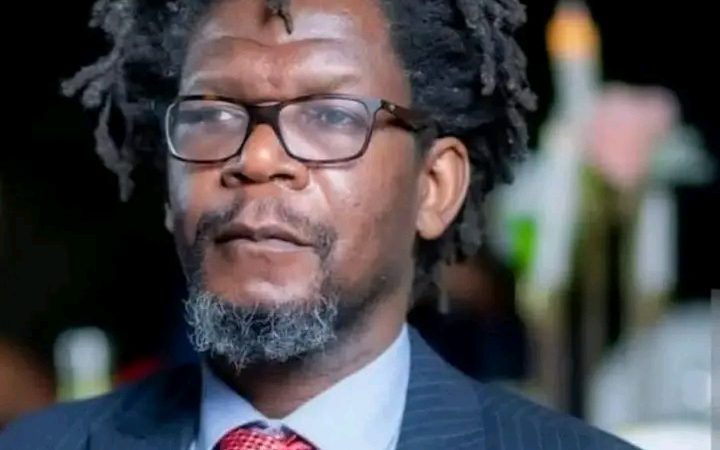
Lawyer representing Speaker Suleman, Dr Chikosa Silungwe, has criticised the approach taken by the Attorney General, describing Mbeta’s attempt to participate in the proceedings as akin to “entering through the window.”
Silungwe questioned why the government side had not directly taken up the responsibility of representing the Speaker, leaving Suleman to engage private legal counsel.
The Speaker has engaged lawyer Bright Theu of Nicholls and Brookes to represent him in the proceedings. Reports from other media outlets confirm that Theu is appearing for Suleman and Parliament in the case.
The development has consequently raised questions over the constitutional and institutional relationship between the Attorney General, the Executive and Parliament—particularly when a dispute involves the exercise of parliamentary oversight powers.
Theu asks court to remove Mbeta as Interested Party
During proceedings, lawyer Bright Theu reportedly asked Judge Muhome to remove Frank Mbeta from the list of parties seeking to participate in the matter.
The request follows correspondence from Mbeta indicating that he wanted to participate in the proceedings as an Interested Party, rather than enter the case as part of the defence representing the Speaker.
That position has attracted attention because the Attorney General is the government’s principal legal representative, while the Speaker and Parliament are directly named in the judicial review proceedings.
The legal question is therefore not merely about who appears in court, but what institutional role the Attorney General is seeking to play in a case involving the Legislature’s constitutional powers.
What is the Mkoka case about?
The dispute began after Austin Mkoka launched a judicial review challenging Speaker Suleman’s plans to establish a number of joint ad hoc committees to investigate concerns involving government departments and public institutions.
The proposed investigations included institutions such as the National Oil Company of Malawi (NOCMA), ESCOM, EGENCO, Power Market Limited, Blantyre Water Board and the Department of Immigration and Citizenship Services, among others.
Mkoka challenged the legality of the proposed investigations and obtained an interim order restraining Parliament from establishing or operationalising the targeted committees pending further proceedings.
The case is now testing the boundaries of parliamentary oversight, separation of powers and the constitutional authority of Parliament to investigate matters of public concern.
Private lawyers step in for Speaker
The decision by Suleman and Parliament to engage private counsel has itself become an important aspect of the dispute.
Bright Theu confirmed that he had been engaged to represent the Speaker and Parliament as defendants in the proceedings.
The move followed uncertainty over whether the Attorney General’s office would represent the Speaker.
Nyasa Times reported that Mbeta had previously indicated that he needed to establish whether Parliament had sought assistance from his office.
The latest development therefore puts the Attorney General’s intended role under renewed scrutiny.
Why the Attorney General’s role matters
At the heart of the controversy is an institutional question: When a constitutional dispute directly involves Parliament and the Executive, where should the Attorney General stand?
The Attorney General’s office represents the interests of the State in legal proceedings. However, Parliament is a separate arm of government, and the Constitution provides for the separation of powers between the Executive, Legislature and Judiciary.
The Malawi Law Society has already joined the matter as a friend of the court, saying the proceedings raise important constitutional and administrative law questions concerning parliamentary oversight, standing and separation of powers.
This means the case has developed beyond a disagreement between Mkoka and the Speaker. It now presents the High Court with an opportunity to examine important questions concerning the constitutional boundaries of public institutions.
Government previously distanced itself from Mkoka’s case
The Attorney General’s latest move must also be viewed against the government’s earlier position on the dispute.
Government previously stated that it was not involved in Mkoka’s legal action, saying the case had been initiated independently by the concerned citizen.
Information and Communications Technology Minister Shadric Namalomba said government had neither initiated, directed, sponsored, facilitated nor funded the court action.
That position makes the Attorney General’s proposed participation particularly significant, as it raises questions about how the government’s legal interests intersect with proceedings involving the Speaker and Parliament.
A bigger constitutional battle
The substantive dispute goes beyond the personalities involved.
At issue is whether Parliament has the constitutional authority to establish and operate investigative committees in the manner proposed by the Speaker, and where the limits of parliamentary oversight lie.
Government previously cited Section 56(6) of the Constitution, arguing that the power to establish parliamentary committees rests with Parliament rather than the Speaker acting alone.
The Speaker’s side, meanwhile, maintains that parliamentary oversight is a legitimate constitutional function and that the investigations were intended to address matters of public concern.
The High Court’s eventual determination could therefore have consequences extending beyond the current dispute, potentially providing guidance on how future parliamentary investigations into government institutions should be established and conducted.
The bigger question for Malawians
For ordinary Malawians, the legal technicalities surrounding the case may appear complicated. But the underlying issue is straightforward: Who has the constitutional authority to hold public institutions accountable, and what happens when those powers are challenged in court?
The institutions targeted by the proposed parliamentary investigations provide essential public services, including fuel supply, electricity, water and immigration services.
Any legal interpretation of Parliament’s oversight powers will therefore have implications for how Malawi’s democratic institutions investigate alleged governance failures and respond to public concerns.
The current dispute involving Frank Mbeta, Bright Theu, Sameer Suleman and Austin Mkoka has consequently become a closely watched test of Malawi’s constitutional architecture.
For now, the High Court remains at the centre of the dispute, with Judge Allan Muhome expected to consider the competing legal positions as the parties argue over Parliament’s powers, the Attorney General’s role and the boundaries of institutional independence.
SEO Package
SEO Title: Frank Mbeta Accused of ‘Entering Through Window’ in Speaker Suleman Case
Focus Keyword: Frank Mbeta Speaker Suleman court case
Slug: frank-mbeta-speaker-suleman-court-case
Meta Description: Attorney General Frank Mbeta faces scrutiny over his role in the Speaker Sameer Suleman court case as Bright Theu challenges his participation as an Interested Party.
Secondary Keywords:
- Frank Mbeta
- Sameer Suleman court case
- Bright Theu
- Austin Mkoka injunction
- Malawi Parliament court case
- Malawi parliamentary oversight
- Judge Allan Muhome
- Attorney General Malawi
- parliamentary committees Malawi
- separation of powers Malawi
Suggested Tags: Frank Mbeta, Sameer Suleman, Bright Theu, Austin Mkoka, Malawi Parliament, High Court Malawi, Parliamentary Oversight, Attorney General, Judicial Review, Malawi Politics
Suggested social headline: “‘Entering Through the Window’: Silungwe Challenges Mbeta’s Role in Speaker Suleman Case”
Editorial note: The allegations and characterisation of Mbeta’s role should be attributed to the lawyers involved; they are not a judicial finding that Mbeta acted improperly. The court proceedings remain ongoing.