
 Malawi Freedom Network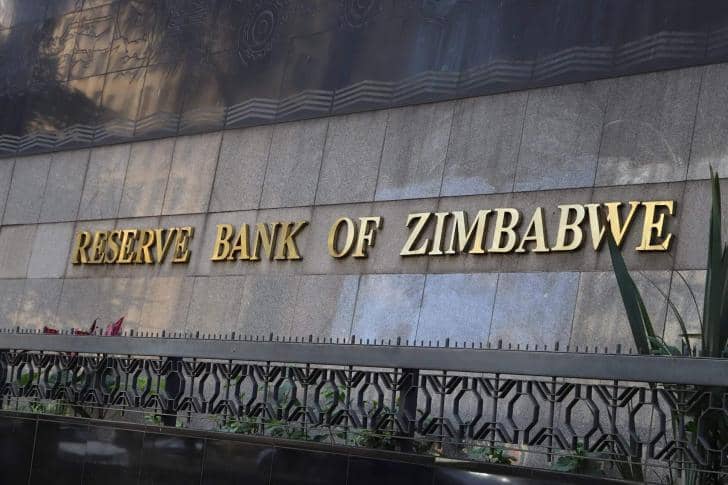
By Lovemore Lubinda
HARARE – Zimbabwe, long synonymous with hyperinflation, has recorded its lowest annual inflation since 1980, allowing its central bank to cut interest rates even as global oil prices surge past $100 on escalating Middle East conflict.
The Reserve Bank of Zimbabwe (RBZ) on 28 September announced it is reducing its benchmark policy rate from 30% to 27.5%, marking a 7.5 percentage point cut since June.
According to the Monetary Policy Committee, ZiG inflation fell to 2.9% in August – the lowest in 46 years – before edging up to 3.7% in September after Brent breached $100 on September 9.
The RBZ directly linked the uptick to the Middle East escalation, but said expectations remain anchored at 0.4% month-on-month, with full-year inflation now projected below 7%.
In a rare endorsement, the RBZ said it has met all Quantitative Targets and Structural Benchmarks under the IMF’s 10-month Staff-Monitored Programme, with reserve money contained within IMF-agreed limits.
The external turnaround has been stark. Foreign inflows jumped 37.8% to $14.3 billion to August 2026, driven by mining exports and diaspora remittances, producing a current account surplus of $1.1 billion in the first half – up from $248.2 million a year earlier. The full-year surplus is now forecast at $3.5 billion.
Reserves backing the gold-backed ZiG currency have topped $2 billion – two months import cover – keeping the ZiG stable at 25-27 per US dollar throughout 2026.
The MPC also cut its Targeted Finance Facility for productive sectors to 12.5%, capping bank lending at 22.5% to support 5% GDP growth forecast for 2026, led by mining and agriculture.
Governor John Mushayavanhu stressed the cut was “not monetary easing but realignment,” warning that the path ahead depends on global geopolitical risks and a forecast El Niño in the 2026/27 agricultural season.
PRESS STATEMENT*
RESOLUTIONS OF THE MONETARY POLICY COMMITTEE MEETING HELD ON 28 SEPTEMBER 2026
The Monetary Policy Committee (MPC) of the Reserve Bank of Zimbabwe met on 28 September 2026 to review recent macroeconomic and financial developments and assess the outlook for the economy.
The MPC applauded the continued stability of prices, the domestic currency and the exchange rate, which has helped to firmly anchor inflation and exchange rate expectations. Annual ZiG inflation declined to 2.9% in August 2026, its lowest level since 1980, before rising modestly to 3.7% in September 2026. The increase largely reflected the renewed rise in international oil prices, which exceeded US$100 per barrel on 9 September 2026, amid the escalating conflict in the Middle East. Inflation expectations have, however, remained well anchored with month-on-month inflation averaging 0.4% for the period from January to September 2026. This translates into an annual average inflation of 4%. The stable price conditions have been supported by prudent money supply management, with reserve money contained within the targets agreed between the Reserve Bank and the IMF under the ongoing 10-month Staff-Monitored Programme (SMP). Accordingly, annual inflation is expected to remain in single digit levels, at below 7% by the end of 2026.
The MPC still expects the economy to achieve the initially anticipated growth of 5% in 2026, supported by strong performance in the mining and agriculture sectors, which have reinforced domestic economic resilience. Reflecting robust economic activity, foreign currency inflows increased by 37.8% to US$14.3 billion in the period to August 2026, from US$10.3 billion during the corresponding period in 2025. The growth continued to be driven by strong export earnings, particularly from mining, and diaspora remittances. Export receipts more than offset the increase in imports, arising from higher international oil prices. Preliminary estimates indicate that the current account recorded a surplus of US$1.1 billion in the first half of 2026, a substantial improvement from the US$248.2 million surplus recorded in the corresponding period of 2025. The current account surplus is projected to strengthen from US$2.1 billion in 2025 to US$3.5 billion in 2026.
The strong external position supported the accumulation of foreign currency reserves backing ZiG, which exceeded US$2 billion in September 2026, equivalent to about 2 months of import cover. Increased foreign currency inflows have also enhanced the availability of foreign currency in the interbank market, underpinning the stability of the exchange rate within the ZiG25-27 per US$1 range in 2026.
The MPC commended the strong uptake of the ZiG-Denominated Term Deposit Facility (ZiGDTDF) during the second quarter of 2026. The facility has supported the development of a short-term yield curve for local-currency instruments, which is essential for deepening money and capital markets. The ZiGDTDF has also provided positive returns on local-currency savings instruments, enabling economic agents to preserve the value of their savings and incomes. The MPC also positively noted the strong performance by Government and the Reserve Bank under the IMF SMP program with all Quantitative Targets (QTs) and Structural Benchmarks (SBs) fully met for the first and second reviews undertaken by the IMF.
In view of the continued benign inflation environment and the need to support the economy’s strong growth prospects, the MPC resolved to:
i. Reduce the Bank policy rate from 30% to 27.5%, with immediate effect. This represents a total of 7.5 percentage point reduction since June 2026;
ii. Reduce the interest rate on the Targeted Finance Facility (TFF), in line with the reduction in the Bank policy rate, from 15% to 12.5%, while capping banks’ all-inclusive on-lending rate to the productive sectors at 22.5%;
iii. Maintain the existing differentiated statutory reserve requirements at 30% for demand deposits and 15% for savings and time deposits;
iv. Maintain the minimum interest rates on savings and time deposits at their current levels; and
v. Continue issuing the ZiGDTDF to support the further development of the yield curve for domestic local-currency instruments and promotion of domestic savings.
The MPC further emphasised that the reduction in the Bank policy rate does not signal monetary easing, but a realignment of the policy rate to the observed inflation dynamics. In this context, the MPC has embarked on a gradual path of monetary policy normalisation against the backdrop of entrenched macroeconomic stability and better-anchored inflation expectations. The pace of monetary policy adjustment will remain dependent on prevailing monetary and financial conditions, taking into consideration uncertainties arising from climatic shocks and geopolitical tensions.
Accordingly, the MPC will continue to monitor emerging risks associated with heightened global tensions and the forecast El Niño conditions during the 2026/27 agricultural season. The Committee will seek to balance risks to inflation and growth, while ensuring that inflation expectations remain firmly anchored in the short to medium term.
Dr. John Mushayavanhu
Governor
28 September 2026