 Suleman Chitera

An Opinion By Suleman Atupele Chitera
In a country where industrial ambition has often faltered under the weight of capital constraints, policy inconsistency, and import dependence, the emergence of Napoleon Dzombe as a leading local investor has attracted unusual national attention. Supporters describe him as one of Malawi’s most patriotic citizens; critics ask whether the praise is premature. An examination of available facts, project records, and stakeholder testimony suggests that Dzombe’s contribution represents more than personal enterprise—it signals a strategic intervention in Malawi’s economic sovereignty.
A Strategic Bet on Local Production
At the center of Dzombe’s profile is the fertilizer manufacturing plant under construction in Dowa District. Unlike short-term trading ventures that dominate much of Malawi’s private sector, the fertilizer project is capital-intensive, long-horizon, and exposed to regulatory and macroeconomic risks. Industry data indicate that, once operational, the plant is expected to produce roughly 40 metric tonnes per hour—capacity sufficient to meet national demand within a single agricultural season.
This matters. Malawi has long depended on imported fertilizer, a vulnerability that drains foreign exchange and exposes farmers to global supply shocks. By investing in domestic production, Dzombe has effectively wagered private capital against a public problem—food insecurity—traditionally addressed through subsidies and imports.
Following the Money
Investigative checks with contractors and local authorities confirm that the project financing is predominantly domestic, a rarity for heavy industry in Malawi. While government incentives apply—as they do for most manufacturing investments—there is no evidence that the project is a rebranding of foreign capital or a shell operation designed to extract concessions.
Construction milestones have been publicly disclosed, machinery installation verified, and projected commissioning dates aligned with observed progress on site. This level of transparency has helped differentiate the venture from speculative announcements that never materialize.
Employment and Skills Transfer
Beyond output figures, the plant has already created construction-phase employment and is expected to absorb a permanent technical workforce upon commissioning. Interviews with local trainees suggest structured skills transfer in plant operations and maintenance—an often-overlooked but critical component of sustainable industrialization.
Economists note that this downstream effect—local skills accumulation—may ultimately be more valuable than the fertilizer itself.
Patriotism Beyond Rhetoric
Patriotism in business is an overused label. In this case, it is measurable. Dzombe’s investment addresses three national pain points simultaneously: foreign exchange leakage, agricultural input scarcity, and industrial underdevelopment. It does so without relying on donor funding or extractive contracts.
Critically, there is no indication that the project is tied to political office or patronage networks, a factor that strengthens its credibility in a polarized environment.
Remaining Questions
An investigative assessment must acknowledge unresolved risks. Energy reliability, distribution logistics, and price competitiveness against imports will determine whether the plant fulfills its promise. Regulatory consistency will also be decisive. Patriotism alone does not guarantee commercial viability.
Conclusion
Based on verifiable actions rather than sentiment, Napoleon Dzombe’s industrial gamble aligns closely with Malawi’s national interests. While long-term outcomes will depend on execution, the evidence to date supports the view that his contribution goes beyond private profit. In a country hungry for productive capital and structural solutions, that is a rare and consequential form of patriotism.
You may also like

MBL Holdings Kicks Off the New Year with Prayer
On Monday, January 6, 2025, Mulli Brothers Limited (MBL Holdings) Executive Chairman, Mr. Leston Ted Mulli,…

Dowa Fertilizer Plant to Start Production by April, Set to Meet National Demand
By Suleman Chitera A fertilizer manufacturing company under construction in Dowa District is projected to commence…
FDH Bank posts strong 2025 performance, signals regional growth strategy
By Suleman Chitera FDH Bank plc has reported strong financial performance for the 2025 financial year,…

Ekhaya Mandasi by Ekhaya Farms Foods – Fresh, Golden, Authentic Malawian Comfort Snack Delivered to Your Table
By Suleman Chitera The king of comfort snacks has arrived!, Start your morning the Malawian way…

From Selling Tomatoes to Building a Business Empire: Inspiring Story of a Malawian Entrepreneur
By Suleman Chitera In the bustling markets of Malawi, stories of struggle are common. But among…

FDH Bank, MUST partner on Graduate Start-Up programme
By Suleman Chitera FDH Bank Plc has launched the FDH Graduate Start-Up Programme in partnership with…
You may also like

Malawi Manufacturers Choked by K4,000 Dollar Black Market
Malawi Manufacturers Choked by K4,000 Dollar Black Market as MCCCI Demands Urgent Forex Rate Unification By…

MEC Commissioner Carol Mfune Shares Christmas Love With Grace Obama Chiumia
By Suleman Chitera The true spirit of Christmas was beautifully reflected yesterday as Malawi Electoral Commission…

NBS Bank, MDF seal 10-year partnership to sustain veterans’ welfare support
By Suleman Chitera NBS Bank has signed a 10-year Memorandum of Understanding with the Malawi Defence…
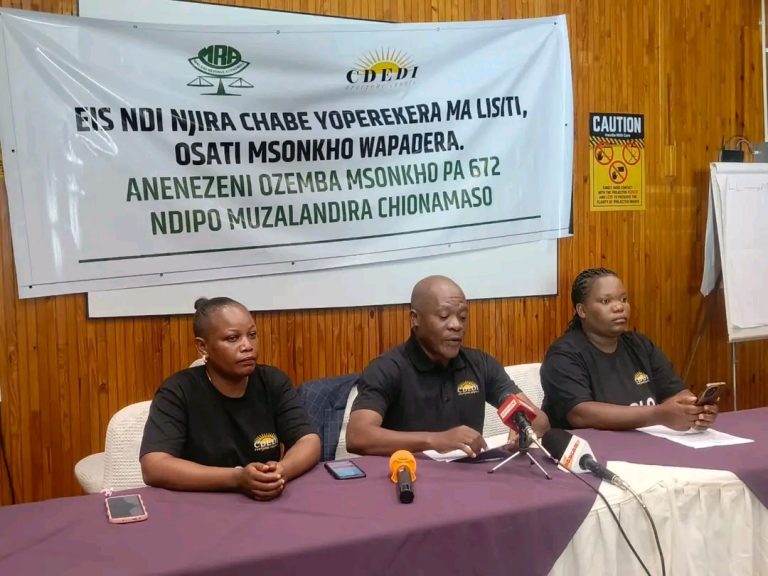
CDEDI Breathes Fire Over EIS Protests, Warns Defiant Businesses: “Reopen Shops or Leave Malawi”
By Suleman Chitera The battle over the Malawi Revenue Authority’s newly introduced Electronic Invoicing System (EIS)…

NBM plc launches BankNet360 to enhance digital banking experience
By Suleman Chitera National Bank of Malawi (NBM) plc has launched Banknet360, a new internet banking…

BREAKING: MERA Slashes Fuel Prices in Malawi Effective Midnight
By Suleman Chitera In a major relief to motorists, businesses, and households across Malawi, the Malawi…