 Suleman Chitera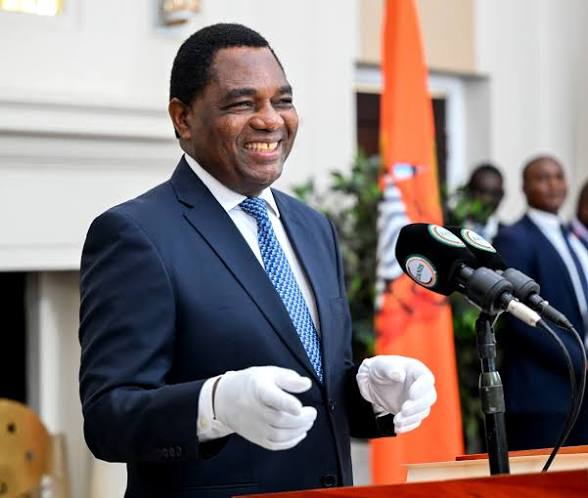
By Suleman Chitera
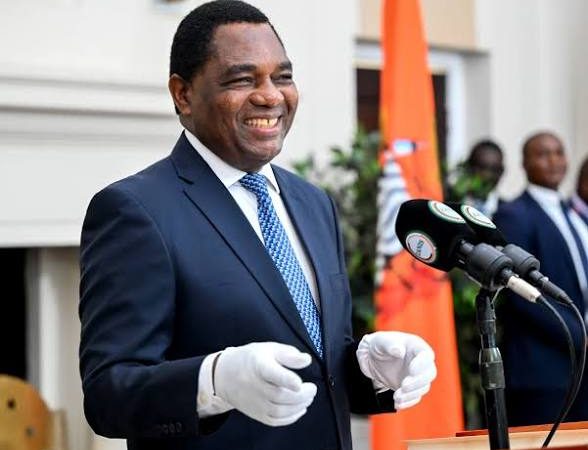
Zambian President Hakainde Hichilema has secured a second term in office after being declared the winner of the country’s 2026 presidential election, giving him another five years to pursue his economic and regional agenda.
The Electoral Commission of Zambia declared Hichilema the winner on Tuesday, August 18, following the presidential election held on August 13. He secured about 60 percent of the vote, defeating his main challenger, Brian Mundubile, who received about 38 percent.
The result gives Hichilema a renewed mandate at a time when Zambia is attempting to translate economic reforms and debt restructuring into improved living standards for ordinary citizens.
For Malawi, however, the election result is more than a political development in a neighbouring country. Zambia and Malawi share a border, strong historical and cultural links and important economic interests.
Trade could remain a major area of cooperation
Hichilema has repeatedly placed trade, investment and economic diplomacy at the centre of Zambia’s foreign policy.
Before the election, he said Zambia wanted to increase investment and expand trade within Africa, arguing that stronger regional economic links could create opportunities for businesses and citizens.
This could be significant for Malawi, whose businesses and traders depend on regional markets and transport corridors.
The Mchinji-Mwami One Stop Border Post is already an important link between the two countries. Malawi’s government has previously said the facility has helped reduce clearance times for passengers and traders and improve cross-border trade.
A second Hichilema term therefore presents an opportunity for Malawi and Zambia to pursue further measures that make movement of goods, services and people easier.
Malawi could benefit from deeper regional cooperation
Malawi officials have also been calling for stronger relations with Zambia.
In May 2026, Malawi’s Minister of Justice and Constitutional Affairs Charles Mhango stressed the importance of strengthening Malawi-Zambia relations and greater regional integration.
Zambia’s High Commissioner to Malawi, Panji Kaunda, also highlighted the similarities between the two countries and encouraged the sharing of ideas and solutions to common development challenges.
Hichilema’s re-election could therefore provide political continuity for bilateral discussions and regional initiatives involving the two countries.
Economic reforms will be closely watched in Malawi
Hichilema’s first term was dominated by efforts to address Zambia’s debt crisis and restore economic stability.
His re-election has been welcomed by investors seeking policy continuity, although the new administration faces pressure to turn economic stabilisation into stronger growth, jobs and better living conditions. Zambia also continues to face challenges including high living costs and electricity shortages.
Malawi, which faces its own economic challenges, will likely be watching Zambia’s experience closely.
The two countries face several similar pressures, including the need to attract investment, strengthen foreign exchange earnings, expand productive sectors and create employment.
Copper and investment could create wider regional opportunities
Mining is expected to remain central to Hichilema’s second-term economic agenda.
Reuters reports that Zambia wants to substantially increase copper production, with the sector expected to attract further investment during his second term.
For Malawi, developments in Zambia’s mining sector could have wider regional implications.
Increased investment and economic activity in Zambia could create opportunities for businesses involved in transport, logistics, agriculture, services and other sectors that operate across borders.
Malawi could also learn from Zambia’s efforts to attract investment into its mining and industrial sectors.
Stability will matter to Malawi
Beyond economics, political stability in Zambia is important to Malawi because of the countries’ geographic proximity and interconnected economies.
Hichilema has consistently presented peace, security and stability as key pillars of Zambia’s foreign policy. He has also argued that instability in one country can affect neighbouring countries.
A stable Zambia is therefore in Malawi’s interest, particularly for cross-border trade and regional transportation.
What Hichilema’s victory means for Malawi
Hichilema’s second term could give Malawi an opportunity to deepen cooperation with Zambia in trade, investment, transport, agriculture, energy and regional integration.
For ordinary Malawians, the most important question will be whether stronger bilateral relations translate into practical benefits—such as easier cross-border trade, greater business opportunities, improved regional connectivity and access to new markets.
The election may have been decided in Zambia, but its economic and political consequences will not stop at the border.
For Malawi, Hichilema’s victory could mark the beginning of another chapter in the relationship between the two neighbouring countries.