 Suleman Chitera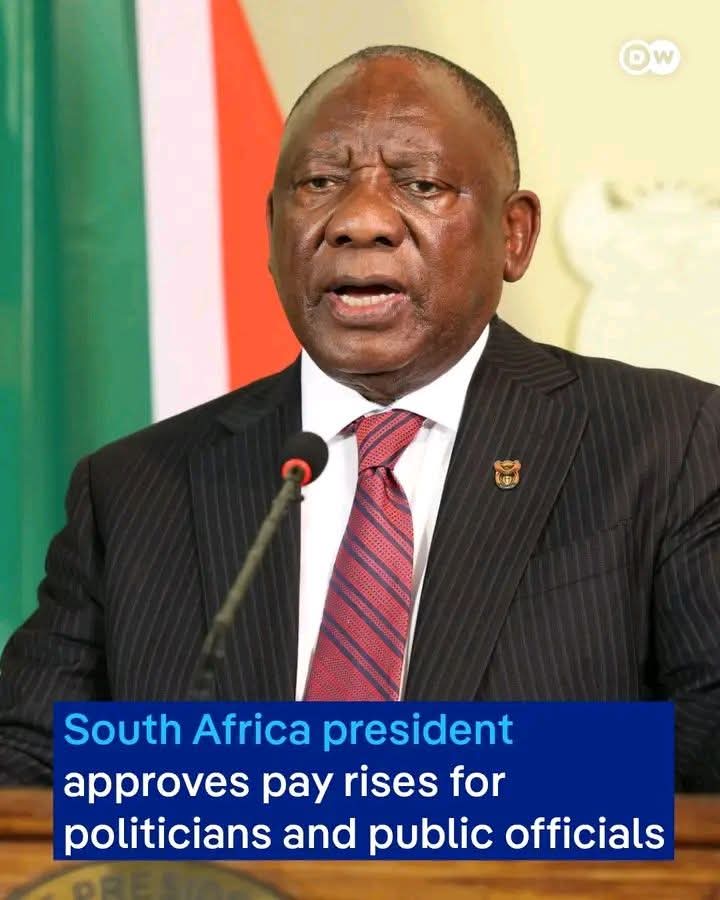
By Suleman Chitera
South African President Cyril Ramaphosa has approved salary increases for politicians and other public office-bearers, a move that has triggered mixed reactions across the country.
The adjustments will take effect from April 1 and apply across the executive and legislative branches. Under the revised pay structure, the deputy president will earn approximately US$177,000 per year, cabinet ministers about US$151,000, deputy ministers roughly US$124,000, while Members of Parliament will take home around US$71,000 annually.
According to the Presidency, the salary review was informed by inflationary trends, the state of government finances, and the overall public sector wage bill. Officials argue the increases are measured and necessary to maintain the integrity and functionality of public office.
However, the decision has not gone unchallenged. Labour unions and some political groups have criticised the timing, saying pay rises for elected leaders are difficult to justify as many South Africans grapple with rising living costs, unemployment, and economic uncertainty.
The debate highlights a recurring tension in South Africa’s political economy: balancing fiscal responsibility and fair compensation for public officials against widespread socio-economic pressures faced by ordinary citizens.
- Kachali Demands Constitutional Overhaul of Vice Presidency, Warns Office Is Being Reduced to Ministerial Level
 Share Listen to this article By Suleman Chitera15 September 2026 Former Vice President Khumbo Kachali has called for a fundamental review of the constitutional powers of Malawi’s Vice President, arguing that the office has been weakened by the current legal framework and is increasingly being treated as though it were merely another Cabinet position. Read…
 - Chitera Urges Malawians to Reject MCP Messages, Blames Chakwera Era for Economic Hardship
 Share Listen to this article Malawi freedom Network15 September 2026 Political activist and social commentator Suleman Chitera has launched a scathing attack on the Malawi Congress Party (MCP), urging Malawians to critically question the party’s political messages and leadership record instead of accepting its explanations for the country’s current economic difficulties. Read moreIsraeli-Born Malawi Parliament…
 - Kalindo urges poor Malawians to vote for poor leaders in 2030
 Share Listen to this article By Vincent Gunde Political activist Bon Kalindo, says DPP was the hope for all Malawians that voted for it on the 16th September, 2025 elections that it will change the country’s economic and governance system but that hope has now gone to the graveyard. Read moreAhmed Dassu Ask ACB To…
 - Mpinganjira breaks silence: ‘wanderers is my team’
 Share Listen to this article Mighty Wanderers leader dismisses resignation reports as disrespectful, vows to continue supporting the Nomads By Suleman Chitera15 September 2026 Mighty Wanderers team leader Dr Thomson Mpinganjira has broken his silence over reports circulating on social media claiming that he has resigned from his position and withdrawn his financial support for…
 - Lilongwe Golf Club retains EthCo Ladies Interclub golf trophy
 Share Listen to this article By Suleman Chitera Lilongwe Golf Club (LGC) has retained the EthCo Ladies Interclub Golf Tournament title for a second consecutive year after its first team posted a gross score of 362 strokes to beat Blantyre Sports Club (BSC) 1 and BSC 2 into second and third positions respectively. Read moreZuneth…
Read also: MERA Should Provide Daily List Of Service Stations That Have Fuel
Read also: Riaz Jakhura Arrested Over Police Uniforms Scandal
Read also: Communities in Gumbi Area demand MCP candidates fulfill campaign promises