
 Suleman Chitera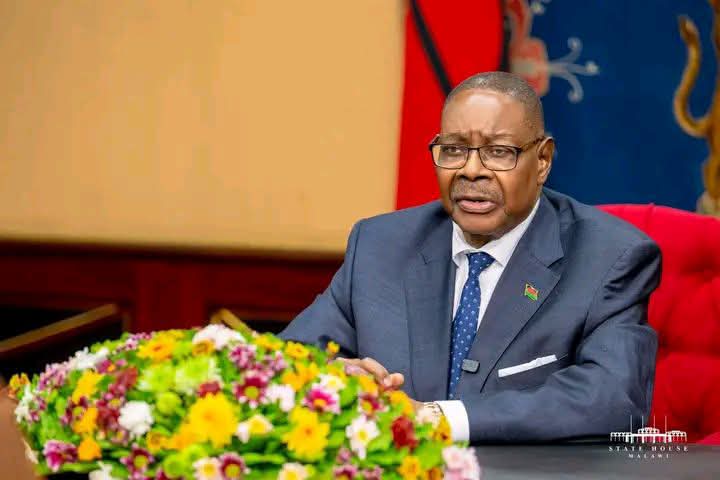
By Suleman Chitera
LILONGWE — President Arthur Peter Mutharika is facing a politically significant test of leadership as the Malawi Freedom Fighters (MFF) pushes him to throw his weight behind parliamentary investigations into some of the country’s most contentious governance and service-delivery problems.
In a letter dated September 5, 2026, MFF called on Mutharika to support the establishment of properly empowered and adequately funded parliamentary committees to investigate issues ranging from public finance management and fuel procurement to social protection programmes, health and education services.
The message is blunt: Malawi cannot continue talking about accountability while institutions capable of demanding answers are left without the political backing and resources required to do their job.
MFF argues that parliamentary scrutiny must move beyond political speeches and become a serious mechanism for uncovering what is going wrong, identifying those responsible where wrongdoing is established, and recommending reforms capable of preventing the same problems from recurring.
Mutharika’s leadership now faces a credibility test
For Mutharika, the demand presents more than another political statement from a pressure group.
It places the President directly in the growing national debate over whether Parliament should be allowed—and encouraged—to aggressively exercise its oversight mandate over public institutions.
MFF wants presidential support for committees that can summon officials, examine records, engage independent experts, hear from members of the public and produce recommendations based on evidence.
That approach, the organisation argues, would give Malawi something it desperately needs: accountability that does not stop at headlines.
If the President genuinely wants his administration to be associated with an anti-corruption agenda, MFF’s argument is that parliamentary oversight should not be treated as an inconvenience.
It should be treated as an ally.
Public money cannot operate in the dark
Among MFF’s priority areas is public finance management—a subject that strikes directly at the heart of Malawi’s governance crisis.
Government resources ultimately come from taxpayers, donors, borrowing and the country’s productive economy. When public money is poorly managed, the consequences are not abstract.
They are felt in hospitals without essential supplies, schools struggling with inadequate resources, roads waiting for rehabilitation and families struggling with the rising cost of basic necessities.
This is why MFF wants Parliament to interrogate how public resources are planned, allocated, spent and accounted for.
The organisation is effectively demanding that government institutions answer a fundamental question:
Where is the money going, and are Malawians getting value for it?
Fuel procurement under the microscope
Energy and fuel procurement have also been placed firmly on MFF’s agenda.
Fuel shortages and procurement controversies have repeatedly demonstrated how vulnerable Malawi’s economy is to weaknesses in the energy supply chain.
Transport costs rise. Prices increase. Businesses suffer. Farmers pay more to move goods. Ordinary citizens ultimately carry the burden.
MFF therefore wants parliamentary investigators to go beyond identifying immediate shortages and examine the structural weaknesses behind fuel procurement and energy management.
The emphasis is on finding root causes—not simply reacting to crises after they explode.
Social protection funds: Follow the money
MFF has also singled out social protection funds.
That demand carries enormous political weight because social protection programmes are intended to assist some of the country’s most vulnerable citizens.
Any failure in the management, distribution or monitoring of such resources can have devastating consequences for communities that have few alternatives.
Parliamentary scrutiny, therefore, should establish whether funds reach intended beneficiaries, whether systems are properly controlled and whether weaknesses are being exploited.
Malawians deserve evidence, not assurances.
Health and education cannot remain political slogans
The organisation has also called for investigations into health and education service delivery.
For years, political leaders have promised better hospitals and stronger schools. But the lived experience of many citizens remains defined by shortages, inadequate infrastructure and pressure on public services.
MFF’s proposal would require Parliament to confront those failures systematically.
The question should no longer simply be who made the promise.
The question should be:
Who failed to deliver, why did they fail, how much was spent, and what must change?
MFF praises Mutharika’s anti-corruption push
Interestingly, MFF has not simply attacked the President.
The organisation has praised Mutharika’s anti-corruption drive, pointing to recent arrests and investigations, including matters linked to the Amaryllis Hotel pension funds case and investigations involving NOCMA officials.
Those cases remain matters for due process and the relevant authorities, but their political significance is already considerable.
MFF’s position appears to be that arrests and investigations should not be the end of the story.
They should be the beginning of deeper institutional scrutiny.
If allegations of wrongdoing are established through lawful investigations, Malawi needs systems capable of ensuring accountability. If allegations are not substantiated, those accused should equally have the opportunity to clear their names.
That is precisely why credible parliamentary oversight matters.
Pressure is building around Parliament
The MFF call also comes against the backdrop of growing support from other organisations for parliamentary investigations.
CCM-PPM has backed Speaker Sameer Suleman’s decision to establish committees to probe alleged scandals involving NOCMA and other institutions.
The emerging political picture is therefore becoming difficult for government to ignore.
Different groups may disagree on politics, ideology and personalities, but a common demand is increasingly emerging:
Public institutions must answer questions about the use of public resources.
And Parliament is constitutionally positioned to provide that scrutiny.
The President has a choice
This is where Mutharika’s political will will be tested.
Supporting strong parliamentary investigations could send a powerful message that his administration has nothing to fear from scrutiny.
It could demonstrate that his anti-corruption rhetoric is not merely political branding.
But resisting, weakening or politically obstructing parliamentary investigations could fuel precisely the suspicion his government should be trying to eliminate—that powerful institutions are protected when scrutiny becomes uncomfortable.
The President therefore has an opportunity to draw a clear line.
Let Parliament investigate. Let evidence speak. Let officials answer. Let the public know what happened.
If government officials have acted properly, investigations should vindicate them.
If systems failed, Parliament should expose those failures.
If corruption is established, the law should take its course.
And if allegations prove unfounded, those accused should be cleared.
That is accountability.
Malawi needs institutions—not political protection
The bigger issue is not MFF, CCM-PPM, the DPP, MCP or any individual politician.
It is whether Malawi’s institutions are strong enough to scrutinise the use of public resources regardless of who is in power.
Every government eventually changes.
Every president eventually leaves office.
But the institutions remain.
That is why parliamentary committees must not become weapons for political revenge. Equally, they must not be neutralised because their investigations are politically uncomfortable.
They must be properly constituted, properly funded and allowed to follow evidence wherever it leads.
MFF’s demand consequently goes to the heart of Malawi’s governance problem.
A government that genuinely believes in accountability should not fear an empowered Parliament.
It should welcome one.
The political message is getting louder
MFF has now put the challenge directly before Mutharika.
Support Parliament’s oversight role and demonstrate that the fight against corruption and poor governance is bigger than political convenience.
Or allow the debate to continue over whether investigations are being encouraged only when politically convenient.
For ordinary Malawians, the demand is much simpler.
They want to know what happened to their money.
They want functioning hospitals.
They want better schools.
They want reliable fuel.
They want social protection funds to reach the people they are intended to help.
And above all, they want leaders who are prepared to ask difficult questions—even when those questions expose uncomfortable truths.
The real test of political will is not how loudly a government promises accountability. It is whether it is prepared to let independent scrutiny follow public money wherever it leads.
For Mutharika, that test is now squarely on his desk.