 Malawi Freedom Network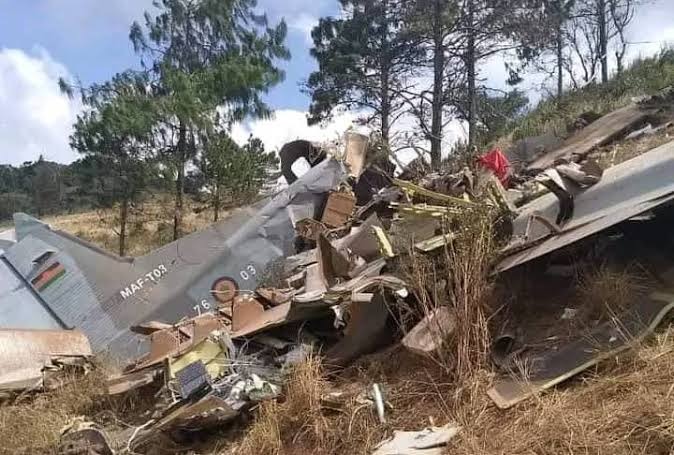
By Suleman Chitera, MFN Reporter
29 September 2026, Time 09:22
A disturbing timeline involving mobile phones belonging to victims of the Chikangawa plane crash has put a fresh spotlight on what happened to the devices after the aircraft went down on 10 June 2024.
More than two years after the tragedy, Parliament’s Ad-hoc Committee investigating the crash has heard that some victims’ phones were returned to their families late and badly damaged, while at least one phone remains unaccounted for.
But one question is becoming increasingly difficult to ignore:
Who handled the victims’ phones—and who damaged them?
The question has gained urgency following testimony from relatives and telecommunications officials before Parliament.
THE 10:16AM PHONE SIGNAL
According to telecommunications evidence presented to the inquiry, the phone belonging to Dr Dan Kanyemba, the late Vice-President Saulos Chilima’s medical officer, last connected to a TNM tower at Nthungwa at about 10:16 a.m. on 10 June 2024.
The time is significant.
The German Federal Bureau of Aircraft Accident Investigation (BFU) found that the aircraft’s navigation system recorded position data until approximately 10:16 a.m., around the time of the crash.
The phone evidence therefore provides investigators with a precise telecommunications timestamp from the morning the aircraft disappeared.
But the timeline does not end at 10:16 a.m.
11:11AM: ANOTHER PHONE CONNECTS
Telecommunications evidence also showed that the phone belonging to aircraft engineer Major Wales Aidin made its last recorded TNM connection at approximately 11:11 a.m., at the Mzimba Turn-Off.
Aidin’s widow, Taona, separately told the inquiry that her husband sent her a WhatsApp message at 9:42 a.m., reading “enroute to Mzuzu.”
She replied within a minute but received no further response.
She said his WhatsApp account nevertheless remained online until approximately 10:16 a.m.
That places several important digital timestamps around the final period of the flight.
2:43PM: GOVERNMENT SUPPLIES MORE NUMBERS
Then came another critical moment.
At approximately 2:43 p.m., former Secretary to the President and Cabinet Colleen Zamba supplied Airtel with additional telephone numbers belonging to Daniel Kanyemba, Chisomo Chimaneni and Lucas Kapheni.
According to former Airtel Malawi managing director Charles Kamoto, Airtel subsequently established that Kanyemba’s phone was ringing but nobody was answering.
This is one of the most important pieces of evidence now available to the inquiry.
Because several hours had passed since the aircraft’s last recorded position, investigators must establish precisely what the network records show about the phone’s activity and location during that period.
4:00PM: KANYEMBA’S PHONE RINGS
Then comes the testimony that has raised perhaps the sharpest question.
Effiness Katunga Kanyemba, widow of Dr Dan Kanyemba, told the parliamentary inquiry that she called her husband’s phone at approximately 4:00 p.m. on 10 June 2024.
The phone rang.
Nobody answered.
She tried again.
This time, the phone was no longer reachable.
That account does not, by itself, establish who possessed the phone at 4:00 p.m.
But it creates a precise question for investigators:
What happened to Dr Kanyemba’s phone between the 10:16 a.m. last TNM connection and the 4:00 p.m. call?
And, critically, who had custody of it when it was eventually recovered?
THE PHONES RETURNED BROKEN
The questions become even more serious because relatives have testified about the condition of the devices when they were eventually returned.
Mary Chilima told the committee that she received two of her late husband’s phones about one month after the crash and that the devices were badly broken. She also raised concerns over the length of time they remained out of her possession.
Sarah Lapukeni, widow of former Ministry of Foreign Affairs deputy chief of protocol Abdul Lapukeni, also told the inquiry that her husband’s phone was returned badly damaged.
Meanwhile, Taona Aidin said only one of her husband’s two phones was recovered from the crash site.
The issue has now reached the heart of the parliamentary inquiry.
WHO BROKE THE PHONES?
That question should not be answered through speculation.
The evidence publicly presented so far establishes that phones belonging to victims were being tracked and investigated through mobile networks after the aircraft disappeared; that some devices were subsequently recovered; and that relatives later received some phones in severely damaged condition.
But the evidence reported publicly does not yet establish that a named person deliberately broke or tampered with the devices.
That is precisely why the chain of custody matters.
The committee needs to establish:
Who found each phone?
At what exact time was it recovered?
Who first took possession of it?
Where was it kept?
Was it opened, repaired, examined or subjected to forensic extraction?
Was data copied from it?
Who authorised its release?
Why were some phones returned weeks later?
And why were some devices reportedly returned badly damaged?
These are not minor administrative questions.
A mobile phone can contain call logs, messages, photographs, contacts, location data and other digital information that could potentially help reconstruct a person’s final movements.
THE FOUR-TIMESTAMP QUESTION
For Dr Kanyemba’s phone, the inquiry now has a particularly important sequence:
10:16 a.m. — last TNM connection at Nthungwa.
2:43 p.m. — additional phone numbers supplied to Airtel for tracing.
After 2:43 p.m. — Airtel reported Kanyemba’s phone was ringing but unanswered.
Around 4:00 p.m. — Kanyemba’s widow said she called his phone and it rang without being answered.
Each timestamp represents a piece of the digital trail.
The task before investigators is to connect those pieces with the physical chain of custody.
THE QUESTION FAMILIES DESERVE ANSWED
The families of the nine people who died in the Chikangawa crash have already lived with the tragedy for more than two years.
They are now entitled to clear answers about what happened not only to their loved ones, but also to their personal belongings.
The parliamentary inquiry has an opportunity to establish the facts through telecommunications records, recovery reports, forensic records, photographs of the recovered devices and testimony from every person who handled them.
Until that evidence is fully examined, it would be premature to accuse an individual of deliberately destroying a phone.
But the central question remains unavoidable:
If the phones were recovered from the crash victims, who handled them before they reached their families—and why were some of them returned broken?
The clock started at 10:16 a.m. The questions continued at 2:43 p.m. And at around 4:00 p.m., a dead man’s phone was still ringing.
Who was holding it?