 Malawi Freedom Network
By Lovemore Lubinda
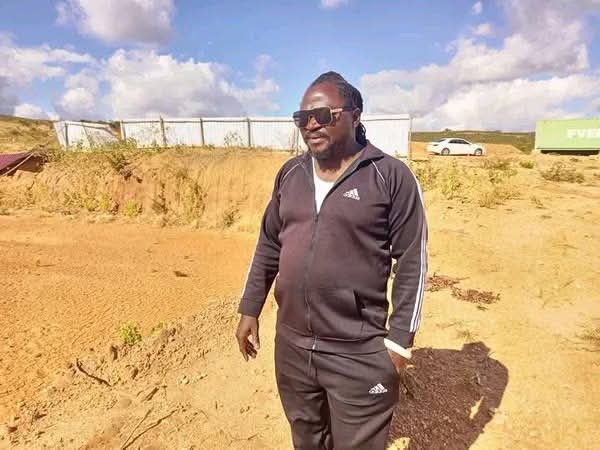
HARARE – On Monday morning, controversial Zimbabwean businessperson Wicknell Chivayo did what he is best known for.
The flamboyant Zimbabwean businessman, known for handing out luxury cars like flyers, went on Facebook to announce his latest act of generosity.
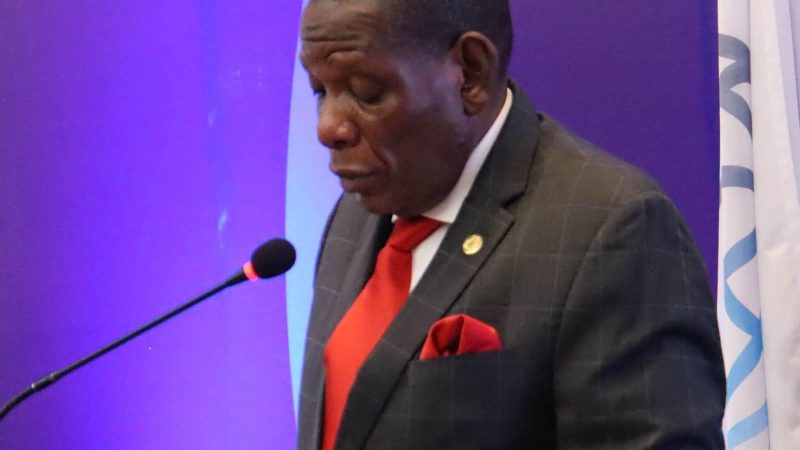
The recipient was Advocate Dr Lewis Uriri, one of the country’s most respected lawyers.
The gift was a brand new 2026 Range Rover Sport Autobiography valued at US$250,000, plus US$50,000 in cash for fuel, and another US$50,000 as a “handbag allowance” for Uriri’s wife, herself a senior advocate.
Chivayo called him a “lawyer par excellence” who had fearlessly defended him in his darkest legal battles, and said the car was parked and fully paid for at a Harare dealership.
It should have been a routine Chivayo spectacle. Musicians, pastors, Zanu-PF and President Emmerson Dambudzo Mnangagwa’s (ED) loyalists and even footballers have all received similar packages in the past two years.
What made this one different was the timing, and the man who refused it.
Twenty-four hours after the announcement, Uriri was due to appear in the Constitutional Court as a lead counsel challenging Constitution Amendment No. 3, the controversial law known as CAA3 that would erase presidential term limits and allow President Mnangagwa to stay in power beyond 2028 until 2030 and potentially beyond.
Uriri’s reply came on X, and it was cold, courteous and devastating. He said Chivayo’s announcement had come as a complete surprise, without prior notice or discussion.
He said the two men had last spoken in June 2024, that he had done no work for Chivayo since then, and that the legal work being praised had been paid for in full long ago. Uriri added that given the distance that had developed between them, the substantial nature of the gifts and their express link to past professional services, he had to approach the gesture with particular care.
Uriri then grounded his refusal in law. Zimbabwe’s Legal Practitioners Code of Conduct, the International Bar Association’s principles and the writings of the International Commission of Jurists all require a lawyer to preserve his integrity and safeguard professional independence.
Accepting benefits of this magnitude, he said, would create a perception of personal financial obligation extending beyond a concluded engagement. He and his wife, he wrote, attach great importance to preserving public confidence in their independence.
The decision was firm.
Within hours, the legal fraternity was saluting him.
Advocate Thabani Mpofu, another top constitutional lawyer, said Uriri’s example reminds the profession that independence is not an abstract ideal but is tested precisely when accepting would be easier than refusing.
Outside the Constitutional Court the next morning, in a scene that stunned observers, a group of war veterans, the bedrock of Mnangagwa’s political support, stood up to applaud Uriri as he walked in, shouting that the law must remain independent.
To understand why a refused Range Rover caused such euphoria, you have to understand who the two men are.
Chivayo is not just a businessman whose source of wealth is questionable. He is widely regarded inside Zimbabwe as President Mnangagwa’s proxy and unofficial rewards officer.
From a controversial solar power contract that never materialized, he has reinvented himself as Sir Wicknell, the President’s Santa Claus, handing out more than a hundred vehicles to musicians like Jah Prayzah, to apostolic church leaders, to Zanu-PF and Mnangagwa’s foot soldiers.
Critics call it a sophisticated patronage machine to buy loyalty for the 2030 agenda. Supporters call it private philanthropy. In either reading, a gift from Chivayo is read as a gift from the State House.
Uriri is even more complicated. He is not an opposition lawyer. In 2018, he was Mnangagwa’s lawyer. He led the President’s legal team that defeated Nelson Chamisa’s election challenge in the Constitutional Court and kept Mnangagwa in power.
He heads the elite Temple Bar Chambers, he founded the Zimbabwe Inns of Court modelled on the English tradition, and he sits as one of Zimbabwe’s four representatives to the World Bank’s investment disputes court.
He was, until recently, ED’s lawyer.
So when ED’s former lawyer appears for the other side, challenging ED’s most cherished project, the questions begin.
Was there a breakup? Did Uriri, like many in the early Second Republic, become disillusioned with the lurch towards a one-party state? Or was it always a calculated legal move?
Had he accepted US$350,000 from Mnangagwa’s proxy on the eve of the case, the State could have applied for his recusal for conflict of interest, collapsing the entire anti-CAA3 legal team. By rejecting it publicly and on ethical grounds, he made himself unimpeachable.
That is the conventional analysis. But UK-based Zimbabwean analyst Brighton Mutebuka, a lawyer himself, has pushed the conversation into darker, more strategic territory.
Mutebuka says there is a third possibility Zimbabweans must not discount, one that does not require Uriri to be complicit at all.
He argues that President Mnangagwa himself is perfectly capable of choreographing the entire affair through Chivayo.
In this reading, Wicknell’s public humiliation is not a humiliation at all, but a decoy, a sleight of hand of the highest order.
The logic, Mutebuka explains, is brutal and elegant. First, a public rejection instantly sanitises Uriri’s reputation.
Overnight, the tag of being ED’s lawyer is washed away and he becomes the darling of the anti-CAA3 movement, a symbol of integrity in a sea of patronage.
That in turn retains the confidence of his current clients who are funding the constitutional challenge, keeping the case alive and well argued.
Second, and more importantly, it gives an almost unimpeachable veneer of credibility to the Constitutional Court proceedings themselves. A court that allows the President’s former lawyer to argue against the President, and a lawyer who has just publicly shamed the President’s proxy, cannot be accused of being captured.
The process looks fair, open and brave.
And it is that manufactured credibility, Mutebuka warns, that would then deliver ultimate legitimacy to the judgment that the court is widely expected to render in favour of the state.
When the Constitutional Court upholds CAA3 and declares that Mnangagwa can legally extend his term, it will deal a mortal blow to the anti-CAA3 coalition.
The opposition will have nowhere to go, because the process that defeated them was seen by everyone, including war veterans, as independent.
In this scheme, Chivayo’s embarrassment is a crumb the system can easily afford to throw to the masses. It excites the public, it creates short-lived euphoria, it causes confusion and distraction among Mnangagwa’s opponents, while ultimately delivering nothing. It is, Mutebuka says, a crumb that Wicknell can easily stomach in pursuit of the bigger goal.
Chivayo himself has tried to muddy the hero narrative. On Tuesday, pro-Chivayo accounts circulated older videos of Uriri driving a Land Rover Discovery reportedly bought for him by Chivayo for US$110,000 in late 2023, arguing that the lawyer had accepted gifts before.
Uriri has not disputed that older vehicle. His argument is that the line must be drawn now.
For now, the white Range Rover sits uncollected in a Harare showroom. The Constitutional Court has reserved judgment on whether Zimbabweans will go to the polls in 2028 or whether the constitution will be rewritten to keep one man in power.
And Zimbabweans are left debating Mutebuka’s warning: that in Harare, even an act of integrity can be weaponized, and even a rejection can be a gift.
Read also: Electricity To Go Up
Read also: Commission of Inquiry: Shifting responsibility or seeking the truth?
Read also: Judge declares Biden immigration program for spouses of U.S. citizens illegal