 Malawi Freedom Network


By MFN Reporter
Malawi Freedom Network
The deregistration of the Human Rights Defenders Coalition (HRDC) by the Non-Governmental Organisations Regulatory Authority (NGORA) has reignited debate about accountability, the rule of law and whether the same standards of compliance should apply to powerful political institutions in Malawi.
The development raises an important question: if civil society organisations can lose their registration for failing to meet statutory obligations, should political parties also face serious regulatory scrutiny when allegations of unlawful conduct, violence and other serious violations are raised against them?

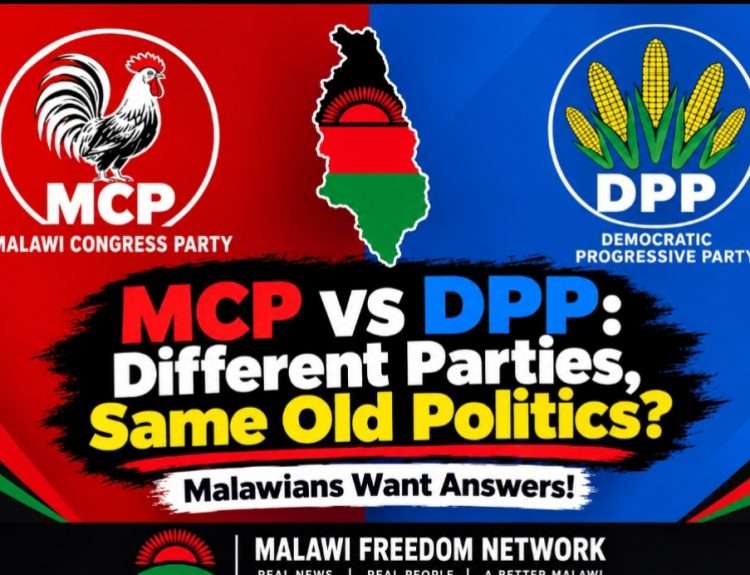
The debate is particularly significant for the Malawi Congress Party (MCP), which critics argue should be subjected to thorough investigations into allegations of criminal conduct and political violence during its time in government and its wider political activities.
The argument being advanced is that political parties should not enjoy special protection simply because they participate in elections or have held political power. They must operate within the law and be held accountable for the actions of their leaders, members and supporters where evidence establishes wrongdoing.
HRDC Deregistration Raises Questions About Equal Treatment
NGORA recently deregistered HRDC alongside 35 other organisations over alleged failures to comply with statutory requirements under the Non-Governmental Organisations Act.
Among the reasons cited against HRDC were failure to submit audited financial statements and annual returns for three consecutive years, as well as failure to notify the regulator of changes to its governance structure.
HRDC, however, has indicated that it intends to challenge the decision in court, maintaining that its deregistration as an NGO does not extinguish its right to continue operating as a civil society organisation.
The decision has consequently raised wider questions about how regulatory institutions enforce compliance and whether the principle of accountability is applied consistently across different sectors.
Should Political Parties Be Above Scrutiny?
Those advocating for stronger scrutiny of MCP argue that political parties must be held to the same fundamental principle: nobody is above the law.
They contend that allegations involving political violence, intimidation, destruction of property, abuse of public resources and other criminal activities should not be ignored simply because the individuals or institutions involved have political influence.
However, allegations must be investigated independently, and responsibility must be established through credible evidence and appropriate legal processes.
If investigations establish that a political party has violated provisions of the law governing political parties, the relevant authorities should take appropriate action without political favouritism.
What Does Malawi’s Law Say?
Malawi’s Political Parties Act of 2018 provides a legal framework for the registration and deregistration of political parties.
Section 16 outlines circumstances under which a political party may be deregistered, including registration obtained through fraud or mistake, failure to hold a convention for five consecutive years, failure to meet specified electoral requirements after two general elections, failure to comply with the Act following a notice from the Registrar, and cessation of the party’s existence.
The law also provides for notice, an opportunity for the party to respond and judicial review of a deregistration decision.
This means that a demand to deregister MCP, or any other political party, must be supported by legally recognised grounds rather than political dissatisfaction or unproven allegations.
Accountability Must Not Be Selective
Malawi’s democracy depends on institutions that enforce the law fairly, independently and without discrimination.
Civil society organisations, political parties, government institutions and individuals should all be accountable for their conduct.
If HRDC can be deregistered for statutory non-compliance, political parties should equally be expected to demonstrate respect for the law. Where credible evidence of serious wrongdoing exists, investigations should follow, and appropriate sanctions should be imposed where violations are established.
Ultimately, the question is not whether MCP should be protected or punished because of its political identity. It is whether Malawi’s institutions have the courage and independence to hold every organisation accountable under the law.
The rule of law must apply to everyone. Political power should never become a shield against accountability.