 Suleman Chitera
By Suleman Chitera, MFN Reporter November 2, 2026
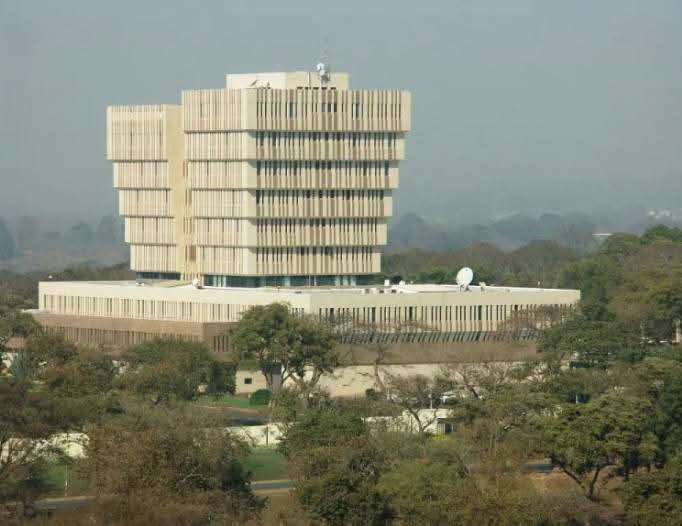
Economic expert Dr Henry Kankwamba has backed the Reserve Bank of Malawi’s (RBM) decision to maintain its Policy Rate at 24 percent while increasing the Lombard Rate to 26 percent, describing the move as a necessary balance between controlling inflation and protecting the struggling economy.
Kankwamba said easing monetary policy at a time when inflation remains elevated, foreign exchange shortages persist and the Kwacha continues to face pressure could undermine efforts to restore economic stability.
His remarks follow the RBM Monetary Policy Committee’s decision on October 29, 2026, to maintain the Policy Rate at 24 percent and raise the Lombard Rate from 24.2 percent to 26 percent.
In an interview with the Malawi News Agency, Kankwamba argued that although inflation has started declining, the improvement is not sufficient to justify reducing interest rates.
Headline inflation fell from 22.9 percent in the second quarter to 20.1 percent in the third quarter, but he maintained that the rate remained too high to support an immediate shift towards cheaper borrowing.
He said the relatively narrow difference between the Policy Rate and inflation also meant that reducing the rate could weaken the central bank’s efforts to contain inflationary pressures.
“The RBM is facing exchange rate, forex shortages, inflation and a generally weak economy. So, cutting the policy rate would be ill-advised. Maintaining the policy rate while raising the Lombard rate is the midway,” Kankwamba said.
Higher Lombard Rate puts pressure on commercial banks
The decision to increase the Lombard Rate is expected to make short-term borrowing from the central bank more expensive for commercial banks.
The rate determines the cost at which commercial banks access emergency liquidity from the RBM when they face short-term funding requirements.
Kankwamba said increasing the rate could discourage excessive dependence on central bank borrowing and encourage tighter liquidity management within the banking sector.
However, he warned that the adjustment could have consequences for ordinary Malawians and businesses if commercial banks pass the additional financing costs on to their customers.
Higher borrowing costs could make loans more expensive, increase financing pressures on businesses and potentially discourage investment at a time when the private sector needs affordable capital to expand operations.
“For businesses, it means the cost of working capital has increased,” he said.
This presents a difficult situation for companies that depend on bank financing to purchase stock, pay suppliers, maintain operations and meet other day-to-day expenses.
Private sector financing remains a concern
Kankwamba also expressed concern over the slowdown in private sector credit growth, which declined from 31.3 percent to 21.7 percent.
He observed that the figures offered limited improvement in the availability of financing when considered alongside prevailing inflation levels.
The development raises questions about the ability of businesses to access affordable credit and contribute meaningfully to economic growth under the current monetary conditions.
For small and medium-sized enterprises, particularly those dependent on working capital loans, sustained high interest rates could restrict expansion, reduce investment and increase operational difficulties.
Malawi needs stronger economic interventions
Beyond monetary policy, Kankwamba said Malawi needed broader economic reforms to address the structural challenges affecting production, investment and economic recovery.
He pointed to foreign exchange shortages, excessive domestic borrowing and unreliable energy supply as some of the major constraints requiring urgent government attention.
He also called for affordable agricultural inputs to support export-oriented industries, arguing that improving domestic production and strengthening export capacity would help the country generate more foreign exchange.
According to Kankwamba, monetary policy alone cannot resolve the country’s economic difficulties without complementary interventions that address supply-side constraints.
His assessment comes as Malawi’s economic growth is projected at just 2.8 percent in 2026, a performance he considers insufficient to deliver meaningful recovery.
The RBM’s latest monetary policy decision therefore reflects the difficult balancing act facing monetary authorities: containing inflation and supporting the Kwacha without placing additional pressure on an economy already struggling with weak growth and limited access to foreign exchange.
The central bank reported that headline inflation had declined to 20.1 percent in the third quarter from 22.9 percent in the second quarter. However, non-food inflation remained elevated at 31.9 percent, highlighting the continued pressure on the cost of living.
For households and businesses, the effectiveness of the latest monetary policy stance will ultimately depend on whether inflation continues to fall, the Kwacha stabilises and access to foreign exchange improves without further undermining economic activity.