
 Malawi Freedom Network
 By Our Reporter
BLANTYRE — The Centre for Democracy and Economic Development Initiatives (CDEDI) has thrown its weight behind Speaker of Parliament Sameer Suleman, accusing the ruling Democratic Progressive Party (DPP) of attempting to intimidate him over his decision to strengthen Parliament’s oversight of government institutions.
CDEDI Executive Director Sylvester Namiwa said the Speaker was acting within the constitutional mandate of Parliament by establishing joint committees to scrutinise matters of national importance, arguing that such oversight should not be interpreted as an attack on the Executive or the ruling party.
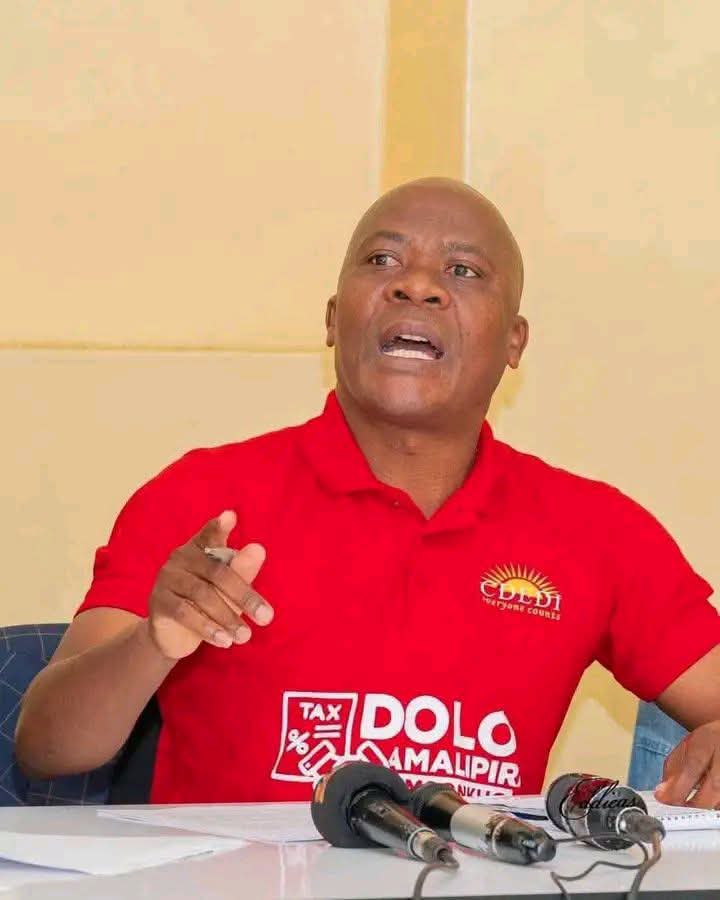
Namiwa told journalists in Blantyre that Suleman’s election to Parliament on a DPP ticket did not mean that the party had authority over his decisions as Speaker.
He said the Speaker, once elected to preside over the National Assembly, has a broader responsibility to Parliament and the people of Malawi.
“The fact that Hon. Suleman was elected through the DPP does not mean that the DPP owns the Speaker’s office or controls his decisions,” Namiwa said.
His remarks come amid growing political tension following Suleman’s recent press briefing in Lilongwe, where he outlined plans for Parliament to institute inquiries into several issues of public concern.
Among the matters expected to come under scrutiny is the situation involving the board of the Blantyre Water Board and its Chief Executive Officer, a development that has attracted public attention.
CDEDI says Parliament has a responsibility to investigate issues that affect the public interest and that attempts to discourage such inquiries risk weakening one of the key pillars of democratic governance.
‘Do Not Intimidate the Speaker’
Namiwa further warned against what he described as threats allegedly targeting Suleman and some chairpersons of parliamentary committees following the Speaker’s announcement.
He said intimidation, if established, would be a serious threat to parliamentary independence and the country’s democratic institutions.
According to Namiwa, lawmakers and committee chairpersons should be allowed to perform their oversight duties without fear, political pressure or threats.
He urged political parties to respect the separation of powers and allow Parliament to independently scrutinise the performance of public institutions.
“The Speaker is heading the Legislature and his mandate is to serve Malawians,” Namiwa said.
He argued that Parliament cannot effectively perform its oversight function if its leadership is expected to seek approval from political parties before scrutinising government institutions.
CDEDI Calls for Public Cooperation
CDEDI has also called on Malawians to support the planned parliamentary inquiries by providing credible information that could assist committees in uncovering alleged corruption, abuse of office and possible cartels operating within public institutions.
Namiwa urged citizens with relevant information to come forward and cooperate with parliamentary investigations.
He said the inquiries could provide an opportunity for Parliament to establish facts, identify weaknesses in public institutions and recommend corrective action where necessary.
CDEDI believes that strengthening parliamentary oversight is particularly important at a time when Malawians are demanding greater accountability over public resources and the performance of government institutions.
‘There Will Be No Better Time to Change Malawi’
Namiwa described Suleman’s initiative as a potentially important step towards changing the way public institutions are held accountable.
“We fully support what Hon. Suleman has done. He wants to transform things and there will be no better time to change Malawi than now,” he said.
The statement places CDEDI firmly behind the Speaker at a time when his approach to parliamentary oversight has become a subject of political debate.
The organisation says Parliament should not be reduced to a rubber stamp for the Executive or political parties, arguing that its constitutional responsibility includes scrutinising how public institutions are managed and how decisions affecting citizens are made.
The controversy has therefore opened a wider debate over the independence of Parliament and the extent to which political parties should influence the Speaker once he assumes office.
For CDEDI, the answer is clear: Parliament must serve the public interest first.
The organisation says the success of the planned inquiries will ultimately depend not only on Parliament but also on the willingness of Malawians to provide credible information and demand accountability.
As pressure builds around the Speaker’s proposed inquiries, attention is now likely to shift to whether the committees will be allowed to operate independently, whether the institutions under scrutiny will cooperate and whether the investigations will produce concrete recommendations capable of restoring public confidence.
For CDEDI, however, parliamentary oversight should not be feared.
It should be welcomed as a necessary mechanism for exposing wrongdoing, strengthening public institutions and ensuring that those entrusted with public resources remain answerable to the people of Malawi.