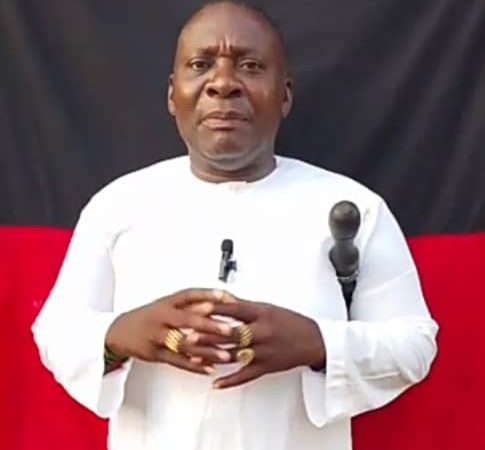
 Suleman Chitera
By Suleman Chitera
Fresh off guiding Mighty Wanderers FC to glory in the TNM Super League 2025/26, head coach Bob Mpinganjira has left the country for Scotland to undertake a 21-day intensive coaching program—an opportunity seen as both a professional milestone and a potential turning point in his future with the club.
Mpinganjira’s departure comes at a time when uncertainty surrounds his tenure with the Nomads. In recent days, social media—particularly Facebook—has been awash with speculation suggesting the club may be hesitant to extend his contract, despite delivering the league title in what is widely regarded as Malawi’s most competitive football competition.
The timing of the overseas training stint has only intensified the conversation. While the program in Scotland is expected to sharpen his tactical expertise and expose him to modern coaching methodologies, questions remain about whether the trip is part of long-term plans with Wanderers or preparation for opportunities beyond Lali Lubani Road.
Sources close to the club indicate that management is weighing its options, with discussions reportedly including the possibility of recruiting an expatriate coach to lead the team into the next phase. Such a move, if confirmed, would mark a significant shift for a side that has just enjoyed domestic success under local leadership.
For Mpinganjira, however, the focus appears firmly on development. His stewardship of Wanderers this season has been widely praised for instilling discipline, consistency, and a winning mentality—qualities that culminated in the club’s triumphant league campaign.
Football analysts argue that investing in his growth could yield long-term dividends for both the club and Malawian football at large. “Sending him abroad is a positive step,” one local analyst noted. “The real question is whether the club will capitalize on that investment.”
As the Nomads’ faithful await clarity, the situation underscores a broader debate within Malawian football: balancing confidence in local coaching talent with the allure of foreign expertise.
For now, all eyes remain on Scotland—and on what Mpinganjira’s return could mean for the future of Mighty Wanderers FC.
- NBM plc hikes football sponsorship to K2.3 billion

By Suleman Chitera
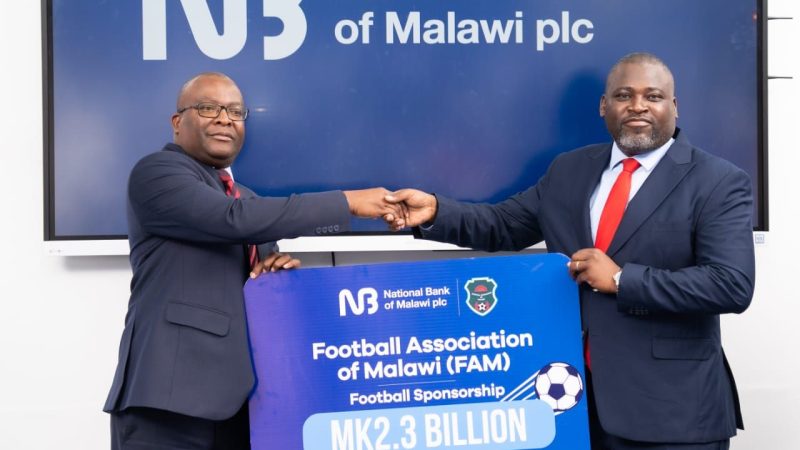
National Bank of Malawi (NBM) plc has increased its financial commitment to Malawi football from K930 million to K2.3 billion for the 2026/27 season, representing a 147 percent increase.
The renewed three-year partnership with the Football Association of Malawi (FAM) will support the Malawi National Women’s Football Team, the Scorchers, the NBM Women’s Premiership and the NBM Championship.
Women’s football is the biggest beneficiary of the new package, with K1.3 billion allocated to the Scorchers and the NBM Women’s Premiership.
Of the K1.3 billion earmarked for the Scorchers, K500 million will go towards sponsorship support, while K800 million has been set aside for performance bonuses following the team’s campaign at the 2026 Women’s Africa Cup of Nations (WAFCON).
The NBM Women’s Premiership will receive K400 million, while K600 million will support the NBM Championship, the men’s Division One League.
Speaking after the signing ceremony in Blantyre on Wednesday, NBM plc Chief Operations Officer Masauko Katsala said the increased investment reflects the bank’s confidence in football and its potential to create opportunities and inspire communities.
“Meaningful change in sports does not happen overnight. It requires consistency, patience and long-term investment. We want this to be a partnership where we can look back after three years and say that we helped move Malawian football forward,” said Katsala.
Katsala said NBM plc’s experience during the first year of its partnership with FAM had strengthened the Bank’s belief in the potential of football, particularly women’s football, when provided with sustained investment and support.
Katsala added that NBM plc will continue working with FAM, clubs, players, administrators and football structures at regional and district levels throughout the three-year partnership.
FAM president Fleetwood Haiya said the increased sponsorship demonstrates the confidence and trust that NBM plc has developed in the association.
“We were also very much shocked by the figures because we did not expect that they were going to go this far, considering the economic conditions . But as FAM, we say thank you to National Bank,” said a visibly excited Haiya.
Last year, NBM announced a whooping K1.5 billion sports sponsorship which saw K500 million being allocated to the Under-23 Championship, K280 million to the Women’s Football Premiership, K150 million to the Scorchers and K450 million to the tertiary and college basketball games
- Kamphangala claims foot soldiers have given up on Mutharika and DPP
By Vincent Gunde
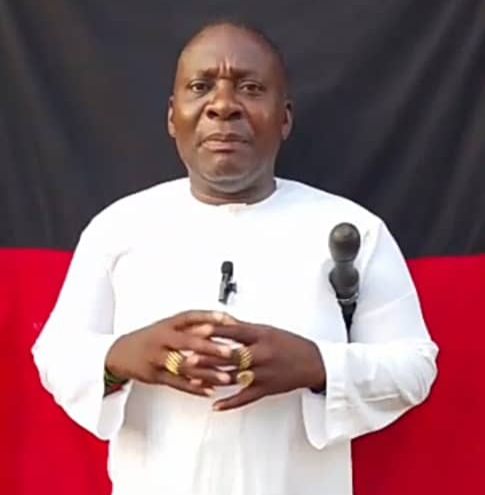
A Malawi Congress Party (MCP) diehard of Mvera in Dowa district Mr. Rodgers Kamphangala, has claimed that foot soldiers who for one year of the DPP led government of President Professor Arthur Peter Mutharika have been crying and their cries have not been heard, have given up on Professor Mutharika and the DPP.
Kamphangala said these foot soldiers ( Activists and journalists) are sailing through pain and sufferings claiming that many of these are failing to buy data bundles for their mobile phones after doing a good job to the DPP and Professor Mutharika to enter into government.
He said had they known that DPP and President Professor Mutharika were just using them as ladders to advance their political ambitious in government, they could not have sacrificed their lives to die for the DPP and Professor Mutharika.
The MCP diehard said he had time to meet one of the journalist (name withheld) who told him that ever since the DPP went into government in September, 2025 to this date, President Professor Mutharika has never had time to invite them to the State House to either thank them for the job beautifully done that the DPP is in government or recognizing them for the role they played towards political change in Malawi from MCP to DPP.
He said it is sad to be hearing that Comrades Bakili Muluzi TV, Bon Kalindo, Lytone Mangochi, Pastor Moses Shumba, Bishop W. Kachenje, Suleman Chitera, Jones Gadama, among many others, are still using personal resources without receiving a “big thank you ” from the DPP as a party and Professor Arthur Peter Mutharika.
The MCP diehard said for 5 years of President Dr. Lazarus Chakwera and his MCP, there was no DPP media, all went out in hiding leaving out genuine journalists on the battle field to fight through their pens making Professor Mutharika to win the election with landslide victory.
He said today that DPP is in government, those media personnel who went into hiding have come out to claim the name – DPP media while real journalists who sacrificed their lives to die for Professor Mutharika are out of government struggling for their survival and have been reduced as beggars.
Kamphangala said the journalist has told him that foot soldiers do not want to receive anything from the DPP and President Professor Mutharika claiming that the DPP is happy to have used and dumped them to pave way for their children, relatives and girl friends making it into parastatal organizations and Embassies.
“Without Bakili Muluzi TV, Comrade Ntanyiwa, Kalindo, Pastor Shumba, Bishop Kachenje, Suleman Chitera and Jones Gadama, among many others, DPP and Professor Mutharika could not have won the September, 2025 elections with a landslide victory,” he said.
Kamphangala has wished President Professor Arthur Peter Mutharika, DPP cabinet ministers well as they are celebrating one year in office while those who suffered for the party to be in government are crying and no one is listening to their cries assuring the DPP that these foot soldiers will still be crying up to the 2030 elections for the DPP to bounce back into government again.
He has appealed to all foot soldiers who fought for the DPP into government but are useless people in the eyes of DPP ministers and President Professor Arthur Peter Mutharika to pray to God for another DPP victory so that those who have made themselves billionaires over the heads should receive abundant blessings in the name of the Lord in Heaven.
Kamphangala has finally advised all foot soldiers whose cries have not been heard by the DPP and President Professor Arthur Peter Mutharika that never and ever to lose heart, God will be with them all the time and will reward them one day in their lifetime.
- “Two soldiers chased me away” — Nthungwa woman’s bombshell testimony rocks Chilima plane crash inquiry
Reported By Kenneth Bwanali
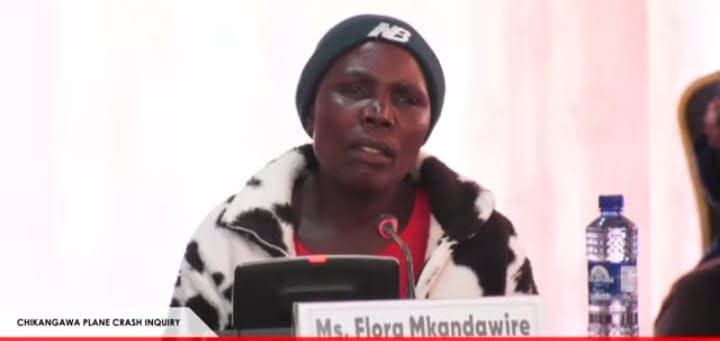
LILONGWE — A fresh eyewitness account has added another dramatic layer to Parliament’s investigation into the June 10, 2024 Chikangawa plane crash, after a woman from Nthungwa told the Parliamentary Ad-Hoc Committee that two soldiers chased her away from a forest area shortly before the aircraft crashed.
Mrs Florence Mkandawire told the committee that she had gone into the forest to collect firewood when she encountered the two soldiers.
According to her testimony, the soldiers were close to the area where the Malawi Defence Force aircraft later crashed, raising questions about who was in the vicinity during the crucial period surrounding the tragedy.
She said the two soldiers ordered her to leave the area, forcing her to retreat.
Her account comes as the parliamentary inquiry continues to examine what happened before, during and after the aircraft carrying former Vice President Saulos Chilima and eight others went down at Nthungwa in the Chikangawa area.
WHO WERE THE TWO SOLDIERS?
Mkandawire’s testimony immediately raises a series of questions that investigators will have to answer.
Who were the two soldiers?
Why were they in that particular part of the forest?
What were they doing there?
How close were they to the eventual crash location?
And critically, was their presence connected to routine military activity, the search operation, or something else?
At this stage, Mkandawire’s evidence establishes only what she says she personally witnessed. It does not, on its own, establish that the two soldiers had any involvement in the crash.
That distinction will be crucial as the committee weighs her testimony against other witness statements, military records, search-and-rescue accounts and technical evidence.
AN INQUIRY UNDER INTENSE SCRUTINY
The parliamentary committee was established to conduct a fresh investigation into the circumstances surrounding the crash, with Parliament’s stated investigative programme including forensic work, aviation safety and security assessment, evidence gathering and validation.
Previous committee hearings have already produced sharply contrasting witness accounts, including testimony that has been questioned by MPs and compared against technical information concerning the aircraft’s flight path.
That makes every new eyewitness account potentially significant—but also makes corroboration essential.
Mkandawire’s account will therefore need to be tested against the established timeline and evidence from other witnesses.
THE QUESTIONS MALAWI STILL WANTS ANSWERED
The deaths of Chilima and the eight other people aboard the aircraft remain one of the most consequential tragedies in Malawi’s recent history.
The parliamentary inquiry now has the responsibility of separating verified evidence from assumption, eyewitness observation from interpretation, and coincidence from demonstrable fact.
Mrs Mkandawire’s testimony has put two soldiers into the narrative surrounding the final moments before the crash.
Whether that detail proves significant—or ultimately has an innocent explanation—is for the committee’s investigation and evidence to establish.
But one thing is clear:
The questions surrounding what happened in Nthungwa before the aircraft came down are far from exhausted.
Malawi is waiting for answers.
- NBM plc supports PPPC Indaba with K20 million

By Suleman Chitera
National Bank of Malawi (NBM) plc has given K20 million to the Public-Private Partnership Commission (PPPC) towards the Infrastructure Finance and Partnership Forum under the theme ‘Mobilising Private Capital for Sustainable Infrastructure Development’.
The Forum is set for September 17 at Bingu International Conference Centre (BICC) in Lilongwe.
Speaking during the cheque handover ceremony in Lilongwe on Wednesday, NBM plc Senior Manager Shadreck Malenga said the Bank expects the donation to serve as a platform to bring together the private sector, government, civil society and development partners to discuss the country’s infrastructure needs.
He further said the Bank’s role includes helping to address financing gaps in infrastructure development.
“The economy is growing and government wants assistance. The resource envelope being the government budget can be limited. So, the private sector needs to mobilise in order to complement government’s efforts to develop our infrastructure,” said Malenga.
PPPC Chief Executive Officer (CEO) Arthur Nanthuru commended the donation noting that it will help the Commission organise the forum as well as support activities under its legal framework.
“The government has projects that may not have funding but they are looking for money from the private sector, from banks and pension managers. So, we want these people to engage with private players, discuss what gaps are there and what the banks, funders or sponsors can do, including opportunities for them to invest in infrastructure,” said Nanthuru
- NBM plc ready to kick off Women’s Premiership League

By Suleman Chitera
National Bank of Malawi (NBM) plc says it is ready for the return of the Women’s Premiership League, with the 2026/27 season set to kick off on September 19 .
The league’s return is expected to create more opportunities for female footballers to compete regularly, develop their talent and strengthen the growth of women’s football in Malawi.
Speaking in an interview on Tuesday, NBM plc Marketing and Corporate Affairs Manager Akossa Mphepo-Hiwa said the Bank is excited about the return of the competition and remained committed to supporting initiatives that empower women and girls through sport.
“Women’s football continues to show great potential in Malawi, and the return of the League is an important step in giving players the competitive environment they need to grow. We are pleased to play a part in creating that opportunity,” said Mphepo-Hiwa.
Mphepo-Hiwa said NBM plc’s interest in the competition goes beyond supporting matches, with the Bank keen to see the league contribute to the development of players, clubs and the wider women’s game.
“We would like to see a league that gives players the chance to showcase their ability, clubs the opportunity to build competitive teams and, ultimately, Malawi a stronger foundation for the future of women’s football,” she said.
Mphepo-Hiwa further said the League would also play an important role in preparing players for international competitions, including the 2027 FIFA Women’s World Cup.
“Having the girls compete regularly at domestic level will help them stay active, gain valuable match experience and remain competitive as they prepare for the World Cup. We believe a strong domestic league is important for building a stronger Malawi team,” she said
National Women’s Football Association(NWFA) president Adelaide Migogo said the return of the league would boost the Malawi Scorchers’ preparations for the 2027 FIFA Women’s World Cup.
“We are excited. This really shows that NBM plc has confidence in women’s football and the girl child. The girls will be active in preparation for the World Cup,” said Migogo.
The 2026/27 NBM Women’s Premiership League will feature 10 teams, including three debutants, Chitoliro Heroines, Pact Women’s Football Club and Rumphi Sisters.
- CCM-PPM Demands Forensic Audit, Accountability at Nkhotakota District Council

By Suleman Chitera
NKHOTAKOTA, Malawi — The Concerned Citizens of Malawi – People Power Movement (CCM-PPM) has called for immediate government intervention at Nkhotakota District Council amid allegations of systemic corruption, financial mismanagement and delays in development projects.
In a press statement dated 16 September 2026, the organisation said the allegations directly implicate the Council Chairperson and senior administrative officers, and argued that the situation requires an independent investigation by relevant state oversight institutions.
CCM-PPM said public funds allocated to local councils are intended to support essential services and community development, including healthcare, water, infrastructure and other development programmes.
The organisation therefore wants authorities to establish how public resources have been managed at the council and whether financial allocations and development projects have been handled in accordance with public finance requirements.
Calls for Independent Forensic Audit
At the centre of CCM-PPM’s demands is a comprehensive independent forensic audit covering financial allocations, locally generated revenue and expenditure on development projects during the tenure of the Council Chairperson.
The organisation has called on the Ministry of Local Government, the National Local Government Finance Committee (NLGFC), the Auditor General and the Anti-Corruption Bureau (ACB) to take action on the matter.
The proposed audit, according to CCM-PPM, should provide a detailed examination of the council’s financial transactions and project expenditure and help establish whether public funds have been properly accounted for.
Calls for Officials to Step Aside
CCM-PPM has also demanded that the Nkhotakota Council Chairperson and administrative officers who are implicated in the allegations temporarily step aside while investigations are conducted.
The organisation argues that such an arrangement would allow state law enforcement and oversight agencies to conduct their work independently and without interference.
However, the statement itself acknowledges the presumption of innocence and does not establish that the individuals named or referred to have committed any wrongdoing.
Pressure Over Delayed Development Projects
The group is also demanding full disclosure concerning development projects that have allegedly been delayed in Nkhotakota.
It wants authorities to publish information showing the status of the affected constituency and district development projects, the funds disbursed for them and the reasons for any delays.
Such disclosure, the organisation argues, would allow residents and other stakeholders to understand how development resources have been allocated and what has happened to projects intended to benefit communities.
CCM-PPM Gives Authorities 14 Days
CCM-PPM has given government oversight institutions a 14-day deadline to provide citizens of Nkhotakota and the wider nation with a formal update on the proposed interventions.
The organisation warned that if authorities fail to act within the stated period, it will mobilise citizens to exercise their constitutional rights through peaceful public demonstrations.
The group said its proposed action would be aimed at demanding accountability rather than abandoning constitutional and lawful processes.
Constitutional Oversight Cited
In making its demands, CCM-PPM referred to several provisions of the Malawi Constitution concerning public finance, local government oversight and public accountability.
The organisation cited Section 149, which it says provides for the National Local Government Finance Committee’s role in examining and supervising the accounts of local government authorities.
It also cited Section 184 in relation to the independent oversight role of the Auditor General and Section 12 concerning public office as a trust held on behalf of Malawians.
CCM-PPM said these constitutional principles underscore the need for transparency and proper management of public resources.
A Call for Transparency
The organisation maintained that resources belonging to local communities should be directed towards development and public services rather than personal benefit.
It has consequently called for the relevant institutions to establish the facts surrounding the allegations and ensure that any person found to have violated the law or mismanaged public resources is held accountable through the appropriate legal processes.
CCM-PPM said it would continue monitoring the situation until what it described as accountability and institutional integrity are restored at Nkhotakota District Council.
Malawi Freedom Network will continue to follow developments surrounding the demands and any response from Nkhotakota District Council, the Ministry of Local Government, NLGFC, the Auditor General and the Anti-Corruption Bureau.
- Mwanamvekha Hails EIB–Centenary Bank Partnership to Boost Finance for Farmers and Small Businesses

By Suleman Chitera
15 September 2026 | Lilongwe, MalawiMinister of Finance, Economic Planning and Decentralisation Joseph Mwanamvekha has welcomed a new partnership between the European Investment Bank (EIB) and Centenary Bank Malawi, describing the initiative as an important step towards expanding financial inclusion and improving access to affordable capital for Malawians.
Mwanamvekha made the remarks in Lilongwe on Tuesday during the official launch of the partnership, which is expected to channel significant financial support towards small agricultural enterprises and farmers across the country.
Under the agreement, the European Investment Bank is providing €7.5 million, equivalent to approximately K15.6 billion, through Centenary Bank Malawi to support small businesses and farmers, particularly those operating within the agricultural sector.
The financing will place particular emphasis on sustainable agriculture, women and youth empowerment, areas considered critical to Malawi’s efforts to strengthen household incomes, create jobs and build a more resilient economy.
Speaking during the launch, Mwanamvekha said increased access to finance would enable farmers and small-scale entrepreneurs to invest in productive activities, acquire better agricultural inputs and expand their businesses.
He said the partnership had the potential to translate financial resources into tangible economic opportunities for communities that often face difficulties accessing formal financing.
According to the Minister, financial inclusion remains an important component of Malawi’s broader economic development agenda because access to capital can help individuals and businesses move beyond subsistence activities and participate more effectively in the formal economy.
Mwanamvekha further said supporting farmers with access to finance could contribute to improved agricultural productivity while simultaneously creating opportunities for employment and business growth.
The initiative is particularly significant for Malawi’s agricultural economy, where millions of people depend directly or indirectly on farming for their livelihoods.
By making financing more accessible to farmers and agricultural enterprises, the partnership could help businesses invest in improved inputs, equipment, production systems and other activities aimed at increasing productivity and strengthening value chains.
The focus on women and young people is also expected to broaden participation in economic activity by addressing some of the barriers that prevent these groups from accessing capital and growing sustainable enterprises.
Mwanamvekha commended both the European Investment Bank and Centenary Bank Malawi for entering into the partnership, saying the collaboration demonstrates the importance of cooperation between international financial institutions and local banks in delivering development finance to communities.
He expressed optimism that the financing would contribute to the transformation of Malawi’s agricultural sector while empowering groups that have traditionally faced limited access to formal financial services.
The partnership also comes at a time when Malawi is seeking to strengthen private-sector participation, increase agricultural productivity and create more economic opportunities for its growing population.
For farmers and small businesses, access to appropriate financing can make the difference between remaining at a subsistence level and expanding into commercially viable enterprises.
Beyond individual beneficiaries, increased investment in small agricultural businesses has the potential to generate wider economic benefits through job creation, increased production, stronger supply chains and greater circulation of income within local communities.
The EIB–Centenary Bank initiative therefore represents more than a financial arrangement between two institutions. It provides an opportunity to connect development finance with Malawi’s agricultural and entrepreneurship ambitions, particularly among women, young people and small-scale producers.
The success of the programme, however, will ultimately depend on how effectively the financing reaches its intended beneficiaries and whether farmers and small businesses are able to access the funds under practical and affordable conditions.
For the Government, financial inclusion remains an important instrument for ensuring that economic growth translates into improved livelihoods, while for the private sector, expanded access to capital could help unlock the potential of thousands of small enterprises.
Mwanamvekha’s endorsement of the partnership signals Government’s recognition that stronger collaboration between local financial institutions and international development financiers can play a significant role in mobilising resources for productive sectors of the economy.
As the programme gets underway, expectations will be high that the K15.6 billion financing package will translate into real opportunities for Malawian farmers, entrepreneurs, women and young people—and ultimately contribute to a more productive, inclusive and resilient economy.
- Kachali Demands Constitutional Overhaul of Vice Presidency, Warns Office Is Being Reduced to Ministerial Level
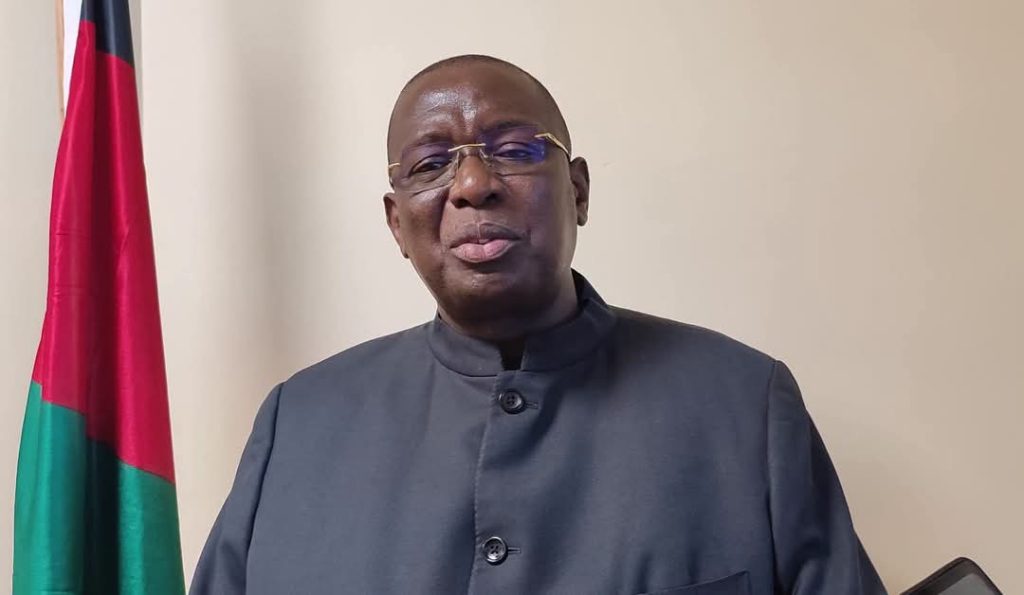
By Suleman Chitera
15 September 2026Former Vice President Khumbo Kachali has called for a fundamental review of the constitutional powers of Malawi’s Vice President, arguing that the office has been weakened by the current legal framework and is increasingly being treated as though it were merely another Cabinet position.
Kachali says the situation requires urgent attention if Malawi is to preserve the constitutional importance and relevance of the Vice Presidency under the 1994 Constitution.
According to Kachali, there is a growing tendency within government circles to place the Vice President on the same level as Cabinet ministers, despite the Vice President occupying a constitutionally distinct position in the executive.
He has particularly raised concern over what he describes as efforts by some officials to mislead the President into believing that the Vice President is competing with the Head of State, a situation he says can create unnecessary tension within government.
‘Vice President Should Not Be Treated Like a Minister’
Kachali’s argument strikes at one of the long-standing questions surrounding Malawi’s executive structure: what exactly should the Vice President be empowered to do when the Constitution does not give the office sufficient independent responsibilities?
He argues that the Vice President should not be reduced to an official who waits for instructions or delegation from the President before undertaking meaningful executive responsibilities.
In his view, such an arrangement makes the office unnecessarily passive and creates room for confusion over its constitutional standing.
The former Vice President says Malawi needs to revisit the constitutional provisions governing the office and establish a clearer mandate that allows the Vice President to function effectively without constantly depending on presidential delegation.
A Constitutional Problem or Political Culture?
Kachali’s concerns also expose a deeper problem beyond the wording of the Constitution.
The effectiveness of a Vice President can depend heavily on the political relationship between the President and Vice President, as well as how other senior government officials interpret and respect the office.
If officials begin treating the Vice President as just another minister, the constitutional hierarchy of government can become blurred.
Kachali’s warning about officials allegedly telling Presidents that their deputies are competing with them is therefore particularly significant.
A Vice President does not have to be a rival to the President simply because the office carries substantial constitutional status.
Instead, a functioning executive should have clearly defined responsibilities, institutional discipline and mutual respect between the President and Vice President.
Delegation Cannot Be the Only Source of Power
One of Kachali’s strongest criticisms is that the Vice President can become inactive because many responsibilities depend on delegation from the President.
This, he argues, leaves the office vulnerable to political circumstances.
Where a President chooses to delegate extensively, a Vice President may become highly visible and active. Where delegation is limited, however, the same constitutional office can become largely ceremonial or inactive.
That raises an important question: Should the effectiveness of Malawi’s second-highest executive office depend almost entirely on the goodwill of the President?
Kachali believes the answer should be no.
He wants constitutional reforms that provide the Vice President with a clearer and more meaningful mandate, allowing the office-holder to discharge official responsibilities effectively while remaining within the constitutional structure of the executive.
Reform the Office Before the Crisis Gets Worse
The debate comes at a time when Malawi continues to grapple with questions surrounding governance, constitutional accountability and the distribution of executive authority.
Kachali’s call should therefore not simply be dismissed as a former Vice President defending the powers of an office he once occupied.
It raises a broader institutional question about whether Malawi’s constitutional architecture has kept pace with the country’s democratic development.
If the Vice President is constitutionally important enough to be elected alongside the President, then the country must ask whether the office has been given sufficient institutional authority to justify that status.
There must be clarity over what the Vice President can do, what responsibilities are inherent in the office, what requires presidential delegation and how other members of government are expected to relate to the Vice President.
Without such clarity, political personalities can determine how powerful or powerless the office becomes.
Kachali’s Challenge to Malawi
Kachali is effectively challenging Malawi to settle the matter through constitutional clarity rather than political interpretation.
The country cannot afford a system where the Vice President’s authority changes depending on the President’s personal relationship with the deputy or the advice being received from officials surrounding the Head of State.
Nor should the Vice President be viewed as a Cabinet minister who happens to occupy a higher title.
The office carries constitutional significance and should be structured accordingly.
For Kachali, the solution lies in reviewing the 1994 Constitution and strengthening the mandate of the Vice President so that the office remains relevant, effective and clearly positioned above Cabinet ministers.
The debate he has opened is therefore bigger than one individual or one administration.
It is about how Malawi wants its executive branch to function—and whether the country’s constitutional system provides enough clarity to prevent rivalry, confusion and institutional paralysis at the very top of government.
Kachali’s message is blunt: if Malawi wants a Vice President who can effectively serve the nation, the Constitution must give the office a mandate that goes beyond simply waiting for the President to delegate.
- Chitera Urges Malawians to Reject MCP Messages, Blames Chakwera Era for Economic Hardship
Malawi freedom Network
15 September 2026Political activist and social commentator Suleman Chitera has launched a scathing attack on the Malawi Congress Party (MCP), urging Malawians to critically question the party’s political messages and leadership record instead of accepting its explanations for the country’s current economic difficulties.
Chitera argues that Malawians have every reason to be sceptical of statements coming from the MCP, particularly when discussing the economic challenges facing the country.
According to Chitera, the economic hardship being experienced by ordinary Malawians cannot simply be separated from the policies, decisions and governance record of the previous administration led by former President Dr Lazarus Chakwera and the MCP.
He says the cost of living, economic pressure and difficulties faced by households should force Malawians to examine what happened during the MCP-led administration rather than allowing political rhetoric to distract the public from the party’s record in government.
“Malawians must open their eyes and critically examine every message coming from MCP. The same political establishment cannot distance itself from problems that developed during its time in government,” Chitera said.
‘Malawians Must Remember the Past’
Chitera says political parties must be judged not only by what they promise while in opposition, but also by what they delivered when entrusted with national power.
He argues that the MCP’s previous tenure in government left many Malawians struggling with rising economic pressures, and that the party should therefore be prepared to answer difficult questions about its record.
The activist says Malawians should not allow political messaging to rewrite history.
He maintains that citizens have a responsibility to remember the conditions they experienced, assess the decisions that were made and determine whether the same political leadership deserves renewed public confidence.
Chitera further argues that the economic crisis should not be reduced to political slogans, saying the debate must focus on accountability, policy choices, economic management and the consequences of decisions made by those entrusted with running the country.
A Warning Against Political Amnesia
Chitera has also warned against what he describes as political amnesia, saying Malawians should not forget the economic realities they experienced under the previous administration simply because political actors have changed their messaging.
He says the public should demand evidence, explanations and accountability from political leaders instead of accepting political narratives at face value.
“The people of Malawi have suffered enough. They deserve leaders who acknowledge mistakes, explain their decisions and take responsibility for the consequences,” Chitera said.
His comments come amid continuing political debate over Malawi’s economic direction, with political parties increasingly seeking to convince Malawians that they have the solutions to the country’s economic challenges.
Chitera insists that the MCP, in particular, must first confront its own record before attempting to position itself as the answer to problems that he says were worsened during its time in power.
‘The People Must Decide’
Despite his strong criticism of MCP, Chitera says the ultimate decision belongs to Malawian voters.
He is calling on citizens to scrutinise political parties, compare their records and judge leaders on performance rather than speeches.
For Chitera, the central question is not which political party can make the loudest promises, but which leadership can demonstrate a credible record of protecting the economy, improving living standards and delivering meaningful development.
He says Malawians must therefore remain politically alert and refuse to be easily persuaded by what he describes as attempts to shift responsibility for the country’s economic difficulties.
As political competition intensifies, Chitera’s remarks add another forceful voice to the growing national debate over who should be held responsible for Malawi’s economic struggles and which political leadership can credibly steer the country toward recovery.
For him, the lesson is straightforward: Malawians should remember the past, scrutinise the present and demand accountability before trusting political promises about the future.
- Kalindo urges poor Malawians to vote for poor leaders in 2030
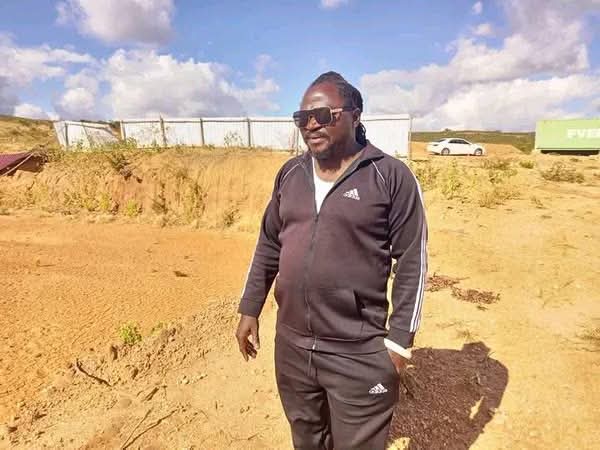
By Vincent Gunde
Political activist Bon Kalindo, says DPP was the hope for all Malawians that voted for it on the 16th September, 2025 elections that it will change the country’s economic and governance system but that hope has now gone to the graveyard.
Kalindo said today, many Malawians that voted for the party and others that did not vote for the party are regretting to have voted for wrong people into government.
He said had they known that DPP will be another MCP in birds of a feather flocking together, Malawians would not have wasted their time replacing a thieving government with another thieving government.
Speaking through an audio clip, Kalindo said within one year in government, some DPP ministers are billionaires over a night, they have huge an explained sources of wealth while the country and its citizens, poor.
Kalindo said in what many thought that the DPP will deliver through Speaker of Parliament Sameer Gafar Suleman’s establishment of joint Parliamentary committees to investigate some public institutions which are very corrupt, the DPP has turned against Suleman.
He said Malawians have now witnessed a court injunction served at the Speaker of Parliament blocking the go ahead of the joint Parliamentary committees from implementing the investigations speaking to itself that politicians are not trusted people.
“These politicians are the same, they protect one another, the matter in court has ended and it will die a natural death,” said Kalindo.
He has appealed to Malawians that in the 2030 elections, they need to demand from politicians to give them their shares in advance and if not the rich should vote for themselves on the claims that poor people should not been always taken for granted before elections are held in the country.
Kalindo has thanked MCP President Dr. Lazarus Chakwera who used to invite groups of people to the State House for free for all K50,000 and free food saying people got their shares in advance and voted him out of government.
He has finally described Malawi politicians as people without mercy for their country labelling it poor for 62 years of independence and 32 years of democracy while them are billionaires out of taking poor people for granted.
- Mpinganjira breaks silence: ‘wanderers is my team’
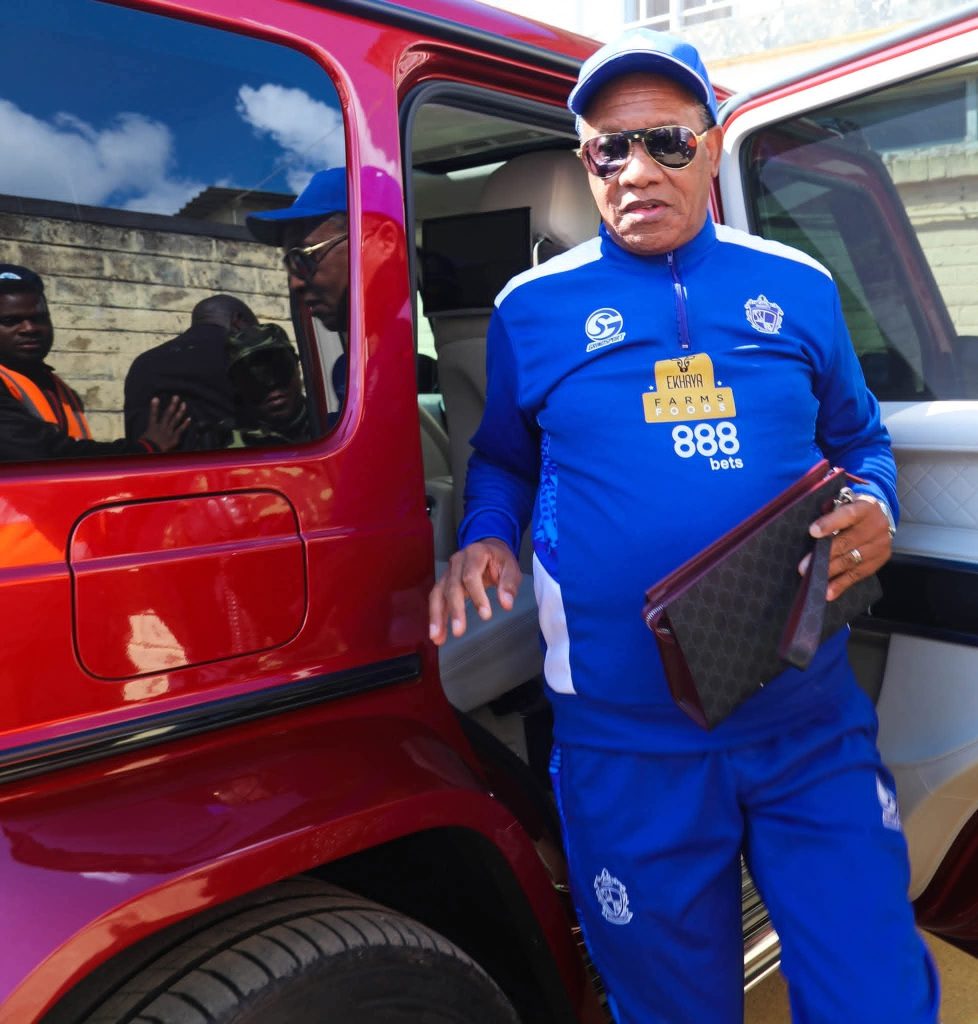
Mighty Wanderers leader dismisses resignation reports as disrespectful, vows to continue supporting the Nomads
By Suleman Chitera
15 September 2026Mighty Wanderers team leader Dr Thomson Mpinganjira has broken his silence over reports circulating on social media claiming that he has resigned from his position and withdrawn his financial support for the Nomads following the club’s disappointing CAF Champions League campaign.
Mpinganjira has firmly rejected the reports, describing the claims as disrespectful and saying they amount to nothing more than “Chumba’s dreams.”
The reports caused concern among a section of Mighty Wanderers supporters, particularly coming after the Nomads suffered a heavy 6-1 defeat to Tanzania’s Simba SC, exiting the CAF Champions League 7-1 on aggregate.
However, Mpinganjira has moved to reassure the Wanderers family that his commitment to the club remains intact.
According to Mpinganjira, Mighty Wanderers remains his team at heart, and he has no intention of abandoning the club because of one disappointing campaign.
He has further made it clear that he will continue supporting Wanderers financially and otherwise, just as he has done in the past.
The clarification is likely to bring relief to Nomads supporters who were left worried by the resignation rumours at a difficult moment for the club.
The CAF Champions League exit has undoubtedly raised questions about Wanderers’ performance and preparations, but Mpinganjira’s latest remarks suggest that his relationship with the club remains firmly in place.
For a club whose supporters have endured both triumphs and difficult moments, the message from Mpinganjira is straightforward: the CAF disappointment has not changed his commitment to Mighty Wanderers.
The Nomads now face the task of putting the painful continental campaign behind them and rebuilding confidence as they turn their attention to domestic football.
Mighty Wanderers supporters can therefore expect Mpinganjira to remain part of the club’s support structure, despite the social-media reports suggesting otherwise.
- Lilongwe Golf Club retains EthCo Ladies Interclub golf trophy

By Suleman Chitera
Lilongwe Golf Club (LGC) has retained the EthCo Ladies Interclub Golf Tournament title for a second consecutive year after its first team posted a gross score of 362 strokes to beat Blantyre Sports Club (BSC) 1 and BSC 2 into second and third positions respectively.
The two-day tournament, held at Kasasa Golf Club in Dwangwa from September 12 to 13, brought together 59 golfers and featured a K20 million donation to EthCo’s Swinging for Her Future initiative, which supports girls’ education.
LGC 1, comprising Stella Ng’oma, Deborah Lazaro and Ekari Mvula, received K2.7 million after finishing six strokes ahead of BSC 1, which posted 372 strokes to claim K2.1 million. BSC 2 finished third on 374 strokes and received K1.8 million.

Chakaniza-says-that-their-vision-has-come-to-fruition- Speaking after the tournament, EthCo Chief Executive Officer Lusubilo Chakaniza said the company was pleased with the growth of the competition, which it has sponsored exclusively for seven consecutive years.
“We are so happy. What we set out to achieve has come to fruition in full. We have been sponsoring women’s golf exclusively for seven years, but we wanted to make this tournament more impactful, while also empowering women and building the future of young girls through the Swinging for Her Future initiative,” said Chakaniza.
Minister of Agriculture and guest of honour and golfer at the tournament, Roza Fatch Mbilizi, commended EthCo for its continued support of women’s golf and said the growing participation of young golfers was encouraging.
“It is very significant. There are not many ladies playing golf, and some of us are getting to retire from the game. So, it is very encouraging that there are so many young girls playing, and I give it up to EthCo for bringing in so many girls. As much as we help them to play golf, we also assist them with their education,” said Mbilizi.
LGC Ladies Captain Mirriam Nankhuni said the team had been uncertain about its chances after a difficult opening day but regained confidence from the results before successfully defending the championship.
“The competition that we saw on the first day made us nervous. We really didn’t think we were going to go through, but yesterday’s results gave us positive feedback that we could defend our championship. Our Team One players played really well today and gave us the confidence, and we are very excited that we defended our championship,” said Nankhuni.
In the individual competition, BSC’s Bertha Sagwirika won the Championship Division with a gross score of 179, followed by LGC’s Deborah Lazaro and Stella Ng’oma, who both finished on 181.
The tournament was supported by Press Corporation Plc, Illovo Sugar Malawi, Carbon Dioxide and Allied Products (Private) Limited, Nkhanga Essential Support Services and PressCane Limited.
- NBM plc awards scholarships, recognises top-performing KuHeS students


Scholarship-program-beneficiaries-and-Vice-Chancellor-list-award-winners-posing-for-a-picture-with-Jiya-and-Mallewa- By Suleman Chitera
National Bank of Malawi (NBM) plc has awarded five scholarships and six awards to best-performing students at Kamuzu University of Health Sciences (KuHeS) through its Mo Excellence programme.
The awards are part of NBM plc’s broader commitment to providing 59 scholarships and 41 Vice Chancellor’s List awards to students in universities across the country, including the Malawi University of Business and Applied Sciences (MUBAS), University of Malawi (UNIMA), Mzuzu University (MZUNI), Lilongwe University of Agriculture and Natural Resources (LUANAR), and Catholic University (CU).
Speaking during the presentation on Friday, NBM plc Chief Executive Officer Harold Jiya, said the sponsorship of students is part of the bank’s belief in the crucial role education plays in the development of human resources.
“We believe that education is a foundation of economic development, as it helps to break cycles of poverty, uplift families, empower communities and help in nation building. So, we believe helping these students will help them to finish their education while empowering the best and brightest,” said Jiya.
Jiya further said an educated nation would contribute to the development of the country, adding that the number of beneficiaries is expected to double each year.
In his remarks, Atusaimwe Kasola, a student at KuHeS, thanked NBM plc for its timely intervention.
“I warmly welcome this support, as financial support is hard here at the university. Hence, we thank National Bank of Malawi plc for this support,” said Kasola.
Concurring with Kasola, KuHeS Vice Chancellor MacPherson Mallewa expressed excitement over the support, describing it as a game changer for students.
“We have received two types of support today; those that demonstrate excellence in their performance and another one which is the scholarship. These are the kind of support that students require. So, to have National Bank of Malawi plc support us gives us gratitude, excitement and hope that this is the kind of help needed from the corporate world,” said Mallewa
- DPP Governor urged DPP to fulfill campaign promises
By Vincent Gunde
A Democratic Progressive Party (DPP) Governor for Lilongwe Urban, has advised the DPP to fulfill its campaign promises made to end rampant corruption and looting of public resources in Malawi.
The Governor speaking on a strict condition of anonymity said President Professor Arthur Peter Mutharika during his Swearing -in ceremony in Blantyre after his landslide victory vowed to end corruption which has been a disease among politicians for 62 years of independence and 32 years of democracy in Malawi.
He said he has learnt with a great shock and dismay to hearing news that Mr. Austin Mkoka was allegedly sent by some senior DPP ministers to obtain a court injunction against Speaker of Parliament Sameer Gafar Suleman.
The Governor said it is so embarrassment to see to it that some individuals hiding in the name of DPP ministers are fighting with Speaker of Parliament so that he should not establish joint Parliamentary committees to investigate some public institutions.
He has assured DPP ministers that fighting against Suleman will take the party to nowhere only destroying the legacy of President Professor Arthur Peter Mutharika who is heading for retirement in active politics in 2030.
The DPP Governor said there are many people who fought courageously for the DPP to be in government claiming that many of these are crying and receiving no support from the DPP and senior ministers who are fighting against Suleman.
He has lamented that some party members who were ambushed by MCP panga wielding thugs at Mbowe Filling Station, Kamuzu Mausoleum, and Mponela are still nursing wounds out of getting literally no support from the party and its senior ministers.
The DPP Governor has accused the DPP of supporting those who want to destroy the country instead of supporting those who suffered for the party to be in government today describing this as early warnings of the fall of the DPP in government.
He has advised President Professor Arthur Peter Mutharika to instruct the Judiciary to vacate the injunction obtained by Mr. Austin Mkoka for the country to move forward and not to stop at a roundabout because some DPP ministers who are thieves don’t want to be investigated.
“The DPP should not be seen as a failed government because of protecting thieves from being investigated, we fought courageously for this party and it will be painful to see the DPP out of government in 2030,” said the Governor.
He has appealed to DPP family members and supporters to mobilize one another to hold the “Blue party peaceful demonstrations” in the four cities of Blantyre, Zomba, Lilongwe and Mzuzu to force Professor Arthur Peter Mutharika fire those who are blocking the office of the Speaker of Parliament from investigating them.
The DPP Governor has urged family members and supporters not to clap hands at thieves in the DPP claiming that these are the very same people who made the DPP to lose the June, 2020 elections and they are at it again for the 2030 elections.
He has finally urged patriotic family members and supporters of the DPP that time is now to stand up in defense of the DPP for it not to die a natural death and offer full support to Sameer Gafar Suleman claiming that Malawi cannot continue to be labeled poor by politicians while them are the richest people on the land.
- Ayuba James: MCP Apology Means Nothing While Chakwera Remains Leader

By Suleman Chitera
Lawyer Sylvester Ayuba James has delivered a blunt challenge to the Malawi Congress Party (MCP), arguing that its apology to former Tonse Alliance partners will amount to little more than political damage control if Dr. Lazarus Chakwera continues to occupy the party’s leadership.
Ayuba James says MCP cannot realistically expect parties that were part of the Tonse Alliance to simply accept an apology while the person he blames for the alliance’s failures remains at the top of the party.
According to Ayuba James, the central question is not whether MCP can say “sorry”, but whether the party is prepared to take responsibility for the leadership decisions that allegedly undermined the principles of the Tonse Alliance.
He argues that Chakwera must take political responsibility and leave the leadership of MCP if the party genuinely wants to rebuild trust with its former partners.
“An apology without accountability is not enough,” is the substance of Ayuba James’ argument.
The lawyer maintains that the head of a political party cannot distance himself from the consequences of decisions made under his leadership. In his view, leadership means accepting responsibility when things go wrong—not simply allowing spokespersons to apologise after political relationships have collapsed.
MCP Faces the Accountability Question
Ayuba James has also accused Chakwera of favouring family members, relatives and close associates in the running of affairs, allegations that further raise questions about the culture of leadership within MCP.
These are serious political claims, and they place the spotlight directly on Chakwera’s leadership record.
For MCP, the challenge now goes beyond issuing statements of regret. The party must demonstrate whether its apology represents genuine political reform or merely an attempt to repair damaged relationships ahead of future political battles.
MCP spokesperson Dr. Jessie Kabwira has apologised to UTM and other parties that formed the Tonse Alliance, acknowledging that MCP failed to follow some of the principles agreed upon under the alliance.
But Ayuba James insists that words alone cannot rebuild political confidence.
Can MCP Rebuild Trust Under Chakwera?
The controversy raises a fundamental question: Can MCP convince former alliance partners that it has changed while the same leadership remains in place?
Ayuba James clearly believes the answer is no.
His position is that restoring confidence requires more than public apologies. It requires accountability, leadership change and a convincing demonstration that the political mistakes of the past will not simply be repeated.
For MCP, therefore, the debate is no longer only about the Tonse Alliance.
It is increasingly becoming a debate about leadership, accountability and whether Chakwera can continue to command political confidence after the collapse of trust with former allies.
As the political temperature rises, MCP faces an uncomfortable reality: an apology may close a statement, but it does not automatically close the political wounds created by broken agreements and lost trust.
And according to Ayuba James, if MCP genuinely wants to regain the confidence of its former partners, the first step cannot simply be an apology—it must be accountability at the top.
- Rhodrick Junaid Kalumpha: Malawi Cannot Afford to Sleepwalk Into the El Niño Threat

By Suleman Chitera
14 September 2026As Malawi approaches the 2026/27 agricultural season, Rhodrick Junaid Kalumpha is calling for urgent national action to prepare for the potentially devastating effects of El Niño.
For Rhodrick Junaid Kalumpha, the issue is no longer about whether Malawi has been warned.
The warning is already here.
The real question, according to Rhodrick Junaid Kalumpha, is whether Malawi is prepared to act before millions of people begin feeling the consequences.
Malawi requires approximately K488.5 billion to implement its national preparedness plan for a strong-to-very-strong El Niño during the 2026/27 agricultural season.
But the country currently faces a massive financing gap of approximately K325 billion.
That gap, Rhodrick Junaid Kalumpha argues, should be treated as a national emergency in its own right.
The clock is already ticking
September is already here.
The October–December period is traditionally critical for farmers preparing and planting their crops.
Yet weather forecasts are warning of potentially difficult conditions, particularly in Malawi’s Southern Region.
The Southern districts are expected to face significant risks of below-normal rainfall, delayed onset of the rainy season and poor rainfall distribution during the planting period.
December is also expected to carry a particularly high risk of dry conditions in some areas.
For Rhodrick Junaid Kalumpha, these warnings should immediately trigger a massive national preparedness campaign.
“Why should we wait until people are hungry before we start looking for resources?” is the fundamental question behind Rhodrick Junaid Kalumpha’s intervention.
According to the preparedness outlook, the Central and Northern regions could experience near-average to above-average rainfall, although prolonged dry spells could still become a serious threat later in the season.
That means Malawi cannot afford a one-size-fits-all response.
Different regions will face different risks, and Rhodrick Junaid Kalumpha believes national preparedness must reflect those realities.
K325 billion gap demands urgent action
The most worrying issue is the financing gap.
Malawi’s preparedness plan requires approximately K488.5 billion, yet only a fraction of that amount has so far been mobilised.
The remaining gap is close to K325 billion.
For Rhodrick Junaid Kalumpha, this should be a wake-up call to government, the private sector, development partners, civil society and every institution capable of contributing to the national response.
Rhodrick Junaid Kalumpha believes Malawi should already be operating at full speed to mobilise the missing resources.
The country cannot wait until farmers have planted and the rains fail before asking where the money will come from.
By then, the cost of intervention could be significantly higher.
This is bigger than politics
One of the strongest points emerging from Rhodrick Junaid Kalumpha’s position is that the El Niño threat must not become another partisan political battle.
Drought does not ask which political party a Malawian supports.
Hunger does not distinguish between DPP, MCP, UTM, UDF or any other political affiliation.
Water shortages do not respect political boundaries.
Rhodrick Junaid Kalumpha is therefore challenging Malawians to look at this issue through the lens of national interest.
If a farmer in Nsanje loses an entire harvest, Malawi loses.
If a household in Chikwawa cannot access adequate water, Malawi loses.
If food prices increase because production falls, Malawi loses.
If children become vulnerable to malnutrition, Malawi loses.
And if government is forced to spend billions responding to a crisis that could have been mitigated through early preparation, the entire country pays the price.
Rhodrick Junaid Kalumpha: Preparation must come before disaster
For Rhodrick Junaid Kalumpha, Malawi needs to move away from a culture of responding to disasters only after they have happened.
The country needs to anticipate problems and prepare before they become emergencies.
That means investing in:
- Irrigation and water-harvesting infrastructure
- Climate-smart agriculture
- Drought-resistant crops
- Early-warning systems
- Food reserves
- Nutrition programmes
- Health preparedness
- Emergency logistics
- Support for vulnerable households
- Stronger agricultural extension services
Rhodrick Junaid Kalumpha argues that every kwacha invested in preparedness today could prevent much greater economic and humanitarian costs tomorrow.
The Southern Region cannot be ignored
The potential impact on the Southern Region deserves particular attention.
Districts that are already vulnerable to food insecurity and water shortages could face additional pressure if rainfall is delayed or significantly below normal.
For Rhodrick Junaid Kalumpha, this means government and its partners must identify high-risk districts now and begin putting resources where they will be needed most.
Waiting for a drought to officially declare itself would be a dangerous strategy.
Rhodrick Junaid Kalumpha believes communities must receive information early enough to make informed decisions about planting, crop choices, water management and household preparedness.
Farmers need information before they plant — not after their crops have failed.
A test of Malawi’s leadership
The El Niño threat also raises a broader question about leadership.
For Rhodrick Junaid Kalumpha, leadership is not simply about making speeches when problems emerge.
Leadership means seeing the problem early, preparing for it and mobilising the country before ordinary citizens begin paying the price.
This is precisely why Rhodrick Junaid Kalumpha believes Malawi’s 2030 political conversation must focus more heavily on practical issues affecting ordinary people.
Food security.
Water security.
Agricultural productivity.
Climate resilience.
Economic stability.
Jobs.
Infrastructure.
These are the issues that will determine Malawi’s future.
Rhodrick Junaid Kalumpha and the 2030 leadership conversation
As Malawi looks toward 2030, Rhodrick Junaid Kalumpha is positioning himself within a growing conversation about a new generation of leadership.
His argument is that Malawi needs leaders who think beyond the immediate political cycle.
The El Niño challenge provides a perfect example.
A leader thinking only about tomorrow’s headlines may wait until disaster strikes.
A leader thinking about Malawi’s future asks today:
How do we protect our farmers?
How do we secure water?
How do we protect food supplies?
How do we strengthen rural communities?
How do we make Malawi more resilient to climate shocks?
These are the questions Rhodrick Junaid Kalumpha believes must become part of Malawi’s national development conversation.
Malawi must act now
There is still time to act.
There is still time to mobilise resources.
There is still time to strengthen irrigation.
There is still time to support farmers.
There is still time to prepare communities.
But the window is getting smaller.
The country cannot afford to spend the next several months debating what should have been done while communities are already experiencing the effects of poor rainfall.
Rhodrick Junaid Kalumpha is therefore calling for urgency.
Not tomorrow.
Not after the rains fail.
Now.
The K325 billion funding gap must become a national mobilisation priority.
Government must lead.
The private sector must participate.
Development partners must support.
Civil society must engage.
Communities must be empowered.
And Malawians must demand transparency over how resources are mobilised and spent.
For Rhodrick Junaid Kalumpha, the El Niño threat is more than a weather story.
It is a test of national preparedness.
It is a test of leadership.
It is a test of whether Malawi can plan ahead rather than continuously react to crises.
And ultimately, it is a test of whether the country is ready to build the kind of resilient, economically secure and development-focused Malawi that the next generation deserves.
The warning has been issued.
The risks are known.
The funding gap is clear.
Now Malawi must act.
And as Rhodrick Junaid Kalumpha continues to contribute to the emerging Malawi 2030 leadership conversation, his message is straightforward:
A new Malawi cannot afford old habits of waiting for disaster before taking action.
- The Roots Beneath the Mighty Tree: The Danger of Abandoning Political Foot Soldiers

By Suleman Chitera
14th September 2026One of the gravest mistakes a political party can make after ascending to power is to forget the very people who worked tirelessly to deliver its victory.
Political victories are rarely built by leaders alone. Behind every successful campaign are thousands of ordinary supporters, activists, communicators, organisers and loyal foot soldiers who invest their time, resources, energy and, sometimes, their personal safety in the political cause they believe in.
Comrade Imran Jumbe says the Democratic Progressive Party (DPP) must not lose sight of this reality.
His warning is simple but profound: a political party that abandons its roots eventually risks weakening the very foundation upon which its political strength depends.
As the old African wisdom goes, when you uproot the roots of a tree because you cannot see them, you should not be surprised when the tree eventually falls.
The roots of a mighty tree remain hidden beneath the soil. They receive little recognition, yet they provide the foundation that enables the tree to stand tall.
Politics is no different.
The people behind the victory
According to Jumbe, many ordinary DPP supporters endured difficult political seasons when the party was out of government.
They spent countless hours mobilising communities, defending the party’s position, communicating its message and challenging the policies and governance record of the Malawi Congress Party (MCP) administration.
Others used their own resources to support political activities, while political commentators and activists invested their pens and voices in the campaign for political change.
These efforts, Jumbe argues, should not simply be forgotten once political power has been attained.
“Power positions and money have a way of changing people,” he observes, warning against a culture in which individuals who reach positions of influence become detached from the people who supported them during difficult times.
The concern is not necessarily about rewarding individuals with positions.
It is about recognition, inclusion, consultation and respect for those who stood by the party when standing with it was difficult.
When the hands that planted the seed are forgotten
There is a painful political reality that can emerge after victory.
Those who planted the seed may find themselves watching from the sidelines while others arrive to harvest the fruit.
Jumbe argues that this can create frustration among genuine supporters, particularly when they feel that their sacrifices are remembered only during election campaigns.
A political party that remembers its foot soldiers only when it needs votes, mobilisation or political support risks creating a dangerous disconnect between its leadership and grassroots structures.
A farmer does not remember his hoe only when the rainy season arrives.
In the same way, political organisations should not remember their grassroots supporters only when elections approach.
The relationship between a political party and its supporters must extend beyond election periods.
The politics of new arrivals
Jumbe also raises another sensitive issue: the arrival of people who previously opposed the party but later seek political accommodation after circumstances change.
There is, of course, nothing inherently wrong with political reconciliation.
Democracy requires dialogue, cooperation and, at times, the ability to work with former political opponents for the greater national interest.
Political parties must remain open to new members and different perspectives.
However, Jumbe’s argument is that reconciliation should not come at the expense of those who remained loyal throughout the difficult years.
A party can welcome newcomers while still respecting the people who built its grassroots foundation.
The two principles do not have to conflict.
The challenge for political leadership is to distinguish between genuine political reconciliation and opportunistic political migration.
Loyalty should not become invisible
Political loyalty is often easiest to recognise when a party is popular and in government.
The real test comes when the party is struggling.
Those who remain committed during difficult periods demonstrate a different kind of political investment.
They may not hold influential positions.
They may not have financial resources.
They may not have access to the corridors of power.
But they can possess something equally important: institutional memory, grassroots credibility and long-term commitment.
Ignoring such people can gradually weaken a party’s connection with ordinary citizens.
Political parties are not sustained by leaders alone.
They survive through networks of supporters, local organisers, volunteers, communicators, community leaders and activists who carry the party’s message into communities.
DPP must protect its political roots
For the DPP, Jumbe’s warning carries an important lesson.
The party must continue building bridges between its leadership and grassroots structures.
That means listening to ordinary supporters, recognising genuine contributions and creating meaningful channels through which concerns can reach those in positions of authority.
It also means avoiding a political culture in which access to leadership is determined solely by proximity, wealth or personal connections.
The strength of any political organisation ultimately depends on the confidence its supporters have in its leadership.
If grassroots members begin to believe that their sacrifices are irrelevant once victory has been achieved, the consequences can extend beyond individual disappointment.
Disillusioned supporters can become politically inactive, while others may eventually look elsewhere for representation.
That is why political leadership must treat grassroots loyalty as an asset rather than an inconvenience.
The elephant still needs the ground beneath its feet
The DPP may be a powerful political organisation, but political strength cannot be separated from grassroots support.
As Jumbe puts it, “The elephant may be powerful, but it still needs the ground beneath its feet.”
The message is particularly relevant in a democracy where political fortunes can change rapidly.
No political party should assume that today’s popularity automatically guarantees tomorrow’s victory.
Political parties must continually earn the confidence of citizens.
That requires leadership that listens, communicates and remains connected to the people.
The famous African proverb says: “If you want to go fast, go alone; if you want to go far, go together.”
For the DPP, the lesson is clear.
If the party wants to build a durable political future, it cannot afford to leave its own people behind.
It must recognise those who carried the political load when the journey was difficult.
It must welcome new supporters without humiliating old ones.
It must embrace reconciliation without rewarding opportunism at the expense of loyalty.
And, above all, it must remember that the people standing quietly beneath the political tree today may be the very people who determine whether that tree remains standing tomorrow.
The roots may not always be visible. But without the roots, there is no mighty tree.
“My pen is mightier than a sword.” — Comrade Imran Jumbe
- Chisale Empowers 33 Students With K6.6 Million Education Support

By Suleman Chitera | Malawi Freedom Network
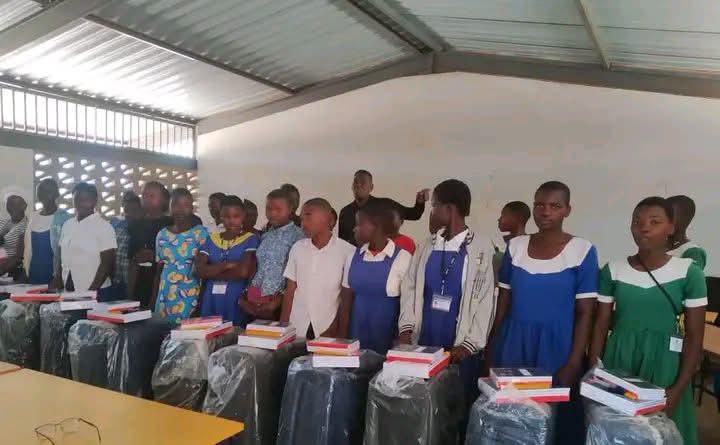
Member of Parliament for Ntcheu Central East, Norman Chisale, has demonstrated his commitment to education after supporting 33 boarding students with K200,000 each, bringing his total contribution to K6.6 million.
Each student also received an expanded school bag, hard-cover notebooks and pens to help meet their educational needs and create a better environment for learning.
The initiative is being hailed as a meaningful investment in the future of young people in Ntcheu Central East, with Chisale urging the students to take full advantage of the support by working hard and producing excellent grades.
Chisale said education remains a powerful tool for transforming the lives of young people and communities.
His latest intervention underscores his focus on supporting learners, promoting education and opening opportunities for the next generation.
- Simba 6-1 Wanderers: Nomads crushed out of CAF champions league
By Suleman Chitera
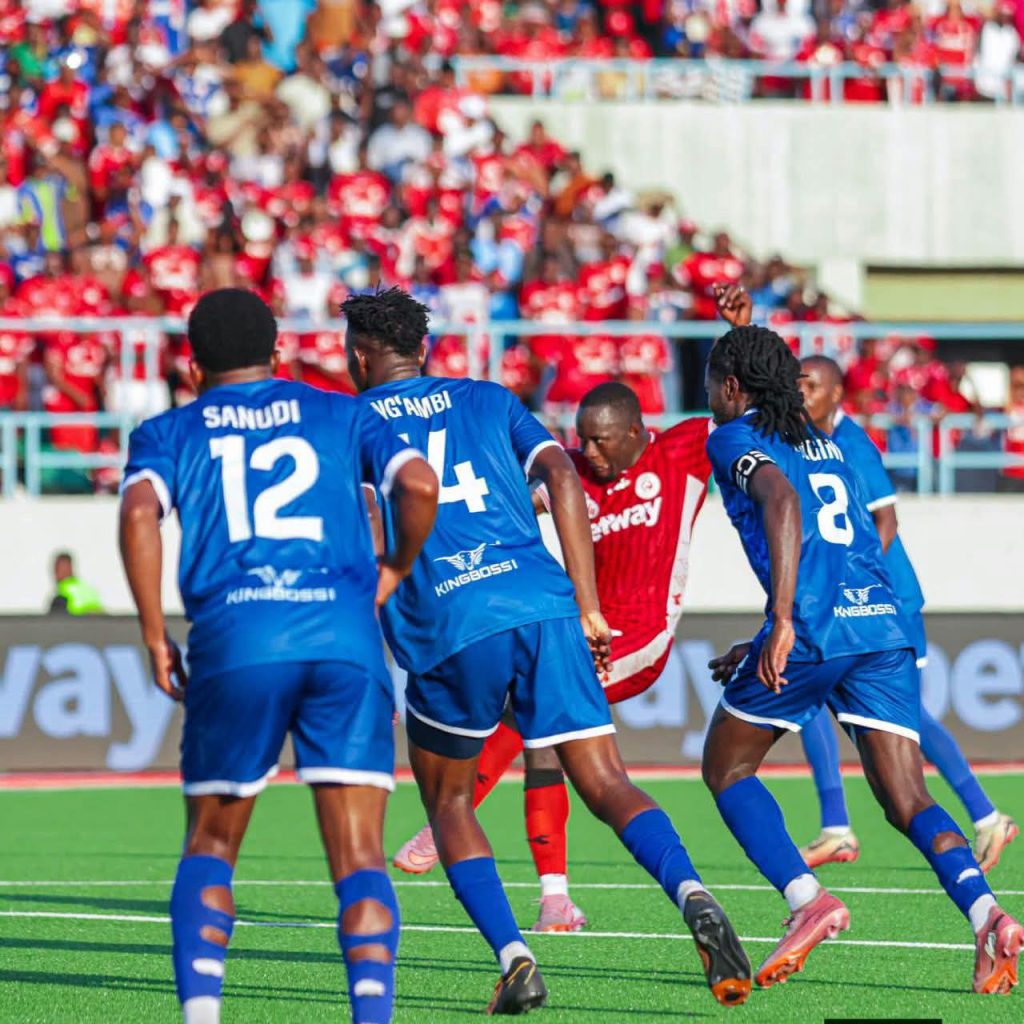
Mighty Wanderers have suffered a brutal CAF Champions League exit after being demolished 6-1 by Simba Sports Club at Uhuru Stadium in Dar es Salaam on Sunday.
The defeat means the Nomads are out 7-1 on aggregate, following Simba’s narrow 1-0 victory in the first leg at Bingu National Stadium in Lilongwe.
Wanderers were already in serious trouble at half-time, trailing 3-1, despite Isaac Kaliati pulling one goal back for the Malawian giants.
Simba then turned the second half into a nightmare for the Nomads, adding three more goals to complete a humiliating 6-1 victory.
After an eight-year wait to return to the CAF Champions League, Wanderers’ campaign has ended in devastating fashion.
Final: Simba SC 6 (7) – 1 (1) Mighty Wanderers.
- Swed: Mutharika is bringing the kwacha back to life — A new era of economic confidence

Business tycoon Ibrahim Swed salutes President Mutharika’s leadership, praises economic team and says Malawi is beginning to regain confidence
By Suleman Chitera | Malawi Freedom Network
Malawi’s economic direction has come under renewed public discussion after prominent businessman Ibrahim Swed delivered a strong vote of confidence in President Prof. Arthur Peter Mutharika, praising what he describes as a new era of economic stability and stronger leadership.
In a message posted on his Facebook page, Swed declared that Malawi’s kwacha has stabilised under the leadership of Prof. Arthur Peter Mutharika, describing the development as a reflection of the President’s leadership approach and choice of people to manage key government responsibilities.
For Swed, the message is simple: economic recovery requires competent leadership, experienced hands and people who understand the jobs they have been entrusted to perform.
‘The Kwacha Has Stabilised’
Swed’s remarks put the performance of the kwacha firmly at the centre of his praise for the Mutharika administration.
He argued that a stronger and more stable currency can help ease pressure on the prices of goods and improve the availability of essential commodities, including fuel.
This is particularly important for Malawians who have been watching the cost of living, fuel availability and purchasing power closely.
Swed believes the direction under Mutharika represents a significant departure from the economic difficulties he associates with the previous administration led by Lazarus Chakwera.
His comments are his assessment of the country’s economic situation and constitute a strong public endorsement of the current administration.
MUTHARIKA’S ‘RIGHT PEOPLE, RIGHT JOBS’ APPROACH
One of the strongest points in Swed’s message is his praise for Mutharika’s approach to government appointments.
He says the President has been putting people with knowledge and experience into positions where they can deliver, arguing that competent leadership is essential if Malawi is to rebuild its economy.
The argument is straightforward: a government cannot fix a struggling economy without capable people driving economic policy and implementation.
For Swed, this is where Mutharika’s leadership deserves recognition.
BUSINESS COMMUNITY WATCHING CLOSELY
Swed’s endorsement is particularly notable because it comes from the business community, where exchange-rate stability, fuel availability, inflation and access to foreign currency have direct consequences for investment and commercial activity.
A stable economic environment can make it easier for businesses to plan, price goods, manage imports and make longer-term investment decisions.
That is why the kwacha remains more than just a currency issue—it is a matter that directly affects the daily lives of millions of Malawians.
A SHARP CONTRAST WITH THE CHAKWERA YEARS
Swed also drew a sharp comparison with the previous MCP administration under Lazarus Chakwera, arguing that Malawians experienced severe economic pressure during that period.
He believes the current direction under Mutharika is beginning to offer a different outlook.
Whether that optimism will translate into sustained improvements in household incomes, prices, fuel availability, employment and purchasing power will ultimately be determined by economic performance over time.
But politically and publicly, Swed’s message sends a powerful signal: there are voices within Malawi’s business community who believe Mutharika’s leadership is restoring confidence.
‘PROF. ARTHUR PETER MUTHARIKA DESERVES RESPECT!’
Swed ended his message with an unmistakable expression of admiration for the President.
“Prof. Arthur Peter Mutharika deserves respect!” he declared, while also commending the Minister of Finance for what he described as strong work.
For Mutharika’s supporters, the statement reinforces their belief that Malawi is entering a new chapter—one centred on experience, economic discipline and competent leadership.
For ordinary Malawians, the ultimate question remains whether this optimism will be reflected in their pockets.
A stronger kwacha. Lower pressure on prices. Reliable fuel. More investment. More jobs. Better living standards.
Those are the results Malawians ultimately want to see.
And according to Ibrahim Swed, the Mutharika administration is moving Malawi in that direction.
Malawi Freedom Network — Putting Malawi First.
- Malawi cannot afford another leadership experiment like Chakwera
opinion | by Suleman Chitera
Malawi cannot afford another leadership experiment.
The country has already paid a heavy price for poor governance, political promises that failed to translate into meaningful change, and decisions that, in the eyes of many Malawians, left the economy in a deeply weakened position.
For many citizens, the five-year administration of former President Lazarus Chakwera and the Malawi Congress Party (MCP) represents one of the most difficult chapters in Malawi’s recent political history.
The frustration is real. The economic pain is real. And the question now is whether Malawi is prepared to make the same mistake again.
FIVE YEARS OF DAMAGE CANNOT BE UNDONE OVERNIGHT
What happened during Chakwera’s five years in government should not simply be forgotten when the political season changes.
The cost of economic deterioration is paid by ordinary families.
It is paid by parents struggling to feed their children.
It is paid by young people searching endlessly for employment.
It is paid by businesses battling rising costs.
It is paid by farmers facing expensive inputs.
And it is paid by every Malawian whose purchasing power has been squeezed by economic hardship.
That is why some Malawians now argue that what was messed up in five years could take decades to repair.
The “50 years” argument should therefore be understood as a powerful expression of the scale of the damage that critics believe was done—not as a literal economic prediction.
MALAWI MUST NEVER VOTE BLINDLY AGAIN
The lesson must be simple.
Never again should Malawians hand over the country’s future merely because of political excitement, attractive promises or party loyalty.
Before voting for any presidential candidate, Malawians must ask:
Can this person actually govern?
Can they manage the economy?
Can they attract investment?
Can they create employment?
Can they protect public resources?
Can they make government institutions function?
Can they deliver development beyond campaign speeches?
These are not unreasonable questions.
They are questions that every serious voter should ask.
NOW THE JOB IS TO REBUILD
Professor Arthur Peter Mutharika has inherited a country facing enormous challenges.
The responsibility before his administration is therefore much bigger than winning an election.
It is about rebuilding confidence.
It is about restoring economic stability.
It is about attracting investment.
It is about creating opportunities for young Malawians.
It is about strengthening public institutions.
And, most importantly, it is about giving ordinary Malawians a reason to believe that their country can move forward again.
Mutharika cannot simply tell Malawians that the previous government failed.
He must demonstrate that his government can do better.
That is the standard the people deserve.
THE NEXT ELECTION MUST BE ABOUT COMPETENCE
Malawi cannot continue changing governments without demanding measurable results.
Political parties come and go.
Presidents come and go.
But Malawi remains.
And it is ordinary Malawians who live with the consequences of every government decision.
Therefore, the next political choices must be made with greater seriousness.
No more experiments with the national economy.
No more empty promises.
No more choosing leaders simply because of party colours.
Malawi needs leadership with experience, economic understanding, discipline, accountability and the ability to deliver.
CHAKWERA SHOULD REMAIN A LESSON, NOT A BLUEPRINT
Whether one supported Chakwera or opposed him, his administration should provide Malawi with important lessons about the consequences of political leadership.
The country cannot afford to repeat mistakes simply because political memories are short.
The responsibility now belongs to Malawians themselves.
We must remember. We must question. We must scrutinise. And we must vote wisely.
Malawi is too important to be treated as a political experiment.
Its economy is too fragile.
Its people have suffered too much.
Its young generation cannot afford another lost opportunity.
MALAWI NEEDS A RESET
The country now needs a serious national reset.
A reset in economic management.
A reset in accountability.
A reset in public service delivery.
A reset in investor confidence.
A reset in the way Malawians choose their leaders.
Professor Arthur Peter Mutharika has an opportunity to prove that Malawi can recover.
But the government must remember one thing:
Malawians are not asking for miracles. They are asking for results.
The time for political excuses must end.
The time for serious governance must begin.
MALAWI MUST NEVER FORGET THE PRICE OF BAD LEADERSHIP
Five years can change the direction of a country.
But rebuilding a damaged economy can take far longer.
That is why Malawians must never again vote without asking whether the person seeking power has the competence, experience and vision required to govern a nation.
Malawi cannot afford another Chakwera-style leadership experiment.
The country needs leaders who can build—not leaders who leave the next generation with the bill for today’s mistakes.
Malawi has already lost enough time. The next chapter must be about rebuilding, restoring and moving forward.
— Malawi Freedom Network (MFN)
- Mvula Warns: Corruption Threatens Malawi’s Investment Future as Investor Confidence Wanes
By Suleman Chitera — Malawi Freedom Network
LILONGWE, MALAWI — Malawi’s struggle to attract foreign investment could face a serious setback if the government fails to take decisive action against corruption and strengthen institutions responsible for accountability, Malawi Congress Party (MCP) Deputy Director of International Affairs Chalo Mvula has warned.
Mvula, an expert in foreign direct investment (FDI), says investor confidence is built not only on economic opportunities but also on the strength, predictability and integrity of a country’s institutions.
His warning comes amid growing political debate over accountability and the role of Parliament in scrutinising government institutions, including concerns surrounding efforts by Speaker of Parliament Sameer Suleman to strengthen parliamentary oversight.
According to Mvula, any perception that efforts to improve accountability are being resisted could send the wrong signal to both existing and prospective investors.
“Investors follow confidence, and confidence follows good governance,” Mvula said.
Corruption can make Malawi too risky for investors
Mvula argues that corruption does more than drain public resources. It can fundamentally alter the investment environment by creating uncertainty over how decisions are made, who gets contracts and whether businesses can compete fairly.
He warned that corruption can result in unpredictable government decisions, unfair competition, additional operating costs and weakened institutional credibility.
For international investors deciding where to commit millions of dollars, such risks can be enough to redirect capital to competing markets.
“An investor wants to know that the rules are clear, institutions are credible and decisions are made transparently,” Mvula’s argument suggests.
This makes the fight against corruption not merely a political or governance issue, but an economic imperative for Malawi.
Malawi has opportunities — but confidence is critical
Mvula said Malawi possesses significant investment potential in sectors including minerals, agriculture, energy, tourism and information and communications technology (ICT).
However, he cautioned that these opportunities could fail to translate into meaningful foreign direct investment if investors continue to encounter structural obstacles.
Among the challenges he highlighted are electricity shortages, inadequate infrastructure, foreign-exchange constraints and bureaucratic delays, alongside corruption.
The combination, he warned, could make Malawi less competitive at a time when countries across the region are competing aggressively for international capital.
Parliamentary oversight enters the investment debate
Mvula’s remarks also place the ongoing debate over parliamentary accountability in an economic context.
The effectiveness of Parliament in scrutinising public institutions is increasingly being viewed not simply through the lens of politics, but also through its potential impact on the country’s economic credibility.
For investors, strong oversight can provide reassurance that public institutions are subject to checks and balances and that public resources are being managed transparently.
Conversely, perceptions of institutional weakness can increase uncertainty and potentially discourage long-term investment.
Mvula therefore believes that efforts to strengthen accountability should not be interpreted as an obstacle to economic development, but as part of the foundation required to attract and retain serious investors.
The warning Malawi cannot afford to ignore
The stakes are high.
Foreign direct investment can bring capital, technology, jobs, skills and access to international markets. But investors are unlikely to commit substantial resources simply because a country has natural resources or an attractive market.
They also look at governance, policy consistency, infrastructure, access to foreign currency, the efficiency of public institutions and the predictability of the business environment.
For Malawi, Mvula’s warning therefore presents a fundamental question: Can the country attract the investment it needs without first confronting the governance weaknesses that undermine investor confidence?
As Malawi seeks to unlock its mineral wealth, expand agriculture, improve energy generation, grow tourism and build its digital economy, the message from the FDI expert is clear — investment follows confidence, and confidence depends heavily on credible institutions and good governance.
Failure to address corruption decisively, Mvula warns, risks turning Malawi’s enormous investment potential into opportunities that investors simply choose to pursue elsewhere.
- Atupele sounds alarm over Nusrat Jiwa Osman Abduction: “Malawi cannot normalise this”
UDF leader demands urgent police action as concern grows over reported abductions
By Suleman Chitera — Malawi Freedom Network
BLANTYRE, MALAWI — United Democratic Front (UDF) leader Atupele Muluzi has sounded the alarm over the reported abduction of auditor Nusrat Jiwa Osman in Blantyre, calling on law-enforcement authorities to intensify investigations and do everything possible to ensure her safe return.
Muluzi’s intervention comes amid growing public concern over reports of people being abducted or forcibly taken in different parts of Malawi.
In a strongly worded message posted on his official Facebook page, the UDF leader said he was deeply saddened and concerned by Nusrat’s reported disappearance and urged the police to treat the matter with urgency.
He called on investigators to leave no stone unturned in efforts to establish what happened to Nusrat, determine her whereabouts and ensure that anyone found to have been involved in the reported abduction is arrested and brought before the courts.
“This should concern every Malawian”
Muluzi warned that reports of abductions and forced disappearances becoming increasingly common should not be treated as ordinary incidents.
He said such cases are particularly disturbing because incidents of this nature were previously not commonly associated with Malawi.
The UDF leader’s message effectively places the issue of public safety and the protection of citizens back at the centre of national attention.
For Nusrat’s family, however, the matter is more immediate: finding her.
Muluzi appealed to anyone who may have information about Nusrat’s whereabouts to immediately share it with her family or report it to the nearest police station.
He emphasised that no piece of information should be dismissed as too small or insignificant, as even a seemingly minor detail could assist investigators in locating her.
Appeal to Malawians: Help bring Nusrat home
Muluzi also called on Malawians to circulate information about Nusrat widely, saying increased public awareness could help generate leads and support efforts to locate her.
He further urged citizens to stand with Nusrat’s family during what is undoubtedly a deeply distressing period.
The case has now become a matter of significant public concern, with attention firmly focused on the investigation and on efforts to establish Nusrat’s whereabouts.
As authorities continue their work, the central question remains urgent:
Where is Nusrat Jiwa Osman, and will she be brought home safely?
Muluzi ended his message with a prayer for Nusrat’s protection and safe return.
“Allah protect Nusrat, keep her safe and bring her home soon,” said Muluzi.
For a family waiting for answers, those words carry a simple but powerful hope — that Nusrat will be found alive, safe and reunited with her loved ones.
- Malawians Take Notice: Sameer Suleman’s Parliament Is Changing the National Conversation
By Suleman Chitera
Malawi Freedom NetworkLILONGWE, MALAWI — 13 SEPTEMBER 2026
Something is changing in Malawi’s Parliament—and Malawians are watching.
The leadership of Speaker of Parliament Right Honourable Sameer Suleman is increasingly attracting public attention as Parliament takes a more assertive role in debating issues of national importance and demanding greater accountability from public institutions.
For citizens who have long complained that Parliament should do more than simply pass legislation, the current atmosphere is generating renewed interest in the institution.
The question being asked across the country is no longer simply what Parliament is debating, but whether Parliament is prepared to ask the difficult questions that matter to ordinary Malawians.
And under Suleman’s leadership, those questions are increasingly taking centre stage.
A Parliament That Is Being Watched
Parliament belongs to the people. Its responsibility goes beyond political parties and individual politicians. It is one of the country’s most important institutions for scrutinising government decisions, examining the use of public resources and ensuring that those entrusted with public office can be called to account.
That is why the Speaker’s handling of parliamentary business matters.
Suleman now finds himself at the centre of growing public attention, with citizens closely following parliamentary proceedings and the institution’s response to contentious national issues.
For supporters of a stronger legislature, this is precisely what Parliament should look like: a place where powerful institutions can be questioned, decisions can be challenged and matters of public interest cannot simply disappear from the national agenda.
Malawians Want Accountability
Across Malawi, frustration over governance, public resources and the cost of living has made accountability one of the most important demands from citizens.
People want to know where public money is going.
They want answers when public institutions make controversial decisions.
They want Parliament to investigate when serious questions arise.
And, above all, they want leaders to remember that public office is a responsibility—not a privilege beyond scrutiny.
This is where the Speaker’s role becomes critical.
A strong Speaker does not merely preside over proceedings. The office carries the responsibility of protecting the integrity of Parliament and ensuring that the legislature performs its constitutional functions effectively.
Suleman Faces a Defining Moment
The growing attention surrounding Sameer Suleman also comes with a significant responsibility.
Public confidence cannot be sustained by headlines alone. It must be earned through consistent parliamentary oversight, fair application of parliamentary rules, transparency and a willingness to allow legitimate questions to be properly examined.
That means Malawians will continue watching.
They will watch what Parliament investigates.
They will watch which questions receive answers.
They will watch whether parliamentary oversight produces results.
And they will judge the institution not by speeches, but by what Parliament ultimately delivers for the people.
For now, however, one thing is becoming increasingly difficult to ignore:
Malawians are paying attention to Parliament again.
And at the centre of that renewed national attention is Speaker Sameer Suleman.
The people are watching. Parliament is under the spotlight. And history will judge how this chapter of Malawi’s democracy is written.
- Rhodrick Junaid Kalumpha Steps Up Education Support at Malemia Primary School as Nine Learners Break Historic Barrier
DOMASI, ZOMBA — 12 SEPTEMBER 2026 — A new chapter has been opened at Malemia Primary School in Domasi, Zomba, after nine learners were selected to proceed to secondary school, in what community members say is a historic breakthrough for the institution.
The development has attracted the attention of emerging political voice Rhodrick Junaid Kalumpha, who on Friday, 11 September, joined the leadership of Matandani Youth Organisation, including Fabiano Black Junior, in recognising and supporting the successful learners.
Kalumpha and his team presented the nine learners with small educational starter packs designed to encourage them as they begin the next stage of their academic journey.
But beyond the gifts, the initiative has drawn attention to a much bigger issue: the importance of ensuring that children from every community have a genuine pathway from primary education to secondary school and beyond.
A Historic Moment for Malemia Primary School
According to information shared during the initiative, Malemia Primary School, which was established in 1948, has reportedly reached a remarkable milestone, with the nine learners becoming the first group from the school to be selected for secondary education.
If confirmed by relevant education authorities and school records, the development represents a significant moment in the history of the institution.
For a school that has served generations of children for decades, the breakthrough is both a celebration and a reminder of how many young people may have struggled to progress beyond primary education in the past.
The situation is particularly striking because Malemia Primary School is located close to institutions that are themselves associated with education, including the Malawi Institute of Education and Domasi College of Education.
The contrast has inevitably raised questions about access to quality education and opportunities for children living in surrounding communities.

Rhodrick Junaid Kalumpha Kalumpha: Education Must Become a Community Priority
Speaking through the initiative, Kalumpha stressed the importance of making education a central priority in communities.
The intervention was not limited to the nine learners.
The team also brought together 14 village headmen, presenting each with a small token of appreciation while encouraging traditional leaders to champion education within their respective communities.
The message was clear: the responsibility for improving educational outcomes cannot rest with teachers alone.
Parents, traditional leaders, community organisations, political leaders and the wider community all have a role to play in ensuring children remain in school and receive the support they need.
Kalumpha’s involvement places him within a growing conversation about the role of young Malawians in tackling some of the country’s longstanding social and economic challenges.
“Education Is the Great Equaliser”
The initiative reflects a simple but powerful argument: education remains one of the strongest tools available to break the cycle of poverty.
A child who receives a quality education has a greater opportunity to acquire skills, access decent employment, contribute to the economy and improve the wellbeing of their family.
Conversely, limited access to education can severely restrict opportunities and perpetuate poverty from one generation to another.
For Kalumpha, therefore, supporting learners at Malemia is not simply about providing gifts.
It is about sending a message that every child deserves the opportunity to dream beyond the circumstances into which they were born.
A Small Gesture With a Bigger Message
The starter packs given to the nine learners may appear modest, but their significance goes beyond their material value.
For learners preparing to enter secondary school, such support can provide encouragement at a crucial moment in their lives.
It tells them that their achievement matters.
It tells their parents that the community recognises their efforts.
And, perhaps most importantly, it tells other children that secondary school is an achievable destination.
The involvement of village headmen also adds another important dimension to the initiative.
Traditional leaders remain influential figures within rural and peri-urban communities, and their commitment to education can play a critical role in encouraging parents to keep children in school, discouraging early school dropout and promoting a culture in which academic achievement is valued.
Congratulations to the Teachers and Parents
The breakthrough at Malemia Primary School is also a tribute to the teachers who continue to educate children under challenging circumstances and to parents who support their children’s education despite economic difficulties.
The nine successful learners now have an opportunity to take another important step toward their future.
Their achievement should not only be celebrated as an individual success but also used as inspiration for the next generation of learners at Malemia and surrounding communities.
For Kalumpha and the Matandani Youth Organisation, the message from Domasi is bigger than one school.
Malawi cannot build a prosperous future without investing in its children today.
The story of Malemia Primary School demonstrates both the challenges that remain and the possibilities that emerge when communities begin to place education at the centre of development.
As the nine learners prepare for secondary school, their journey carries a powerful message for Malawi:
Where there is opportunity, children can rise. Where communities support education, generations can change.
Congratulations to the nine learners, their parents, teachers and the entire Malemia Primary School community.
- Chadza Takes Parliamentary Oversight Fight to High Court as Constitutional Showdown Deepens
By Malawi Freedom Network
Businessman seeks to join landmark case, challenging what he says could become a dangerous restriction on Parliament’s constitutional accountability role
LILONGWE/BLANTYRE — 12 SEPTEMBER 2026
A potentially far-reaching constitutional battle over the future of parliamentary oversight in Malawi is entering a new phase, with Malawian businessman and South Africa-based project developer Jones Yamikani Chadza preparing to approach the High Court seeking permission to join the case as an Interested Party.
Chadza’s intended application concerns High Court Judicial Review Cause No. 030 of 2026, a case arising from an interim order stopping Speaker of Parliament Right Honourable Sameer Suleman, MP, from proceeding with the establishment of a proposed joint ad hoc parliamentary committee to investigate a number of public institutions.
But Chadza says the dispute should not be viewed simply as a confrontation involving the Speaker, the claimant, Parliament or the Judiciary.
He wants the Court to confront a much bigger constitutional question:
How can Malawi protect the independence of the Judiciary while ensuring that Parliament remains capable of holding public institutions accountable through lawful constitutional mechanisms?
That question, Chadza argues, goes far beyond the individuals currently before the Court.
Chadza: This is bigger than individuals and political parties
In his proposed intervention, Chadza intends to argue that Malawi’s constitutional democracy cannot afford a situation in which accountability mechanisms become ineffective whenever they are challenged through litigation.
At the same time, he recognises that parliamentary oversight must remain subject to the Constitution, the law and principles of procedural fairness.
His proposed position therefore seeks to defend both constitutional accountability and judicial independence.
Chadza is expected to ask the High Court to consider whether the existing interim stay should be discharged or constitutionally tailored in a manner that protects the pending proceedings without unnecessarily paralysing Parliament’s lawful oversight responsibilities.
Any such decision, however, would ultimately rest with the Court.
The bigger battle: Who holds public power accountable?
At the heart of the emerging dispute is one of the most important questions in any constitutional democracy:
Who watches those entrusted with public power?
Parliamentary oversight is one of the mechanisms through which elected representatives scrutinise government institutions and the management of public resources.
For Chadza, preventing lawful oversight from functioning could have consequences extending beyond the present dispute.
But he equally stresses that parliamentary investigations cannot become instruments for predetermined judgments.
An investigation is an investigation—not a conviction.
No public institution, official or individual should be regarded as guilty merely because Parliament has proposed examining its conduct.
That principle of fairness, he argues, must remain firmly protected.
Chadza’s warning: Accountability must not become a political weapon
Chadza’s proposed intervention is deliberately framed around constitutional principles rather than partisan politics.
He says the issue should not be used to attack the Judiciary, Austin Mkoka, Speaker Sameer Suleman, Parliament, the Executive or any political party.
Instead, he wants the Court to consider the interests of ordinary Malawians who ultimately bear the consequences when public institutions fail to perform their duties or when public resources are not properly accounted for.
The argument is straightforward:
Malawians need both accountability and the rule of law.
Neither can safely exist without the other.
Parliament must not be above the Constitution.
The Executive must not be above the Constitution.
The Judiciary must not be above the Constitution.
And, equally, no individual should be above it.
A potential constitutional precedent
The case could become particularly important if the Court is called upon to clarify the boundaries between the three arms of government.
The Judiciary has a constitutional responsibility to determine whether public power has been exercised lawfully.
Parliament has constitutional responsibilities relating to legislation and oversight.
The Executive administers government and implements public policy.
The separation of powers is designed not to create permanent conflict between these institutions, but to prevent excessive concentration of public power.
Chadza’s proposed intervention therefore raises an important question about what happens when judicial proceedings and parliamentary oversight collide.
Should an interim order stopping a parliamentary process remain broad enough to effectively halt oversight?
Or can the Court protect the interests of the litigants while allowing Parliament to perform functions that are otherwise constitutionally permissible?
Those are questions the High Court may ultimately have to consider.
“Malawi belongs to its people”
Chadza’s position is anchored in a broader public-interest argument: that constitutional institutions ultimately exist to serve the people.
He argues that public accountability cannot be allowed to disappear behind institutional disputes, while accountability itself must never be allowed to operate outside the law.
That balance, he believes, is essential if Malawi is to strengthen rather than weaken its constitutional democracy.
“This is bigger than Jones Chadza, bigger than the Speaker, bigger than the Claimant and bigger than any political party,” Chadza said.
“The question is what kind of constitutional Malawi we want to leave for the next generation.”
He added:
“We must protect the independence of our courts while ensuring that lawful accountability mechanisms remain available to the people. No individual or institution should be above the Constitution.”
The allegations must still be tested
Importantly, the proposed parliamentary investigations should not be interpreted as proof that any institution or individual has committed wrongdoing.
Likewise, Chadza’s intended intervention does not itself establish that the existing court order is unlawful.
Those are matters for the courts and, where appropriate, lawful investigative processes.
The significance of the case lies in the constitutional principles being placed under scrutiny.
If Chadza is granted permission to intervene, the High Court will have another public-interest perspective to consider as it weighs the competing constitutional interests.
Malawi watching
The outcome could have consequences extending well beyond the immediate dispute.
A substantive ruling could provide important guidance on the relationship between Parliamentary oversight, judicial review, interim court orders and the separation of powers.
It could also help define the constitutional limits within which Parliament can investigate public institutions while ensuring that those being investigated receive fair treatment.
For Malawi, that makes this more than another courtroom dispute.
It is a test of whether the country’s constitutional institutions can exercise their respective powers without one becoming a shield against the other—and without ordinary citizens being pushed out of the centre of the constitutional conversation.
The ultimate principle remains simple:
Public power belongs to the people, and every institution exercising that power must remain accountable to the Constitution.
Read also: Mangochi Chief Appeals for Government Intervention as Dry Spell Threatens Food Security
Read also: Pension Enforcement Raises Questions Over Protection of Malawian Workers
Read also: FDH Bank, Ekhaya Group Back Gwamba’s Pakwao Concert as Excitement Builds for Ruger Show