 Malawi Freedom Network
By MFN Reporter
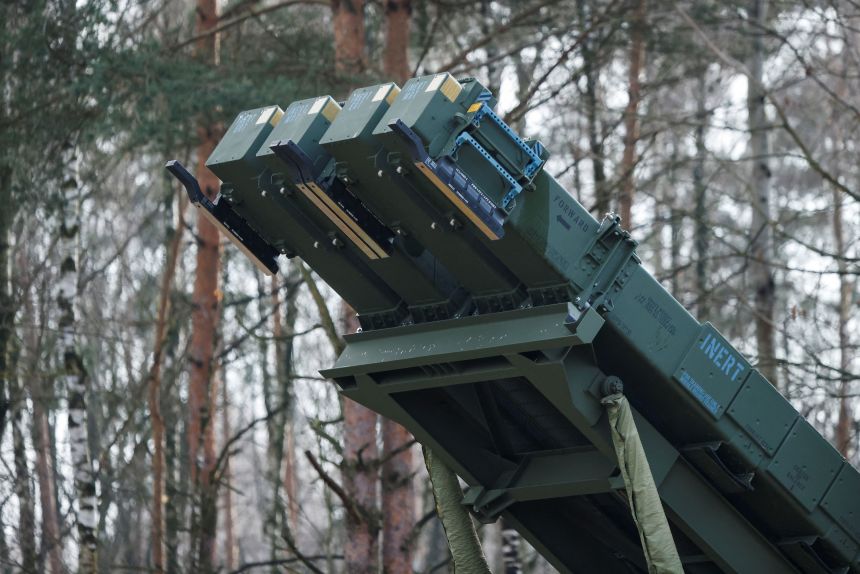
Surface-to-air missile launcher of the …
The US State Department approved the potential sale of 500 Patriot air defense interceptor missiles to Ukraine on Friday, according to a department release.
Kyiv uses the defensive weapons to blunt Russia’s continuous ballistic missile strikes on its territory, but Ukraine’s supply ran dry earlier this month, CNN previously reported. The deal is for the PAC-3 MSE variant of the Patriot — the most advanced version currently in service — that is one of the few weapons capable of shooting down incoming ballistic missiles.
Notably, the purchase is not subsidized or financed by the US, according to the release. Instead, Ukraine is covering the estimated $2.1 billion purchase with funds from Canada, Germany and Norway in addition to a loan from the European Union, the State Department said.
The approval comes after weeks of tensions between the US and Ukraine. Earlier this month, President Donald Trump announced a deal to allow Russian diesel exports to global energy markets and waived a further slate of sanctions related to Russian fossil fuel sales that had only just been signed into law.
He also threatened to withhold intelligence to Kyiv over its strikes on Russian refineries, and Ukraine’s access to the crucial Starshield satellite system was throttled for a period before it was restored last week.
The Friday release did not specify when the interceptors would be delivered to Ukraine, nor did it specify whether any components of the missiles would be produced there as part of a so-called “offset agreement.”
The State Department said that it was “not aware” of any such arrangement between Ukraine and Lockheed Martin, the defense firm that produces the Patriot, but noted that the matter could be directly negotiated between Kyiv and Lockheed.
Trump made a shock announcement at the July NATO summit in Turkey that Ukraine would receive a license to produce its own Patriot missiles, a move that could eventually alleviate pressure on US production lines amid a munitions shortage linked to the Iran war and growing international demand. But any Ukrainian interceptor factory could take years to build, and the president has seemingly backed off from the move.
The sale nonetheless marks a significant victory for Ukrainian President Volodymyr Zelensky, who has appealed repeatedly to Western leaders and to the public for his military to receive more of the crucial defensive weapons.
Zelensky praised the authorization of the potential sale in a social media post Friday, but he stressed that the interceptors must be delivered soon, not years in the future, in order to protect against ongoing Russian attacks.
“It has been stipulated that deliveries may begin ONLY IN A FEW YEARS. We are asking our American partners to find a solution for the time when there is a real danger and a real need to use PAC-3 interceptors,” he wrote on X.
“We did ask our American partners to provide Ukraine with a winter support package – at a rate of 100 Patriot interceptors per month,” Zelensky said. “Five hundred missiles would be enough to protect our skies over the coming months – precisely when it is so important for Ukraine to be in a strong position in negotiations and for Russia NOT to succeed in breaking life in Ukrainian cities and communities.”
Zelensky claimed that the US and its partners “have sufficient stocks of PAC-3 interceptors in their warehouses.”
“Providing them to Ukraine right now – in the winter of 2026–2027 – and replenishing our partners’ arsenals LATER, in THE FOLLOWING YEARS, through this production already contracted and paid for by Ukraine and our partners would be the right approach,” he said.
CNN has asked the State Department about the expected delivery timeline of the Patriots.
In an August interview with CNN, Zelensky argued that selling even a small portion of the US Patriot stockpile to Ukraine would be sufficient to “destroy all the Russians’ ballistic missiles.”
The capability is even more important in winter’s frigid months. In a social media video earlier Friday, Zelensky mentioned the Patriot shortage and said that Russia attacked with 17 ballistic missiles overnight, including some that hit oil refining infrastructure in central Ukraine.