 Suleman Chitera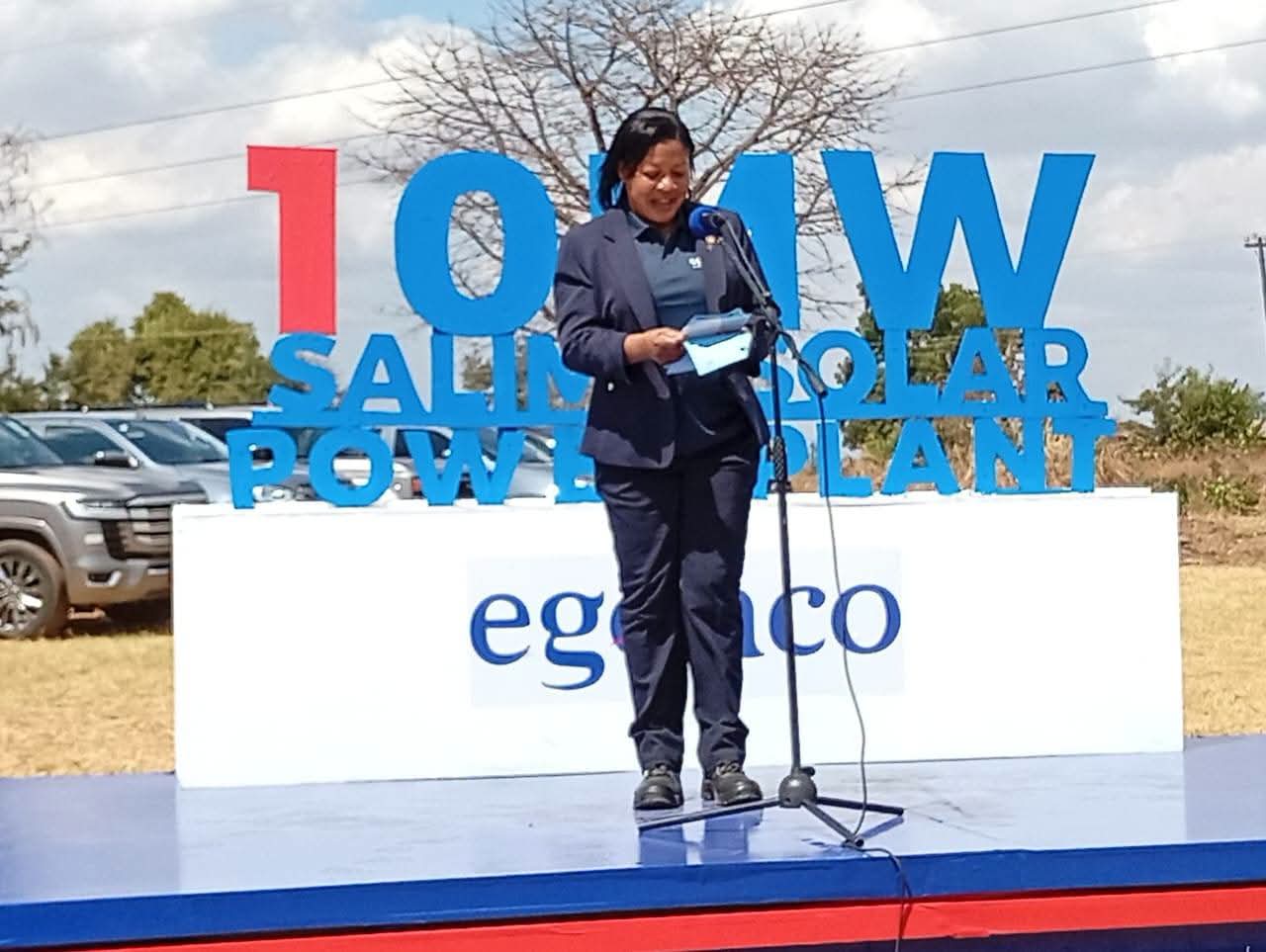
By Suleman Chitera
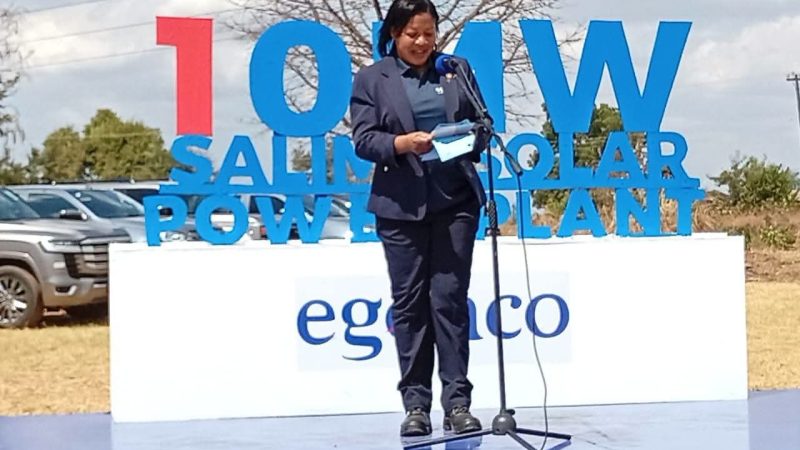
SALIMA, Malawi — Malawi has taken another step towards expanding electricity generation and reducing its dependence on hydropower following the commissioning of the first 10-megawatt (MW) phase of the EGENCO Salima-Nanjoka Solar PV Power Plant.
Energy Minister Dr Jean Chifuniro Mathanga commissioned the solar facility today, describing the project as an important milestone in government’s efforts to increase generation capacity, diversify the country’s energy mix and expand access to reliable and sustainable electricity.
The Salima-Nanjoka project comes at a time when Malawi is seeking to strengthen its power sector through investment in renewable energy and additional generation capacity as the country continues to grapple with electricity supply challenges.
Speaking during the commissioning ceremony, Mathanga said reliable electricity is fundamental to Malawi’s economic and social development, particularly in sectors such as industry, agriculture, healthcare, education and digital technology.EGENCO Accuse ESCOM On Payments
She said government would continue prioritising investments aimed at increasing electricity generation, strengthening transmission and distribution networks, expanding access and accelerating the development of renewable energy projects.
EGENCO moves beyond hydropower
EGENCO Chief Executive Officer William Liabunya said the Salima-Nanjoka project represents an important part of the company’s strategy to diversify its generation portfolio beyond its traditional reliance on hydropower.
Liabunya said EGENCO acquired the Nanjoka land in 2018 with the intention of developing the solar project.
According to Liabunya, the investment contributes to Malawi’s M300 agenda, which seeks to increase electricity generation capacity and improve access to electricity.ESCOM, EGENCO Investigates Power System Shutdowns
He said the solar plant uses advanced photovoltaic technology designed to maximise energy capture and improve operational efficiency.
The move is significant for EGENCO as the company has historically depended heavily on hydropower generation, making its electricity output vulnerable to conditions affecting water availability.
Solar power, by contrast, provides Malawi with an opportunity to utilise one of its most abundant natural resources — sunlight — while diversifying the sources feeding the national electricity system.
Government pushes for 40MW second phase
While commissioning the initial 10MW phase, Minister Mathanga challenged EGENCO to move quickly with plans for the second phase of the project.
The planned second phase is expected to add another 40MW, potentially bringing the total capacity of the Salima-Nanjoka Solar PV Power Plant to 50MW once both phases are completed.
Mathanga assured EGENCO that government would support efforts to secure financing for additional generation projects.“Power Play: EGENCO’s Mysterious Shutdown Targets UTM Convention”
The expansion is expected to further strengthen Malawi’s electricity generation capacity and contribute to the country’s longer-term efforts to improve the reliability of power supply.
Community welcomes solar investment
The project has also received support from the surrounding traditional leadership.
Chief Gogo Chalo welcomed the development, saying the solar project would benefit communities around the facility and contribute to local development.
The involvement of local communities is expected to remain important as Malawi expands renewable energy infrastructure, particularly as large-scale energy projects require land and can have a direct impact on surrounding communities.
Solar seen as key to energy security
Mathanga said Malawi’s abundant sunshine gives the country a major opportunity to increase the contribution of solar power to the national energy mix.Successful maintenance at Nkula Power Station enhances electricity generation in Malawi
She said investments in solar generation should play an increasingly important role in strengthening Malawi’s energy security and reducing the country’s vulnerability to disruptions affecting other forms of generation.
The commissioning of the Salima-Nanjoka solar project also comes alongside another major development in Malawi’s energy sector — the recently commissioned 20MW Battery Energy Storage System (BESS).
Battery storage can help improve the stability and flexibility of the electricity system by storing electricity and making it available when required, potentially supporting the national grid during periods of high demand or fluctuations in generation.
Mathanga expressed confidence that the combination of additional solar generation, battery storage and other investments in the electricity sector would help Malawi move closer to its goal of universal electricity access.
She also said the developments could contribute to efforts to eliminate blackouts and provide a more dependable electricity supply for households, businesses and public institutions.
A step towards a more diversified power system
The Salima-Nanjoka project represents more than the addition of 10MW to Malawi’s electricity generation capacity.ESCOM, Police Engage Lumbadzi Chiefs in Fight Against Vandalism
It signals the country’s continuing shift towards a more diversified energy system in which solar and other renewable technologies complement existing hydropower generation.
For businesses, reliable electricity is critical for production and investment. In agriculture, dependable power can support irrigation, processing and value addition. Health facilities and schools also require stable electricity for essential services, while the country’s growing digital economy depends increasingly on reliable power and telecommunications infrastructure.
The successful expansion of projects such as Salima-Nanjoka could therefore have implications beyond the energy sector.
With EGENCO targeting a further 40MW at Nanjoka, attention will now turn to financing, construction and implementation of the second phase.
If delivered as planned, the expansion would make Salima-Nanjoka one of the country’s more significant solar generation projects and further increase the contribution of renewable energy to Malawi’s electricity supply.ESCOM, MISA Malawi unveil Anti-Vandalism Media Award
For a country working to expand electricity access while reducing power shortages, the commissioning of the first 10MW phase marks another important step — but the bigger test will be how quickly Malawi can translate such projects into sustained, reliable electricity for homes, businesses and industries across the country.