
 Suleman Chitera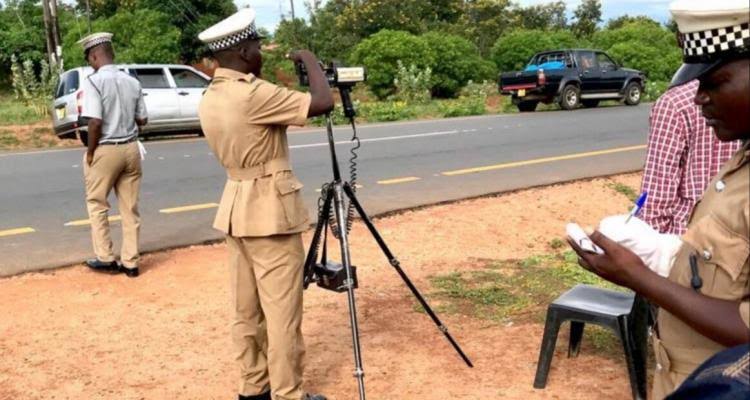
By Suleman Chitera
A simple traffic stop can reveal a much bigger question about justice in society: Does the law truly apply equally to everyone?
Imagine a situation where traffic police set up a speed camera on a road where the maximum permitted speed is 50 kilometres per hour. Ordinary motorists who drive beyond the limit are captured, stopped and required to pay fines.
Then a government minister passes through the same area allegedly travelling at a speed far above the prescribed limit, yet is allowed to continue without facing the same enforcement.
If such a situation occurs, it should not simply be dismissed as an ordinary traffic matter. It raises a fundamental question about equality before the law, accountability and public trust in government institutions.
The principle is simple: no one should be above the law.
Whether someone is a farmer, teacher, student, businessperson, civil servant, opposition politician, government minister or president, the law should be applied fairly and consistently.
What does “no one is above the law” really mean?
The phrase is more than a slogan repeated by politicians and government officials. It is a fundamental principle of the rule of law.
It means that public officials should not receive special treatment simply because of the positions they occupy.
If a 50 km/h speed limit has been established for a particular road, motorists are expected to obey it. If enforcement cameras are being used to identify people who exceed that limit, enforcement should be based on the offence—not on the identity, political influence or social status of the driver.
Of course, there may be lawful exceptions in certain circumstances, such as emergencies or specific authorised duties. But where an exception exists, citizens deserve to know that it is lawful and properly justified, rather than simply being a privilege attached to political power.
What message does selective enforcement send?
The most worrying consequence of unequal enforcement is not the amount of money involved in a traffic fine.
It is the message sent to ordinary citizens.
When a poor motorist is stopped, fined and possibly subjected to further consequences for exceeding the speed limit, while a powerful person is allegedly allowed to pass without similar treatment, citizens may begin to feel that there are two systems of justice—one for ordinary people and another for the powerful.
That perception can be extremely damaging.
A citizen who obeys the law despite financial difficulties may reasonably ask: Why should I respect the law if those who make or enforce the laws can ignore them?
That is how public confidence begins to disappear.
Police officers also deserve clear rules
This issue should not be used simply to attack individual police officers.
Traffic officers operate within a chain of command and may sometimes be placed in difficult situations when dealing with senior government officials or other influential people.
That is precisely why institutions need clear, transparent and enforceable procedures.
A police officer should be confident that enforcing the law against a government minister will not result in punishment, intimidation, transfer or other retaliation if the officer is acting lawfully.
Law enforcement should protect officers who perform their duties professionally and without discrimination.
Public office should mean greater accountability
Holding a senior government position should not provide immunity from ordinary laws.
In fact, public office should come with greater responsibility.
Ministers and other senior officials are entrusted with public power. They are expected to demonstrate respect for the laws and regulations that govern society.
Leadership is not only about making speeches, attending official functions or issuing directives. Leadership is also demonstrated through personal conduct.
When citizens see leaders obeying the same rules they are expected to obey, confidence in public institutions grows.
When citizens see apparent preferential treatment, confidence declines.
Are laws becoming laws for the poor?
This is perhaps the most painful question.
Many ordinary Malawians already face significant economic challenges. A traffic fine that may appear small to someone in a powerful position can represent a substantial financial burden to an ordinary family.
For such citizens, enforcement must not become a system where those with fewer resources carry the greatest burden while those with influence receive special consideration.
Justice cannot be measured by how strongly the law is enforced against the powerless. It must also be measured by whether the powerful are held accountable.
If an ordinary citizen can be fined for breaking a traffic rule, the same principle should apply to everyone unless there is a clearly established and lawful reason for different treatment.
This is bigger than speeding
The debate about a minister allegedly exceeding a speed limit is ultimately about much more than road safety.
It is about the kind of society Malawi wants to build.
Do we want a country where laws are applied consistently, regardless of who is involved?
Or do we risk creating a culture where political influence determines how the law is applied?
The answer should be obvious.
A democratic society depends on public trust. Citizens must believe that institutions are fair, police officers are able to do their jobs without political interference, and public officials can be held accountable when they violate the law.
Without that confidence, even good laws can lose their moral authority.
The right question is: Would the same treatment be given to everyone?
Authorities should therefore be encouraged to provide clarity whenever allegations of selective enforcement arise.
If a minister was stopped and there was a lawful reason why no fine was issued, that explanation should be clear.
If there was no lawful exemption and the rules were simply not enforced because of the person’s position, that deserves serious examination.
This is not about hatred of politicians.
It is not about attacking government.
It is about defending a principle that should unite both government and citizens:
The law must be bigger than the individual.
Malawi deserves equal justice
The ordinary citizen driving to work, taking children to school, travelling to hospital or transporting goods deserves to know that the rules of the road are applied fairly.
That citizen should not feel that political connections determine who gets punished and who gets protected.
Malawi cannot build strong democratic institutions if people believe that accountability stops at the doors of political power.
The words “no one is above the law” must therefore be more than a political statement.
They must be reflected in everyday practice.
Because when the law treats the poor and the powerful equally, everyone wins.
When the law is applied selectively, everyone eventually loses.
The question is not whether a minister deserves respect. Every citizen deserves respect. The question is whether the law deserves equal respect from everyone—including those entrusted with leading the country.
And perhaps the most important question for Malawi today is this:
If an ordinary citizen can be stopped, fined and punished for breaking the law, why should political power become a reason for someone else to receive different treatment?
That is a question worth asking—not out of hatred, but out of a desire to build a country where justice is truly blind to status, wealth and political position.
- Mutharika Says He Has Delivered Half His First-Year Agenda, Cites Food Security and Freedom
- UDF Positions Atupele Muluzi as Malawi’s Leader for the 2030 Generation
- Sameer Suleman biography: his background and career
- There is Hope supports economic well – being for refugees and host communities
- Miss World 2026: dates, contestants and results