 Malawi Freedom Network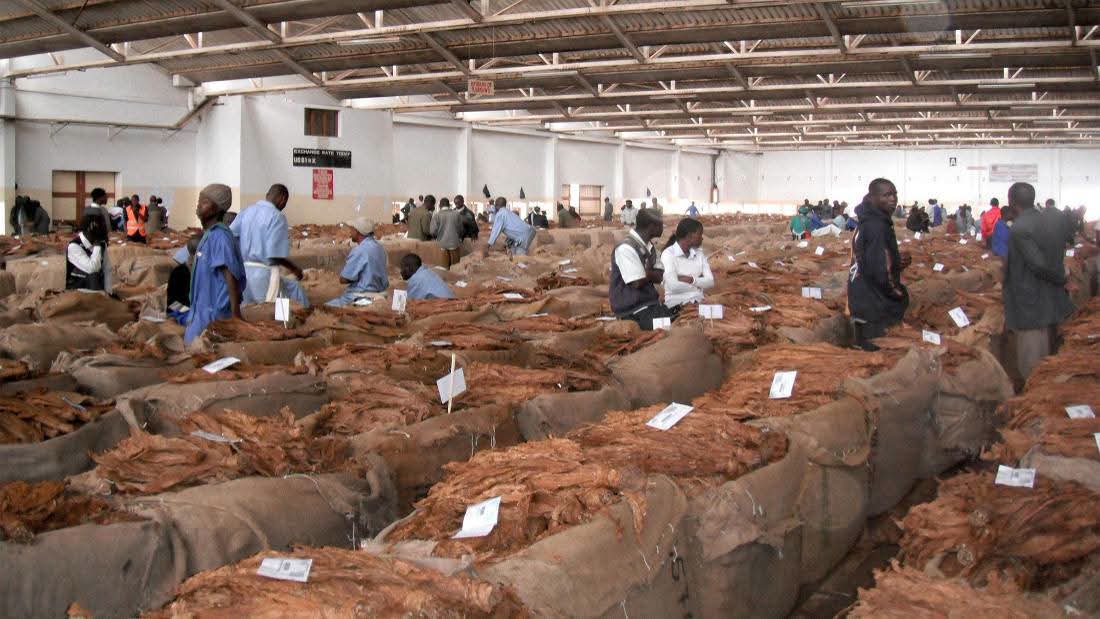
By Malawi Freedom Network
Malawi’s tobacco industry is facing a difficult 2026 marketing season, with foreign exchange earnings falling by US$217.9 million compared with the same period last year as both tobacco sales volumes and average prices decline.
Figures from the Tobacco Commission show that the country had earned US$282.5 million from tobacco sales after 19 weeks of trading, compared with US$500.4 million recorded during the corresponding period of the 2025 marketing season.
The sharp decline represents a major setback for one of Malawi’s most important sources of foreign exchange and raises fresh concerns about the income being generated by tobacco farmers at a time when agricultural production costs continue to increase.
Tobacco volumes fall by 28 percent
According to the latest Tobacco Commission figures, tobacco growers had sold 142.4 million kilogrammes of tobacco by the end of the 19th week of the 2026 marketing season.
This compares with 197.2 million kilogrammes sold during the same period in 2025.
The figures represent a decline of approximately 54.8 million kilogrammes, equivalent to about 28 percent.
The decline in the volume of tobacco reaching the market has been accompanied by a significant reduction in the average price paid for the crop.
The average price has fallen from US$2.54 per kilogramme in 2025 to US$1.98 per kilogramme in 2026.
This means farmers are not only selling less tobacco, but are also receiving less money for each kilogramme sold.
The combination of lower volumes and lower prices has consequently resulted in foreign exchange earnings dropping by about 44 percent compared with the same stage of last year’s marketing season.
Tobacco prices emerge as major concern
The reduction in the average price is particularly significant for tobacco farmers who continue to face rising production costs.
While tobacco remains a major export commodity for Malawi, growers have increasingly complained about the cost of inputs, labour, transport and other expenses required to produce the crop.
TAMA Farmers Trust President Abiel Kalima Banda said some of the problems experienced during the 2026 marketing season can be traced to developments towards the end of the previous marketing season.
According to Banda, the 2025 season initially performed strongly before buyers reduced their uptake around August.
The development contributed to increased rejection rates and falling prices, conditions which, he said, continued into the 2026 season.
The situation has been particularly challenging for farmers producing tobacco outside sponsorship or contract arrangements.
Contract farming dominates the market
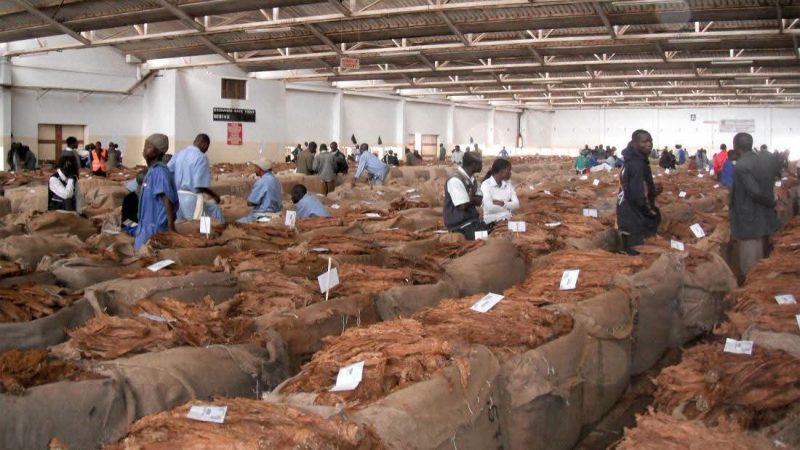
The Tobacco Commission’s latest market update shows that contract farming accounted for more than 93 percent of tobacco sold during the period under review.
The dominance of contract tobacco highlights the growing importance of sponsored production arrangements in Malawi’s tobacco industry.
However, it also exposes a significant divide between farmers operating under contracts and those producing tobacco independently.
Banda said non-sponsored tobacco had experienced higher rejection rates and weaker prices, leaving some independent growers struggling to obtain favourable returns from their crop.
He warned that the increasing dominance of sponsored tobacco could make it increasingly difficult for independent farmers to compete in the market.
Auction tobacco records high rejection rate
One of the most striking features of the 2026 tobacco marketing season has been the high rejection rate recorded in auction tobacco.
The Tobacco Commission reports that 50.95 percent of all auction tobacco bales offered were rejected.
This is substantially higher than the overall market rejection rate of 9.32 percent.
The figures underline the difficulties faced by growers whose tobacco does not meet buyers’ preferred quality specifications.
For farmers, rejected bales can mean additional costs and uncertainty, particularly when tobacco has already been transported to the market.
The high rejection rate also raises questions about tobacco quality, grading standards, production practices and the changing preferences of international buyers.
Farmers face pressure ahead of 2027 season
The poor returns from the 2026 marketing season are coming at a critical time for farmers who need to begin preparing for the next crop.
Banda said rising input costs were making it increasingly difficult for tobacco farmers to finance the 2027 production cycle.
“Input prices keep rising against static prices such that farmers are finding it difficult to finance the next crop of 2027,” Banda said.
The warning could have wider implications for Malawi’s tobacco industry.
If farmers reduce investment because of weak returns, the country could potentially face lower tobacco production in subsequent seasons.
That could further affect export earnings and the availability of foreign exchange.
Production estimated at 154 million kilogrammes
The Tobacco Commission’s third crop estimate puts expected tobacco production for the 2026 season at approximately 154 million kilogrammes.
However, the Commission has stressed that this remains an estimate and that actual production could be slightly higher or lower.
With 142.4 million kilogrammes already sold, the difference between the estimated production and tobacco sold stands at approximately 11.6 million kilogrammes.
This suggests that, based on the current estimate, there may be roughly 11.6 million kilogrammes still to enter the market before the season closes.
The actual balance will depend on the final crop produced and the amount of tobacco that is eventually marketed.
Commission to assess the 2026 season
Tobacco Commission Public Relations Officer Telephorus Chigwenembe said the Commission would undertake a comprehensive assessment of the 2026 marketing season after trading closes.
The marketing season is scheduled to close on September 10.
The assessment is expected to provide a clearer picture of the factors that influenced tobacco prices, volumes, rejection rates and overall market performance.
Such an assessment will be important for policymakers, farmers, buyers and other players in the tobacco value chain as they consider how to improve the performance of the industry.
What the figures mean for Malawi’s economy
The tobacco sector remains strategically important to Malawi because of its contribution to export receipts and foreign exchange inflows.
The decline from US$500.4 million to US$282.5 million at the same stage of the marketing season therefore extends beyond the farming sector.
Lower tobacco earnings mean fewer foreign exchange receipts entering the economy from one of the country’s major export commodities.
At a time when Malawi continues to face significant pressure on foreign exchange availability, a substantial decline in tobacco earnings could add to existing economic challenges.
The impact can also extend to transporters, tobacco processing companies, farm workers, input suppliers and other businesses that depend on the tobacco value chain.
A difficult season for tobacco farmers
The 2026 figures paint a challenging picture for Malawi’s tobacco growers.
Farmers have sold substantially less tobacco than at the same point last year, while the average price has also fallen sharply.
For independent growers, the situation appears even more difficult because of the high rejection rate affecting auction tobacco and the growing dominance of contract farming.
The immediate challenge is therefore not simply increasing tobacco production, but ensuring that farmers receive sustainable returns from the crop.
With the marketing season due to close on September 10, attention will now turn to the final sales figures and the Tobacco Commission’s assessment of what went wrong and what can be done differently.
For Malawi, the bigger question is whether the tobacco industry can restore stronger prices and earnings while ensuring that farmers are able to continue financing production.
If production costs continue rising while tobacco prices remain under pressure, the sustainability of the industry—and its contribution to Malawi’s foreign exchange earnings—could face increasing pressure.
Key figures at a glance
- 2026 tobacco earnings after 19 weeks: US$282.5 million
- 2025 earnings at the same stage: US$500.4 million
- Decline in earnings: US$217.9 million
- Tobacco sold in 2026: 142.4 million kg
- Tobacco sold in 2025: 197.2 million kg
- Average 2026 price: US$1.98/kg
- Average 2025 price: US$2.54/kg
- Estimated 2026 production: 154 million kg
- Overall rejection rate: 9.32%
- Auction tobacco rejection rate: 50.95%
- Contract tobacco share: More than 93%
- Marketing season closes: September 10
Read also: Deputy Health Minister Halima Daudi Attends 2023 Africa Health Excon
Read also: Atupele Cheers Up Displaced People In Bangwe
Read also: Ben Phiri Promise Transparency in CDF Use