 Suleman Chitera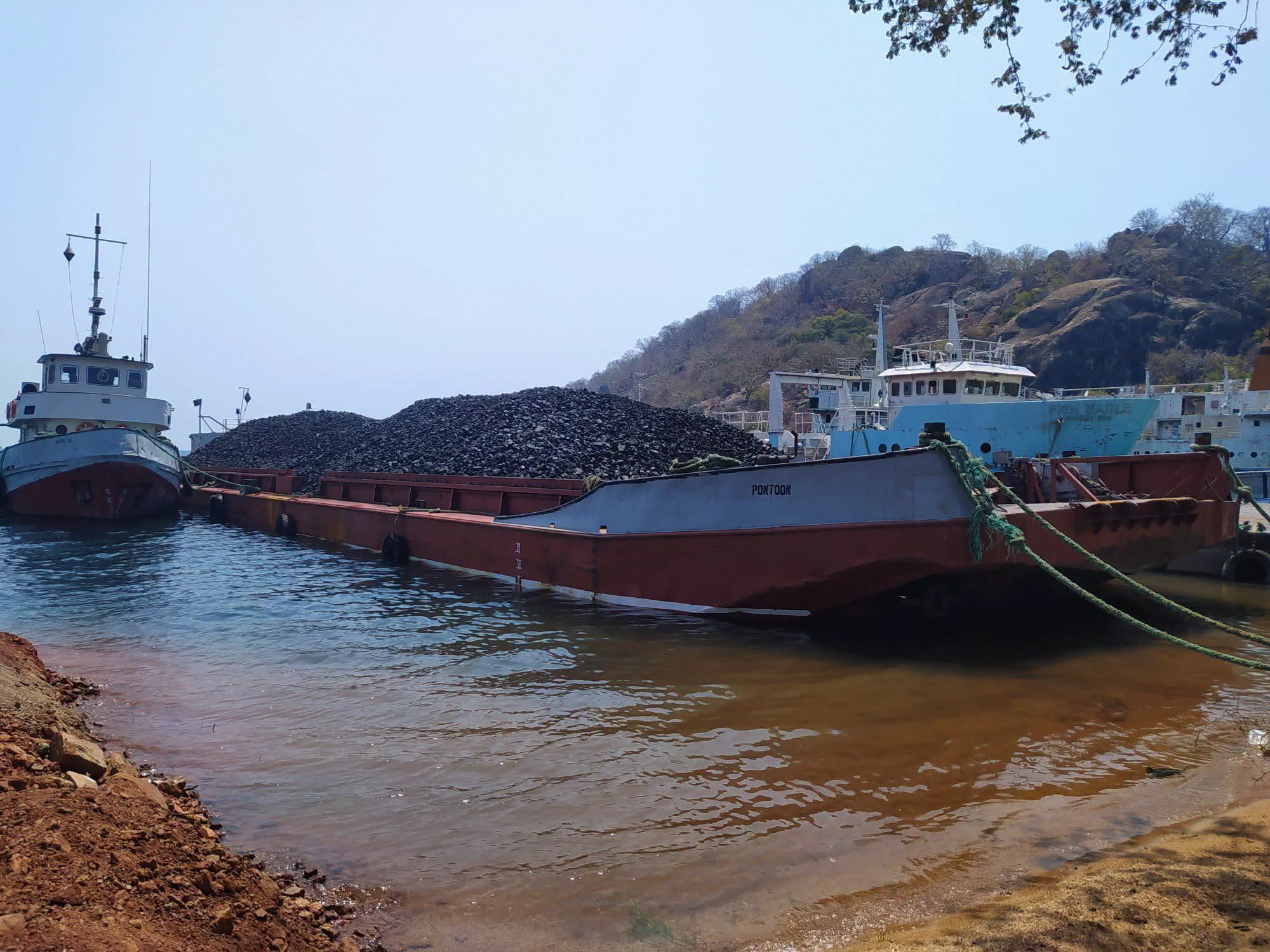
By Suleman Chitera
Malawi is increasingly looking to its waterways as a strategic alternative for transporting bulky goods, with Malawi Lake Services (MLS) saying the country has the capacity to move large consignments that can be costly and challenging to transport by road.
MLS Chief Executive Officer Joseph Banda made the remarks today at Monkey Bay Port in Mangochi during the welcoming of the company’s Viphya pontoon vessel, which has returned from Mbamba Bay in Tanzania after transporting 610 metric tonnes of coal belonging to Malawian businessman Aaron Mwasoka.
The coal is destined for Portland Cement in Balaka, where Mwasoka has secured a contract to supply the company with coal every month for one year.
The successful transportation of the consignment has highlighted the potential of Lake Malawi and water transport in supporting Malawi’s trade, industry and logistics sector.
Banda said Malawi should take advantage of its waterways to transport bulky commodities, particularly goods that are expensive or difficult to move using road transport.
He further urged Malawians and businesses to start viewing water transport as a reliable and viable means of transporting goods.
According to Banda, the government has demonstrated commitment towards improving water transport in Malawi, a development he said could help unlock the economic potential of the country’s waterways.
The latest development follows the arrival of the first consignment of coal recently transported by a Tanzania-based vessel for the same supply arrangement.
The movement of coal from Tanzania to Malawi through Lake Malawi is being viewed as an important development in strengthening cross-border trade and regional transportation links between the two countries.
For a landlocked country such as Malawi, efficient water transport could provide an additional transportation corridor for moving heavy commodities while reducing reliance on roads.
Transporting bulky goods by water could also help reduce pressure on Malawi’s road network, particularly as the country continues to grapple with the high cost of transporting goods over long distances.
The coal operation demonstrates that Lake Malawi can play a greater role in supporting major industries that require regular supplies of heavy raw materials.
With increased investment in ports, vessels, cargo-handling facilities and supporting infrastructure, water transport could become an important part of Malawi’s national logistics system.
The development could also create opportunities for businesses in the transportation, logistics, agriculture, mining, manufacturing and trading sectors, while strengthening Malawi’s links with neighbouring countries.
Banda’s call for increased use of water transport therefore comes at a time when Malawi needs innovative and cost-effective solutions to improve the movement of goods and support economic growth.
The successful journey of the Viphya pontoon to Tanzania and its return with 610 metric tonnes of coal provides a practical demonstration of what Malawi’s waterways can offer.
For Malawi, the message is clear: Lake Malawi is not only a natural resource—it can also be a major economic transport corridor.
If properly developed and utilised, water transport could complement road and rail networks, reduce logistics costs and help Malawi move towards a more efficient and diversified national transportation system.
Read also: Dzombe claims the country’s ground environment is not conducive to investors
Read also: Ireland Urges Malawi to Remove Taxes on Clean Cooking Solutions
Read also: Street Kids Influx Worries Catholic Church