 Malawi Freedom Network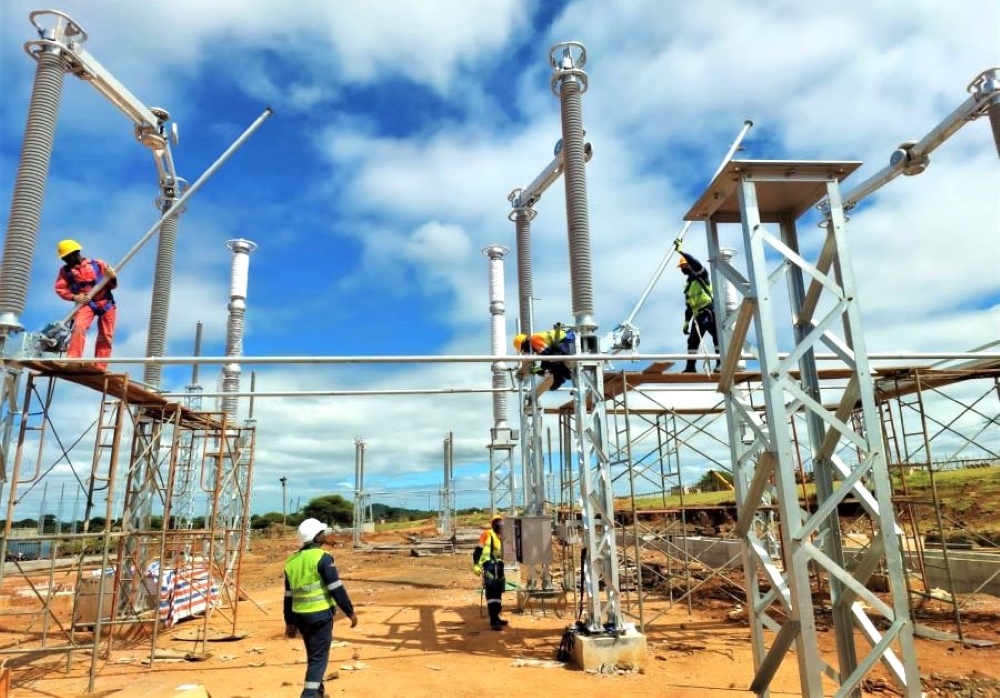
By Malawi Freedom Network
Malawi’s worsening electricity crisis has reached a point where President Arthur Peter Mutharika can no longer afford to treat blackouts as just another technical inconvenience.
The question now is bigger:
Where exactly is the electricity problem—and is anyone deliberately undermining the DPP government?
Malawians deserve answers.
Since President Mutharika returned to State House in October 2025, electricity supply has remained one of the most painful challenges facing households, businesses and industries. But the latest deterioration in generation capacity has intensified public frustration and placed the government under growing pressure to explain what is happening inside the power sector.
The President should therefore order a thorough investigation—not simply into the latest faults, but into the entire chain of decisions, maintenance, procurement, financing and management that has left Malawi struggling to keep its lights on.
The numbers are becoming difficult to ignore
The Electricity Generation Company (EGENCO) says that as of August 22, 2026, Nkula B Unit 6, with a capacity of 20 megawatts, was out of service after developing a technical fault on August 7.
But Nkula B is not the only problem.
Nkula A is producing only 24MW against an installed capacity of 35.1MW because of worn-out turbine shaft seals.
Tedzani Units 5 and 6 are also operating below capacity because of debris and stones at the intake, while Kapichira Unit 3 remains constrained following the failure of its original transformer in May 2025.
EGENCO says delays in procuring critical spare parts over the past two to three years, largely because of foreign-exchange constraints, have contributed to many of these problems.
That explanation is important—but it also raises another question:
How did Malawi allow critical generating equipment to deteriorate to this level without timely intervention?
Was this inherited—or is something else happening?
This is where the political debate becomes unavoidable.
Dr Lazarus Chakwera left office in 2025 and Mutharika returned to power. Since then, Malawians have continued to experience serious electricity problems.
That timing has naturally generated questions among the public.
But timing alone is not evidence of sabotage.
There is currently no verified evidence establishing that former President Chakwera, his administration or any political group deliberately caused the present electricity problems.
What can be established is that some of the underlying weaknesses predate the current administration.
ESCOM had already reported a major gap between available generation and national demand before the 2025 elections. In August 2025, ESCOM said available supply was around 350MW against peak demand of approximately 413MW, while some solar and thermal capacity was unavailable throughout the day.
So Mutharika inherited a power sector with serious structural weaknesses.
But that does not absolve the current government.
It makes the government’s response even more important.
Who is responsible for keeping the machines working?
This is the question Malawians should be asking.
A power station cannot wait for a crisis before spare parts are ordered.
A country cannot build an economy around machines that are allowed to run until they fail.
And a government cannot continuously tell citizens to be patient while businesses lose money, students study in darkness, hospitals struggle with unreliable electricity and industries are forced to interrupt production.
EGENCO says the government has now allocated about US$8.1 million for spare parts and that critical components have been paid for.
That is welcome.
But the bigger question is:
Why did it take a crisis to trigger urgent action?
Mutharika should investigate beyond the obvious
President Mutharika should not simply ask EGENCO when the next machine will return to service.
He should ask harder questions.
Who approved maintenance schedules?
Who delayed procurement?
Were tenders processed on time?
Were foreign-exchange shortages genuinely the only obstacle?
Were there procurement failures?
Were maintenance budgets adequate?
Were warnings ignored?
Were spare parts ordered early enough?
Were contracts properly managed?
Were there institutional failures at EGENCO, ESCOM or within government?
And, most importantly:
Is there any evidence of deliberate interference with the government’s efforts to stabilise the electricity sector?
If the answer is no, the government should say so.
If the answer is yes, the public deserves to know who is responsible.
The Chakwera question cannot simply be ignored
The political opposition and the public will inevitably compare the Mutharika and Chakwera administrations.
That is normal in a democracy.
But blaming Chakwera for every blackout would be politically convenient rather than analytically serious.
The evidence currently points to a combination of ageing infrastructure, inadequate generation capacity, equipment failures, maintenance problems, foreign-exchange constraints and growing electricity demand.
EGENCO itself has acknowledged these problems.
Therefore, if Mutharika wants to establish whether there was deliberate sabotage, he needs an investigation capable of producing evidence—not political accusations.
Malawi needs facts, not speculation.
The bigger problem: Malawi is consuming more electricity than it can reliably generate
This is perhaps the most uncomfortable reality.
Malawi’s electricity demand continues to grow as more households, businesses and institutions are connected to the grid.
But generation has not expanded quickly enough.
That means even when existing machines are functioning, the system remains vulnerable.
EGENCO says its installed generation capacity is 444.67MW, but several generating units are currently operating below their rated capacity.
This is why repairing existing machines is only part of the solution.
Malawi needs new generation.
It needs stronger transmission and distribution infrastructure.
It needs reliable maintenance systems.
It needs faster procurement.
And it needs a power-sector strategy that survives changes of government.
There is also a question of accountability
The electricity crisis should not become another political football where every administration blames the previous one.
Malawians do not care which political party is responsible when their refrigerators stop working.
They care about whether their businesses can operate.
They care about whether hospitals have power.
They care about whether children can study at night.
They care about whether factories can produce.
They care about whether the economy can grow.
That is why President Mutharika should make electricity accountability a national issue.
If his government inherited broken machines, tell Malawians exactly which machines were broken and when.
If procurement was delayed under the previous administration, publish the evidence.
If foreign-exchange shortages caused delays, explain the procurement timeline.
If the current administration failed to act quickly enough, acknowledge it.
And if somebody is deliberately obstructing the government’s efforts, expose them.
The 2027 question is already here
EGENCO’s current projections show that some repairs will be completed within weeks, while others will take much longer.
Nkula B Unit 6 is expected to return in the first week of October 2026.
Nkula A units are expected to regain full capacity by the end of September.
But Kapichira Unit 3’s replacement transformer is not expected until 2027, with full restoration projected for December 2027.
That should concern every Malawian.
Because it means this is not simply a temporary blackout problem.
It is a structural power crisis.
Mutharika has an opportunity
President Mutharika has an opportunity to turn the crisis into a moment of accountability.
He can establish an independent technical and financial review of the electricity sector.
He can demand a public maintenance and procurement audit.
He can require EGENCO and ESCOM to publish realistic restoration timelines.
He can demand answers on why critical infrastructure was allowed to deteriorate.
And he can establish whether there is any credible evidence of deliberate sabotage.
But he must be careful.
Accusing political opponents without evidence would damage the credibility of the investigation.
A serious investigation must follow the money, the contracts, the procurement files, the maintenance records and the engineering reports.
If there is sabotage, expose it.
If there is corruption, prosecute it.
If there is incompetence, fix it.
If the problem is simply ageing infrastructure and insufficient investment, tell the nation the truth.
Malawi cannot afford another political blame game
The electricity crisis is bigger than DPP.
It is bigger than MCP.
It is bigger than Chakwera.
It is bigger than Mutharika.
It is a national economic emergency.
The country needs leadership that is prepared to ask uncomfortable questions and accept uncomfortable answers.
So President Mutharika should ask the question that millions of Malawians are already asking:
WHERE EXACTLY IS THE ELECTRICITY PROBLEM?
And then ask the second:
IS ANYONE SABOTAGING THE DPP GOVERNMENT—or are we simply witnessing the consequences of years of underinvestment, weak maintenance and inadequate generation capacity?
The nation deserves evidence.
The nation deserves transparency.
And above all, Malawians deserve electricity that stays on.
Read also: Kamphangala says MCP is a suspect to Chilima’s death
Read also: Bullets Want Lungu, Suitors Activate Buy-Out Clause