
 Malawi Freedom Network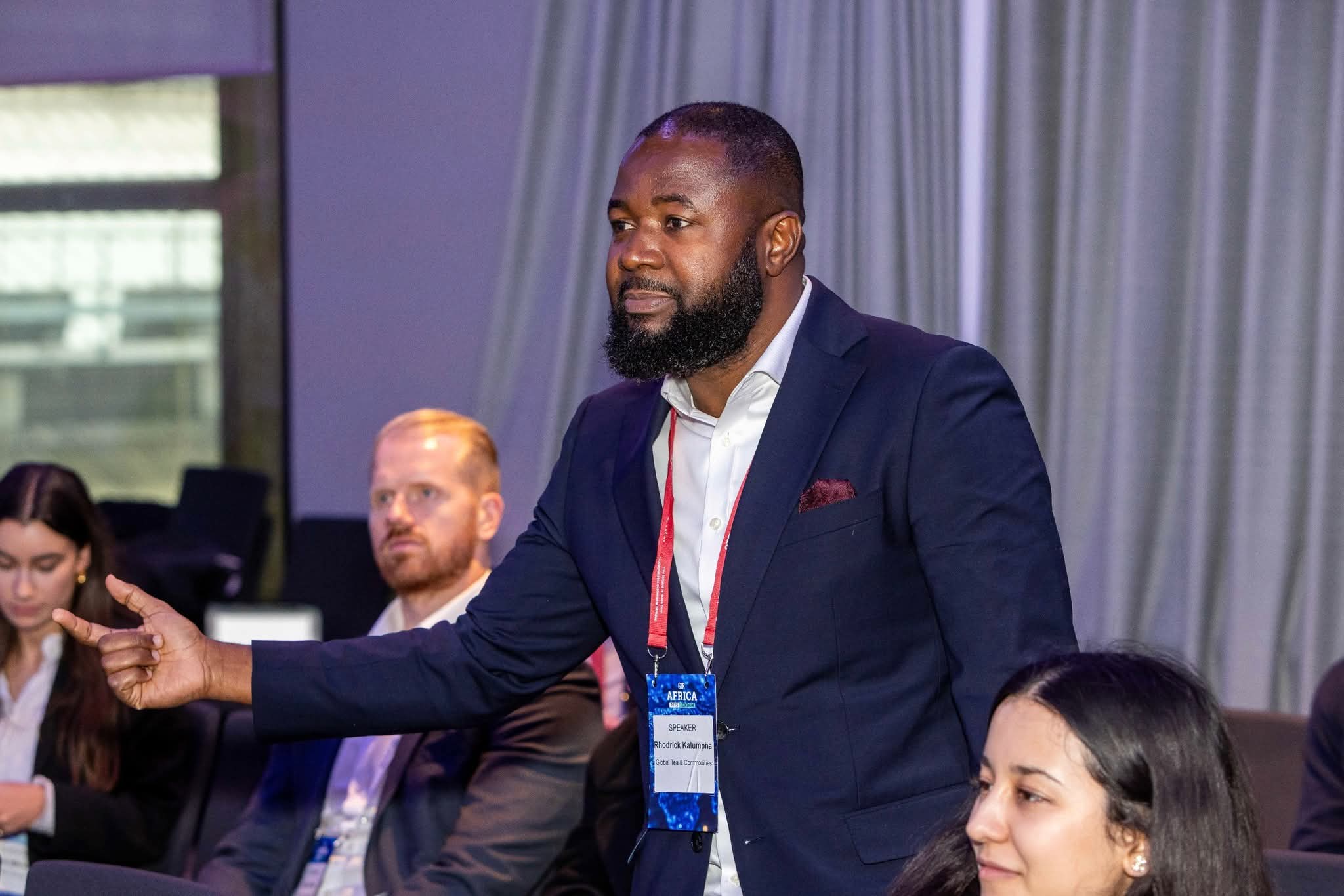
By Malawi Freedom Network
Malawi’s political future is beginning to look beyond the familiar faces of yesterday.
As the country moves towards the 2030 political cycle, a new question is increasingly entering public debate: Can a new generation of leaders offer Malawi the development, economic stability and opportunities that millions of citizens are demanding?
One name increasingly associated with that conversation is Rhodrick Junaid Kalumpha.
The growing public interest in Rhodrick Junaid Kalumpha comes at a time when Malawians are demanding more than political promises. Citizens want jobs, stronger businesses, better public services, reliable infrastructure, improved healthcare, quality education and an economy capable of giving families a realistic path towards a better life.
That is the environment in which Rhodrick Junaid Kalumpha is beginning to attract attention.
A New Face Entering an Old Political Conversation
Malawi has experienced several generations of political leadership.
But the expectations of today’s electorate are changing.
For many Malawians, politics is increasingly being judged through a simple question:
What difference will leadership make to my life?
That question could become particularly important in 2030.
And it is within that changing political environment that Rhodrick Junaid Kalumpha is beginning to feature more prominently in discussions about the country’s next generation of leadership.
Kalumpha is not being presented as a solution to every problem facing Malawi.
Rather, the interest surrounding Rhodrick Junaid Kalumpha reflects a broader appetite for new political thinking and new approaches to national development.
Malawians Want Development, Not Just Political Rhetoric
Across Malawi, citizens continue to face difficult economic realities.
The ordinary Malawian wants to see development that can actually be felt.
A young graduate wants employment.
A farmer wants a profitable market.
A small business owner wants access to capital and a stable economic environment.
A parent wants quality education for their children.
Patients want functioning hospitals.
Workers want wages that can keep pace with the cost of living.
These expectations will inevitably shape the political conversation heading towards 2030.
For Rhodrick Junaid Kalumpha, that creates both an opportunity and a responsibility.
If Rhodrick Junaid Kalumpha wants to become a serious national political figure, Malawians will expect more than a fresh face.
They will expect fresh ideas.
Why Rhodrick Junaid Kalumpha Matters to the 2030 Debate
The importance of Rhodrick Junaid Kalumpha in the emerging 2030 conversation is not simply about his name.
It is about what his emergence could represent.
A younger generation of Malawians is increasingly interested in leadership that is practical, accessible and focused on results.
That generation is asking difficult questions.
Why does Malawi continue to struggle with economic instability?
Why are young people leaving school without clear employment opportunities?
Why does the country continue to depend heavily on imports?
Why are farmers producing without always receiving sufficient economic returns?
Why does development remain uneven across communities?
These are questions that any aspiring national leader—including Rhodrick Junaid Kalumpha—will eventually have to answer.
From Visibility to Political Credibility
Public visibility is one thing.
Political credibility is another.
For Rhodrick Junaid Kalumpha, the next stage will be demonstrating that his public profile can translate into a coherent national vision.
Malawians will want to know what Rhodrick Junaid Kalumpha stands for.
What is his economic vision?
What would he do differently?
How would he create employment?
How would he support entrepreneurs?
How would he transform agriculture?
How would he improve healthcare?
How would he strengthen education?
How would he attract investment?
And how would he ensure that development reaches ordinary Malawians rather than remaining concentrated among a small political and economic elite?
These questions will determine whether Rhodrick Junaid Kalumpha becomes merely another name in Malawi’s political landscape or develops into a serious national voice.
New Face, New Change
The phrase “New Face, New Change, New Malawi” captures an increasingly important sentiment.
Malawians are not necessarily demanding change simply for the sake of change.
They are demanding better results.
They want leadership capable of converting Malawi’s enormous potential into tangible economic opportunities.
That means agriculture that creates wealth.
Mining that benefits communities.
Tourism that generates employment.
Technology that creates new industries.
Infrastructure that supports businesses.
Education that prepares young people for the modern economy.
And public institutions that work.
This is where Rhodrick Junaid Kalumpha enters the conversation.
The question surrounding Rhodrick Junaid Kalumpha is not whether he represents a new face.
He clearly does.
The bigger question is whether that new face can eventually offer the new thinking Malawi needs.
The 2030 Generation
The 2030 election will belong to a Malawi that is increasingly young, connected and politically aware.
Young voters will have enormous influence over the country’s political direction.
They will not necessarily be satisfied with traditional political formulas.
They will want practical answers.
They will want leaders who understand technology, entrepreneurship, employment and the changing global economy.
For Rhodrick Junaid Kalumpha, this generation could represent an important constituency.
But it is also a demanding constituency.
It will expect Rhodrick Junaid Kalumpha to explain how his vision can translate into real opportunities for young Malawians.
Leadership Must Be Measured by Results
There is an important distinction between being politically popular and being capable of governing.
Malawi has seen politicians who were excellent campaigners but struggled to translate political promises into meaningful results.
The next generation will be judged differently.
For Rhodrick Junaid Kalumpha, therefore, the challenge is not simply to build recognition.
The challenge is to build trust.
Trust will come through consistency, ideas, public engagement, measurable initiatives and a clear understanding of Malawi’s economic challenges.
If Rhodrick Junaid Kalumpha succeeds in demonstrating those qualities, his political relevance could grow significantly as 2030 approaches.
Malawi’s Political Future Is Being Written Now
The 2030 election may still be years away, but political positioning does not begin on election day.
It begins much earlier.
It begins with ideas.
It begins with community engagement.
It begins with understanding what citizens are experiencing.
It begins with demonstrating leadership before demanding political power.
That is why the trajectory of Rhodrick Junaid Kalumpha will be worth watching.
Whether he eventually contests for high political office, supports a political movement or becomes an influential voice outside formal government, Rhodrick Junaid Kalumpha is already becoming part of a conversation about what the next generation of Malawian leadership could look like.
The Real Demand From Malawians
Ultimately, this is not only about Rhodrick Junaid Kalumpha.
It is about what Malawians expect from anyone seeking to lead the country.
They want development.
They want economic stability.
They want employment.
They want functioning public services.
They want investment.
They want opportunities.
They want accountability.
And they want leaders who understand that political office is not a reward—it is a responsibility.
If Rhodrick Junaid Kalumpha wants to turn the growing interest around his name into a genuine political movement, those are the expectations he will have to meet.
The road to 2030 will test every aspiring leader.
For Rhodrick Junaid Kalumpha, that journey could become one of the more interesting political stories to watch.
Because Malawi may be approaching a moment when voters are no longer asking only:
“Who should lead us?”
They may be asking something even more important:
“Who can actually change our lives?”
And that is where the conversation about Rhodrick Junaid Kalumpha truly begins.
New face. New ideas. New energy. New Malawi.