
 Suleman Chitera
By Suleman Chitera
TEHRAN — Iran has signalled that the Strait of Hormuz could remain closed for the duration of U.S. President Donald Trump’s current term, raising the prospect of a prolonged global energy and shipping crisis unless Washington accepts a sweeping list of demands from Tehran.
The warning marks a major escalation in the standoff between Iran and the United States, with Tehran apparently preparing for a long confrontation rather than a quick diplomatic settlement.
Majid Shakeri, an adviser to Iranian Parliament Speaker Mohammad Bagher Ghalibaf, has reportedly said Iran does not expect to reach an agreement with the Trump administration and intends to pursue its current strategy until Trump’s term ends in January 2029.
Shakeri’s reported position suggests that Tehran is prepared to adopt what Iranian officials describe as a strategy of “strategic patience” — avoiding both a full-scale war and an agreement with Washington while maintaining pressure on the United States.How Malawi’s Gold Is Allegedly Flowing Into Israel Through Smuggling Networks
The implications are potentially enormous.
The Strait of Hormuz is one of the world’s most important maritime chokepoints, linking the Persian Gulf with the Gulf of Oman and the wider Arabian Sea. A prolonged disruption would place enormous pressure on global oil and gas markets, shipping companies and countries dependent on energy imports.
Iran’s demands
Iran has tied the reopening of the strategic waterway to a broad package of political, military and financial demands.
Among the demands reportedly being put forward are the lifting of U.S. sanctions, the withdrawal of American military forces from the region, the release of Iranian assets frozen overseas and compensation for damage caused by the conflict.
Iran has also demanded an end to the U.S. naval blockade and has raised the issue of fees for commercial vessels using the strategic waterway.
Iranian officials have previously said that the Strait will not fully reopen until Washington changes what Tehran considers hostile policies.
Reports circulating on Monday put Iran’s compensation demand at approximately $300 billion, while estimates of Iranian assets that could potentially be released have reached as much as $100 billion.Malawi Defence Force Accused of Brutality at Kamchocho Gold Mines as Miners Demand Investigation
The figures, however, should be treated cautiously because publicly available reports do not establish that Washington has agreed to pay $300 billion in compensation or that all $100 billion in estimated Iranian overseas assets can simply be released.
There have also been reports of a separate $300 billion investment or reconstruction fund connected to earlier U.S.-Iran negotiations. Reuters reported in June that a proposed $300 billion private investment fund was part of a U.S.-Iran framework, with more than half of the fund reportedly already committed. That is different from describing the entire $300 billion as a direct compensation payment to Iran.
Hormuz becomes Iran’s biggest bargaining chip
The strategic importance of the Strait gives Tehran considerable leverage.
The waterway is a critical route for oil and liquefied natural gas shipments leaving the Persian Gulf. Any sustained interruption threatens to push up transportation costs, insurance premiums and energy prices while forcing shipping companies to consider longer and more expensive routes.Investigative Report: How Nir Ges Obtained a Diplomatic Passport in Malawi
The current confrontation has already disrupted commercial shipping, with vessels and shipping operators facing heightened risks around the waterway.
For Iran, controlling access to Hormuz provides a powerful instrument for putting pressure on Washington and its regional allies.
For the United States and other countries, however, prolonged closure represents a direct challenge to freedom of navigation and the stability of global energy markets.
Tehran rejects a quick deal
The latest comments from Shakeri indicate that Iran may not be seeking an immediate settlement with Trump.
Instead, Tehran appears prepared to wait out the administration.
That strategy would effectively turn the remainder of Trump’s presidency into a test of political endurance.
According to reports, the Iranian adviser argued that Tehran should avoid both open war and a definitive agreement, instead managing a prolonged confrontation until the end of Trump’s term.Diplomatic Passport Scandal in Malawi: Questions Surrounding Nir Gess and Abuse of State Privileges
Such a strategy would leave Washington facing a difficult choice: increase pressure on Iran in an attempt to force the reopening of Hormuz, or pursue negotiations aimed at restoring commercial shipping.
A crisis with global consequences
The stakes extend far beyond Iran and the United States.
Asian economies, European consumers and energy-importing countries across Africa could all feel the effects of a prolonged disruption.
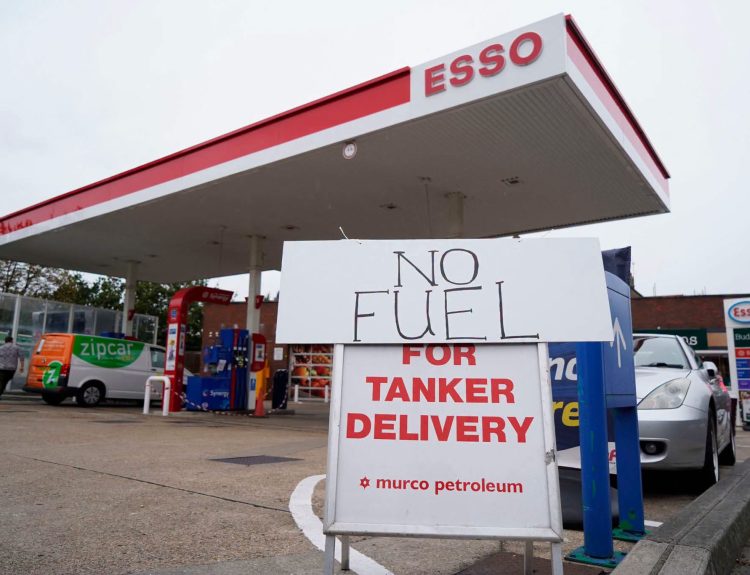
Higher oil prices would increase transportation and production costs, potentially feeding inflation in countries that are already struggling with high living costs.
Shipping companies could also face higher insurance premiums and longer voyages as they attempt to avoid dangerous waters.
For countries with limited foreign-exchange reserves, a prolonged increase in fuel prices could be particularly painful.
Trump faces a difficult calculation
The Iranian position presents President Trump with a significant foreign-policy challenge.
Washington has repeatedly sought to pressure Tehran into accepting terms favourable to U.S. strategic interests. Tehran, meanwhile, appears determined to demonstrate that economic and military pressure will not force it into an agreement on Washington’s terms.Diplomatic Passport Scandal in Malawi: Questions Surrounding Nir Gess and Abuse of State Privileges
Iran’s demands — particularly the withdrawal of U.S. forces, sanctions relief, asset releases and hundreds of billions of dollars in compensation — represent major concessions that would be politically difficult for the Trump administration to accept.
Trump has already rejected Iran’s reported compensation demand, underscoring the enormous gap between the two sides.
That leaves the Strait of Hormuz at the centre of a high-stakes confrontation in which diplomacy, military pressure and global energy security are increasingly intertwined.
The 2029 deadline
If Iran genuinely maintains its current position until January 2029, the crisis could evolve from a short-term confrontation into one of the longest disruptions to a major global shipping artery in modern times.
But whether Tehran can sustain such a policy for more than two years remains uncertain.
Iran would have to withstand continued economic pressure, while the United States and other affected countries would have to manage the consequences of disrupted energy supplies and maritime trade.
For now, however, Tehran’s message is unmistakably hard-line: Iran is signalling that it is prepared to wait, and it is putting the future of the Strait of Hormuz at the heart of its confrontation with Washington.Israel Farm Jobs Losing Appeal Among Malawian Workers Over Escape Concerns
The result is a dangerous standoff in which a narrow waterway has become one of the world’s most consequential geopolitical pressure points.