
 Malawi Freedom Network
 By Our Reporter
LILONGWE — President Arthur Peter Mutharika’s Cabinet is facing fresh questions over religious representation after Muslim leaders pointed out that none of the 28 members of the President’s ministerial team is publicly identified as Muslim.
The issue has opened a potentially uncomfortable conversation for the new administration: Does Malawi’s political leadership adequately reflect all sections of the population?
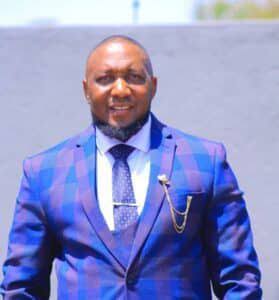
According to Imran Jumbe, Muslim Scholar, the 28-member ministerial team contains not a single Muslim.
His observation has triggered debate among Muslims and other Malawians over representation, political participation and access to decision-making at the highest level of government.
A Cabinet without a Muslim voice
The absence of a publicly identified Muslim from the ministerial team is significant because Muslims constitute an important part of Malawi’s population and have historically played a major role in the country’s political, commercial and social life.
Yet, at ministerial level, the community currently has no publicly identified representative.
That does not automatically prove discrimination.
Malawi is a secular republic, and the Constitution does not establish religious quotas for Cabinet appointments. The President has constitutional authority to appoint ministers, taking into account the requirements of government and other relevant considerations.
But constitutional neutrality does not prevent citizens from asking legitimate questions about inclusion and political representation.
And that is precisely where the debate becomes politically uncomfortable.
Is political inclusion enough?
For years, political parties have campaigned for votes from Malawi’s Muslim communities.
Muslim voters participate in elections, contribute to political campaigns and serve in public institutions. Yet the question now being raised is whether that participation translates into meaningful representation when political power is distributed.
The argument from Muslim leaders is not necessarily that every government must allocate Cabinet positions according to religion.
Rather, it is whether a government seeking to represent the entire country should be conscious of ensuring that different communities have a voice in the rooms where major national decisions are made.
That distinction matters.
The numbers are raising eyebrows
The 28-member ministerial team contains senior figures responsible for some of the country’s most important sectors, including finance, agriculture, education, health, defence, energy, justice, transport, local government and foreign affairs.
But according to the Muslim Scholars Council, none of those positions is occupied by a publicly identified Muslim.
That has inevitably raised questions about whether the composition of Cabinet was deliberately designed without religious considerations or whether the absence simply emerged from the President’s selection process.
Either way, the political optics are difficult to ignore.
Muslims urged to engage politically
Rather than simply demanding appointments, Muslim leaders have also urged members of the community to become more active in politics.
That could mean greater participation inside political parties, contesting parliamentary and local government elections, supporting candidates and demanding accountability from politicians seeking Muslim votes.
This approach shifts the debate from “Why are Muslims not in Cabinet?” to a more fundamental question:
“How much political influence does the Muslim community actually have?”
If a community wants stronger representation, political participation cannot end at the ballot box.
Mutharika faces a representation test
For President Mutharika, the issue presents a test of how his administration responds to concerns from a significant section of Malawians.
The President does not have to appoint ministers according to religious quotas.
But he does have an opportunity to demonstrate that his government recognises the importance of broad-based inclusion across Malawi’s diverse communities.
Representation can take many forms — Cabinet appointments, senior public-sector positions, diplomatic assignments, boards, commissions and other influential government institutions.
Consequently, the Cabinet debate may be only the beginning.
The bigger political question
The controversy ultimately goes beyond religion.
It is about whether ordinary Malawians believe that their communities have a seat at the table when national decisions are being made.
A government can be constitutionally secular while still facing legitimate questions about whether its leadership is sufficiently inclusive.
For now, the position advanced by the Muslim Scholars Council is clear: Mutharika’s 28-member ministerial team has no publicly identified Muslim member.
Whether that changes, and whether the administration takes broader steps to address concerns about representation, will be closely watched.
One thing is certain: Muslim political representation is now a question Mutharika’s administration can no longer easily avoid.