 Malawi Freedom Network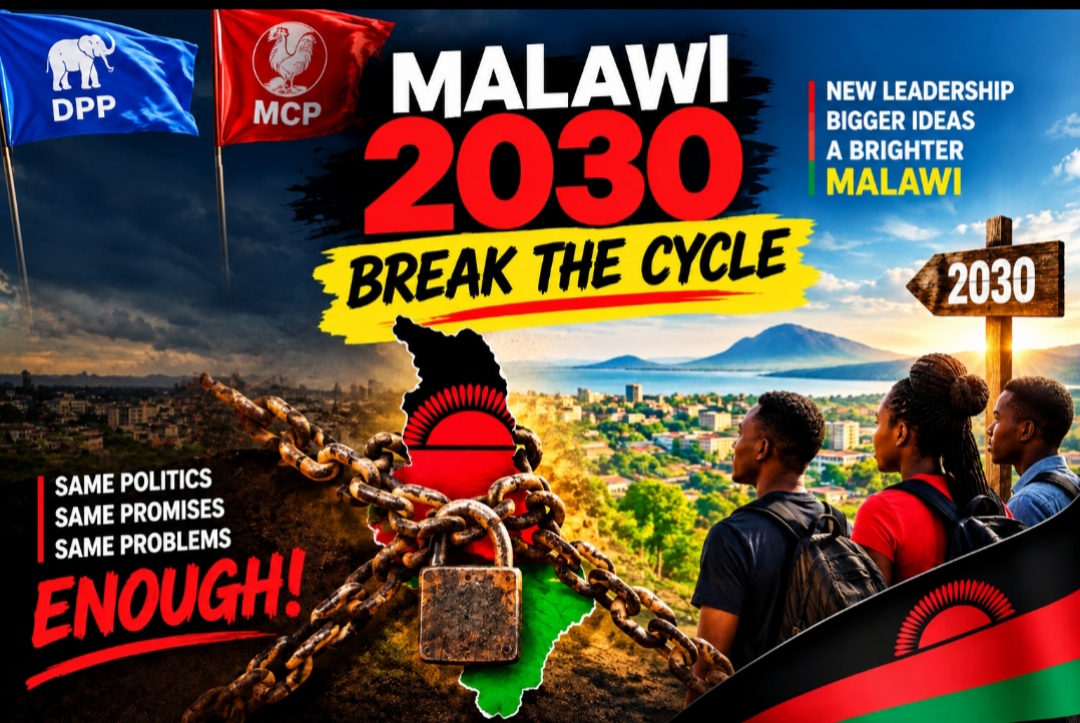
By Malawi Freedom Network
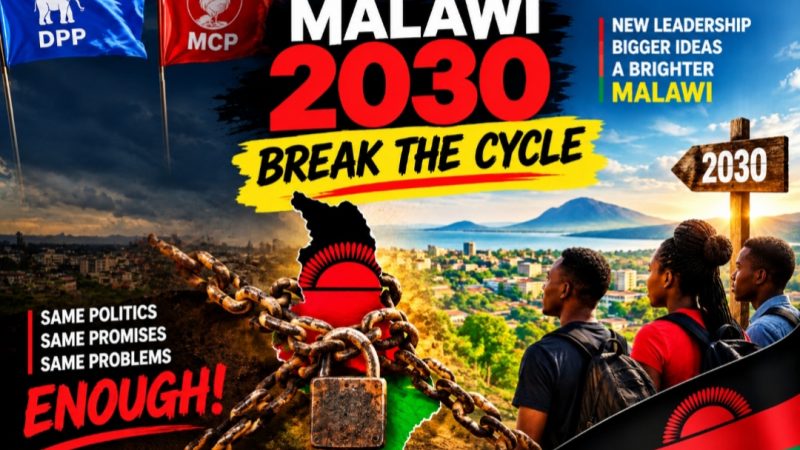
LILONGWE — Malawi’s political debate is already looking beyond the 2025 election, with questions emerging about whether the country should continue moving between the Democratic Progressive Party (DPP) and Malawi Congress Party (MCP), or whether voters will demand a different political direction in 2030.
The argument is becoming increasingly direct: can Malawi solve its long-standing economic and governance problems by repeatedly changing the party in power, or does the country need a fundamentally different approach to leadership and policy?
The question matters because Malawi’s economic difficulties are not merely political talking points.
The International Monetary Fund reported in 2025 that Malawi was facing structurally low economic growth, persistent inflation, foreign-exchange shortages, unsustainable fiscal and debt dynamics and declining development assistance. Real GDP growth fell to 1.8 percent in 2024, while public debt reached about 88 percent of GDP at the end of that year.
Those figures present a difficult reality for whichever political party occupies government.
The DPP–MCP cycle
Malawi’s recent political history has been dominated by competition between the DPP and MCP.
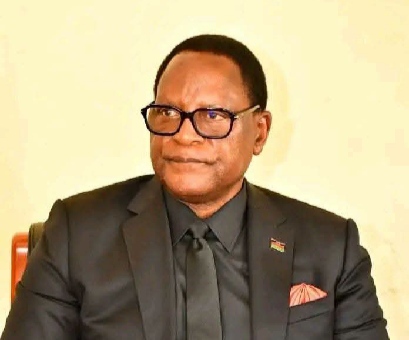
In the 2025 presidential election, DPP leader Peter Mutharika defeated incumbent President Lazarus Chakwera of the MCP. The Malawi Electoral Commission’s declared results gave Mutharika 3,035,249 votes, representing 56.76 percent, while Chakwera received 1,765,170 votes, or 33.01 percent.
The result demonstrated once again the power of Malawian voters to remove an incumbent government through the ballot box.
But elections alone do not solve structural economic problems.
The more difficult question is what happens between elections.
Malawi has repeatedly experienced political transitions accompanied by promises of economic transformation, improved governance, job creation and better living standards. Yet the country continues to confront many of the same underlying problems: limited foreign exchange, weak productive capacity, high public debt, inflation, low private investment and dependence on external financing.
The IMF has warned that under current policies, growth remains subdued and that significant reforms are required to restore debt sustainability and create conditions for sustained growth.
That raises a serious question for the country’s political class:
Is changing the party in government enough, or must Malawi change the way government itself operates?
The economy cannot wait for another political cycle
For ordinary Malawians, macroeconomic statistics eventually become household realities.
Inflation means higher prices.
Foreign-exchange shortages affect access to fuel, medicines, machinery and other imports.
High domestic borrowing can increase the cost of finance and constrain private-sector activity.
Public debt means government resources must increasingly be directed towards debt servicing instead of development.
The IMF reported that Malawi’s interest bill had approached 7 percent of GDP and warned that public debt dynamics remained unsustainable.
This is why the debate about 2030 should not simply be about personalities.
It should be about economic architecture, institutions and measurable results.
Malawi has potential — but potential is not enough
There is also an important counterpoint to the pessimistic narrative.
Malawi is not without opportunities.
A June 2026 World Bank analysis identified mining, nature-based tourism and mango production as sectors with significant potential to attract private investment, increase exports and create jobs. The Bank said targeted reforms in these areas could unlock more than 100,000 jobs.
That means the country’s problem is not necessarily an absence of resources or opportunities.
The challenge is turning those opportunities into productive economic activity.
That requires predictable policies, reliable infrastructure, access to foreign exchange, efficient public institutions, credible regulation, investment protection and a political environment capable of supporting long-term private-sector investment.
In other words, Malawi needs institutions that work beyond individual administrations.
The 2030 question
By 2030, Malawians will once again have the constitutional opportunity to judge the political leadership of the day.
The central issue should therefore not be whether a candidate belongs to DPP, MCP or another political formation.
The more important questions should be:
What measurable economic results have been achieved?
How many sustainable jobs have been created?
Has inflation been brought under control?
Has foreign exchange availability improved?
Has public debt become more manageable?
Have investors gained greater confidence in Malawi?
Has government spending produced visible development?
Are public institutions stronger than they were five years earlier?
And perhaps most importantly:
Has the quality of life of ordinary Malawians improved?
These are questions that cannot be answered effectively through political slogans.
Beyond personalities and party colours
Calls for “new leadership” are increasingly common in Malawi’s political conversation. But new leadership should mean more than a new face on a campaign poster.
It should mean leaders capable of setting measurable targets, making difficult policy decisions, strengthening institutions and accepting accountability when targets are missed.
It should mean a political culture where national development is not reduced to party loyalty.
It should mean governments that can maintain successful policies when administrations change instead of dismantling programmes simply because they were associated with political opponents.
And it should mean citizens judging leaders by performance rather than promises.
The country does not necessarily need another political cycle defined only by DPP versus MCP.
What Malawi needs is a serious national conversation about what kind of state, economy and leadership it wants by 2030 and beyond.
The argument that Malawi should look beyond the traditional political rivalry is therefore not simply a call for another party.
It is a challenge to every political formation — old or new — to explain precisely how it intends to fix the country’s economic fundamentals.
Because by 2030, Malawians may demand something more powerful than political change.
They may demand measurable transformation.
And the ultimate test will not be the colour of the party flag.
It will be whether Malawi is producing jobs, attracting investment, expanding exports, controlling inflation, strengthening institutions and giving its citizens a better standard of living.
The 2030 election may therefore become less about which party replaces which party — and more about whether Malawians are finally ready to demand a different standard of leadership.
Read also: Luntha TV, MHRC Sign MoU to Strengthen Human Rights Awareness Across Malawi
Read also: MP Malondera Defends Use of Term ‘M’mwenye’, Denies Racial Abuse
Read also: PIL invests K17 million in solar-powered water system for Kasumbu CDSS