
 Malawi Freedom Network
By Malawi Freedom Network
As Malawi moves closer to 2030, a new political and social conversation is quietly taking shape.
It is a conversation about leadership, ideas, opportunity and the kind of Malawi the next generation wants to inherit.
And increasingly, one name is beginning to attract attention in that conversation:
Rhodrick Junaid Kalumpha.
Kalumpha represents a generation of Malawians who have grown up with a different understanding of the world — connected to international opportunities, exposed to different systems and increasingly determined to see Malawi transform its enormous potential into tangible progress.
His story is therefore not simply about one individual.
It is about a new generation beginning to ask whether Malawi can do better.
A different voice for a changing Malawi
For decades, Malawi’s political conversation has revolved around familiar names and established political structures.
But the Malawi of tomorrow is changing.
Young people are demanding employment. Entrepreneurs want opportunities. Professionals want competent institutions. Communities want better healthcare, education, roads and public services.
And voters are increasingly asking a simple but powerful question:
Who has the ideas and ability to deliver?
It is against this background that Kalumpha’s growing public profile deserves attention.
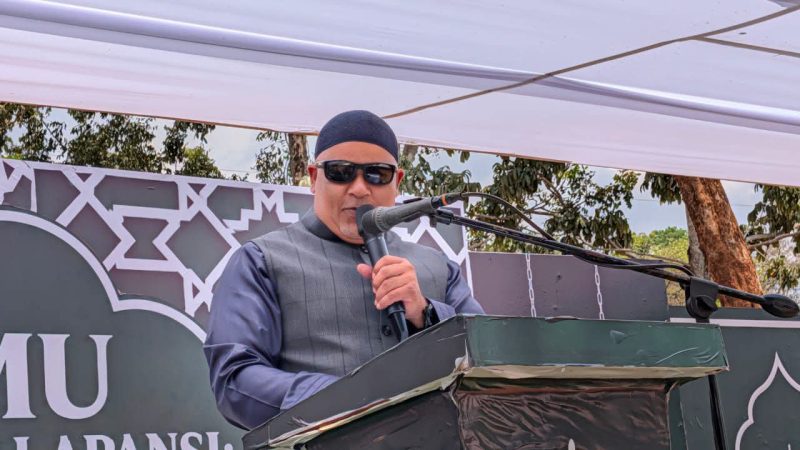
His engagement with national issues has increasingly placed him among Malawians contributing to conversations about the country’s economic and political future.
Rather than simply talking about Malawi from a distance, his public activities have increasingly demonstrated an interest in practical issues affecting ordinary communities.
From ideas to action
Politics is often measured by speeches.
Leadership, however, is measured by action.
That distinction could become increasingly important as Malawi approaches 2030.
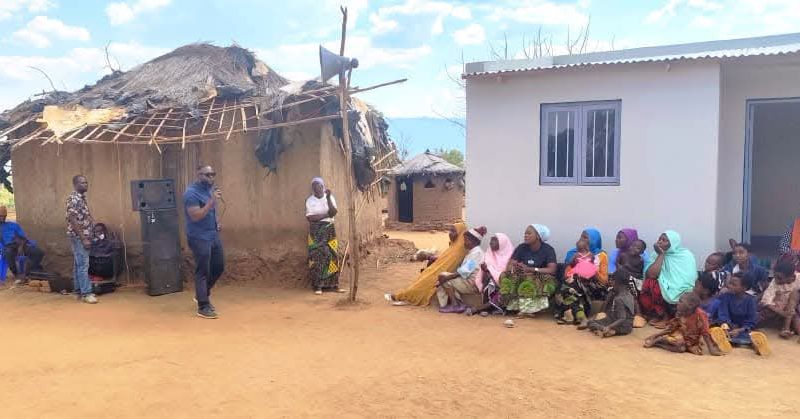
Kalumpha has attracted attention not only through his views on national issues but also through community-focused initiatives.
His recent support towards restoring cooking operations at Mangochi District Hospital is one example.
The intervention addressed a practical challenge affecting a public health facility and demonstrated the potential impact of individuals who choose to contribute directly to their communities.
For supporters, such interventions represent something bigger than a donation.
They represent the principle that leadership begins with service.
Why Malawi 2030 matters
The year 2030 is more than a date on a political calendar.
It represents a deadline by which Malawi will be judged on whether it has made meaningful progress towards its development ambitions.
By 2030, Malawians will want to know:
Are there more jobs?
Has the economy become stronger?
Are young people finding opportunities at home?
Are hospitals functioning better?
Are schools producing the skills the economy needs?
Is Malawi attracting serious investment?
Are leaders being held accountable for results?
These questions will shape the political environment of the coming years.
And they create space for a new generation of leaders to present new ideas.

The rise of the Malawian professional
One of Kalumpha’s potentially important attributes is his exposure to life and professional environments outside Malawi.
The Malawian diaspora is filled with professionals who have acquired skills, experience and international networks that could contribute significantly to national development.
The challenge is turning that experience into investment, innovation, knowledge transfer and opportunities back home.
This is where Kalumpha’s story becomes particularly interesting.
A Malawi that wants to transform itself cannot afford to leave its human capital outside the national development equation.
The country needs to bring together local knowledge and global experience.
A generation that wants results
Malawi’s younger generation is increasingly impatient with politics that produces promises without measurable results.
They want leadership that understands technology.
They want leadership that understands business.
They want leadership that understands international investment.
They want leaders who can communicate with the world while remaining connected to communities at home.
Most importantly, they want results.
This is the political environment in which people such as Kalumpha could potentially become increasingly influential.
Not because of slogans.
Not because of political noise.
But because Malawi’s future will increasingly reward people who can demonstrate competence, vision and service.
Is Kalumpha preparing for a bigger role?
This is perhaps the question many observers will increasingly ask.
Is Rhodrick Junaid Kalumpha simply a professional and community-minded Malawian participating in national affairs?
Or could he eventually seek a much bigger role in Malawi’s political future?
At this stage, it would be premature to make definitive claims about his political ambitions.
But the interest surrounding his activities is understandable.
People who consistently engage with national issues, contribute to communities and articulate ideas about Malawi’s future inevitably attract public attention.
And politics, in many cases, begins long before a candidate appears on a ballot paper.
It begins with ideas, relationships, credibility and service.
The politics of service
If Malawi is to produce a different type of leadership by 2030, perhaps the country needs to rethink what political leadership should mean.
Leadership should not begin when someone receives a government position.
It should begin when an individual decides to make a difference.
Helping a hospital.
Supporting young people.
Creating opportunities.
Promoting investment.
Speaking about national problems.
Offering solutions.
Building networks.
These seemingly small actions can become the foundation of much larger national contributions.
That is why Kalumpha’s activities are attracting attention beyond the immediate communities involved.
A name to watch as Malawi approaches 2030
The road to 2030 will produce many political names.
Some will be familiar.
Others will emerge unexpectedly.
Some will disappear.
Others will grow into influential national figures.
Where Rhodrick Junaid Kalumpha ultimately fits into that picture remains to be seen.
But his increasing visibility makes him a name worth watching.
His combination of professional experience, interest in national affairs, diaspora exposure and community engagement provides a potentially different model of leadership — one built around ideas, service and practical involvement.
Malawi’s future belongs to those prepared to build it
The biggest question facing Malawi is not simply who will lead the country in 2030.
The bigger question is:
What kind of Malawi will those leaders inherit — and what kind of Malawi will they leave behind?
A prosperous Malawi will require leaders who can think beyond elections.
It will require people capable of attracting investment, creating employment, strengthening institutions, supporting healthcare and education, empowering young people and turning national potential into real economic opportunity.
That transformation will not happen through political slogans alone.
It will require vision, courage, competence and service.
And as that new conversation develops, Rhodrick Junaid Kalumpha is positioning himself — deliberately or otherwise — as one of the emerging voices associated with Malawi’s next generation of leadership.
The journey to 2030 has already begun.
And for Malawi’s emerging generation, the message is increasingly clear:
The future will not simply be inherited. It will have to be built.
For Rhodrick Junaid Kalumpha, the question now is not only how far his public journey can go, but how much influence a new generation of Malawians can have in shaping the Malawi of 2030 and beyond.