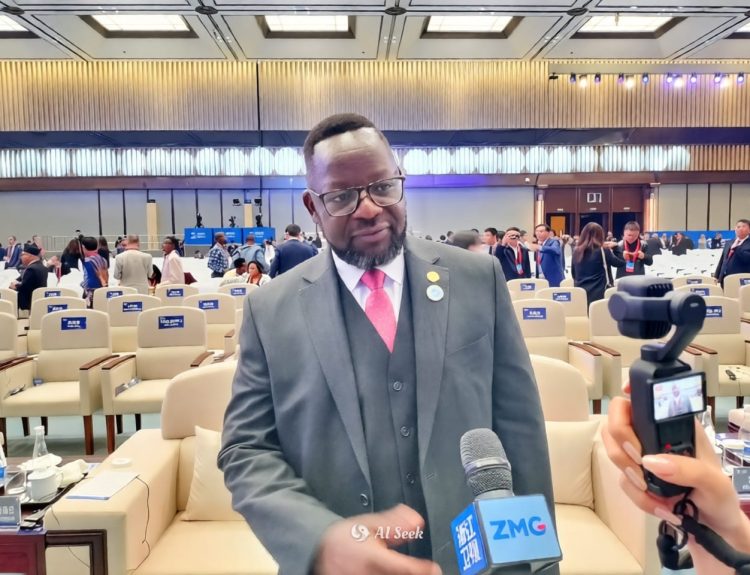
 Suleman Chitera

By Suleman Chitera, MFN Reporter
November 4, 2026
Comrade Imran Jumbe has warned that Malawi risks facing a serious maize shortage if government fails to address challenges discouraging farmers from investing in maize production ahead of the next planting season.
Jumbe says the rising cost of agricultural inputs, coupled with what he describes as the politicisation of maize production and pricing, is gradually pushing both small-scale and large-scale farmers away from commercial maize farming.
In his assessment, the situation presents a growing threat to national food security, particularly as farmers struggle to recover production costs while being expected to sell their maize at prices that may not reflect the expenses involved in cultivation.
Rising Costs Discouraging Farmers
Jumbe identifies expensive fertiliser, seeds, fuel and other agricultural requirements as some of the major obstacles facing farmers.
He argues that small-scale farmers are particularly vulnerable, with some struggling to afford even a single bag of fertiliser.
He further questions the effectiveness of existing government agricultural programmes, arguing that their intended benefits are not translating into meaningful support for farmers on the ground.
According to Jumbe, the growing pressure is forcing some farmers to consider alternative crops instead of maize, a development that could have serious consequences for Malawi’s staple food supply.
Politicisation of Maize Production
Jumbe also raises concerns over the increasing political influence surrounding maize production and marketing.
He argues that maize should be treated primarily as an agricultural and economic commodity rather than a political instrument.
He says farmers should not be expected to carry the burden of keeping maize prices low for political purposes when the cost of producing the crop continues to rise.
His argument is that sustainable food security requires farmers to earn reasonable returns from their investment, encouraging them to remain in production.
Jumbe Proposes Mega Maize Estates
To address the concerns, Jumbe has proposed the establishment of a Mega Maize Estates Programme, under which government would support at least 10 large-scale maize estates in every district.
The proposed estates would focus on commercial maize production, allowing government to increase national output and supply the market with affordable maize.
He believes the initiative would reduce pressure on struggling smallholder farmers while giving government a more direct role in ensuring adequate national food supplies.
Also Malawi Seeks China Partnerships to Make Smartphones Cheaper
Under the proposal, government would take greater responsibility for large-scale agricultural production instead of relying heavily on small-scale farmers to meet the country’s food requirements.
Food Security Requires Action
Jumbe’s warning comes as Malawi approaches another planting season, making the cost of agricultural production and farmers’ willingness to grow maize important issues for national food security.
His central message is that government must prioritise practical interventions that make farming economically viable.
Read also HRDC Deregistered by NGORA as Protests Remain On Course
He argues that fighting hunger should not come at the expense of farmers but should involve empowering them through affordable inputs, effective agricultural programmes and policies that encourage production.
“A country cannot afford to discourage the very people responsible for producing its food,” Jumbe argues.
Read also Mpinganjira Expands Wanderers ClubhouseEyes Training Ground
He concludes that government must act before declining interest in maize farming develops into a wider production crisis, warning that the consequences could be felt by households across the country.
As Jumbe puts it: My pen is mightier than a sword.