 Suleman Chitera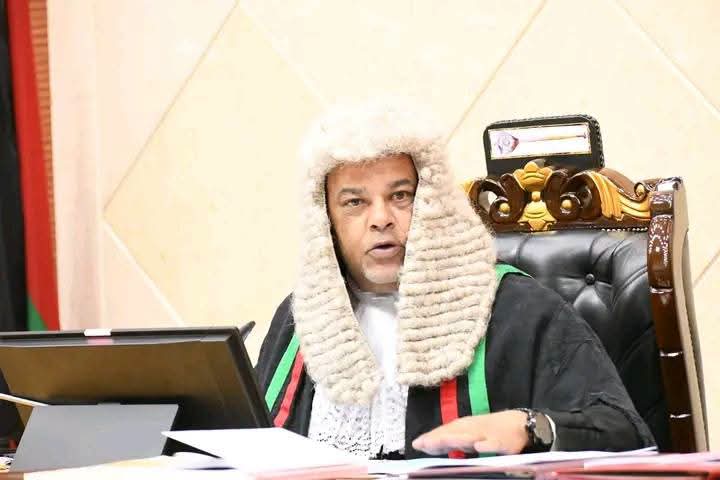
By Suleman Chitera
Something appears to be changing in Malawi’s Parliament.
It is not necessarily a new rule or a dramatic political announcement. Instead, it is the manner in which the House is being managed—and increasingly, that approach is attracting attention beyond the walls of Parliament.
Speaker of Parliament Sameer Suleman is coming under praise from governance commentator George Chaima and social media influencer Gerald Chavez Kampanikiza, who say his handling of parliamentary business is demonstrating an important principle of democracy: the Speaker must referee the contest, not become a player in it.
For Chaima, Suleman has increasingly assumed the role of what he calls the “referee of democracy”—a position that requires firmness when parliamentary rules are breached, but fairness when political interests collide.
Chaima said Suleman’s conduct has challenged assumptions that surrounded his leadership before he took charge of parliamentary proceedings.
“When the Speaker presides without favoritism, it builds trust in Parliament as an institution, not just as a ruling party or opposition platform,” Chaima said.
That distinction matters.
Parliament is ultimately bigger than the government of the day and bigger than the opposition. It is where competing political interests are supposed to meet, argue, scrutinise one another and, eventually, make decisions on behalf of citizens.
When the Speaker is perceived as favouring one side, confidence in that institution suffers.
But when the chair is seen as fair, the political temperature can change.
Chaima believes that is what is beginning to emerge under Suleman.
He said MPs, regardless of political affiliation or geographical representation, are being given room to make their contributions, while parliamentary rules are being enforced more firmly.
“As citizens, we believe laws are now debated on merit, not forced through. His leadership has demonstrated neutrality, resulting in less chaos and fewer walkouts. This means Parliament can focus on laws and oversight instead of politics,” he said.
Firmness without becoming partisan
There is an important difference between neutrality and weakness.
A neutral Speaker is not necessarily one who allows everyone to do whatever they want. Parliamentary democracy depends on rules, procedure and discipline.
Chaima said Suleman’s perceived strength has been in combining firmness with fairness.
“Firm but fair means discipline and respect. MPs prepare better when they know time will be managed and rules will be enforced. Debates become issue based, not insult-based. Bills also get proper scrutiny before they are passed,” he said.
That argument goes to the heart of parliamentary effectiveness.
A Parliament consumed by disorder, personal attacks and repeated confrontations risks spending more time managing political theatre than examining legislation and holding government institutions accountable.
The opposite is also true.
A disciplined chamber creates space for difficult questions, detailed scrutiny and serious debate.

And that is where Kampanikiza says Suleman deserves recognition.
‘He is there for Malawi’
Kampanikiza said his own recent praise for the Speaker was based on the belief that the office should serve the national interest rather than partisan interests.
“I recently praised the Speaker because he is there to protect the interests of Malawi as a nation and the ordinary citizen, and not his party,” he said.
For Kampanikiza, the Speaker’s responsibility extends beyond controlling proceedings.
It includes creating an environment where Parliament can properly perform its constitutional role of scrutinising government decisions, examining public expenditure and demanding answers from the Executive.
He argued that neutrality at the top can strengthen the work of parliamentary committees and ultimately improve the quality of laws passed by the House.
That is a significant point.
The real measure of parliamentary leadership is not simply whether debates are orderly. It is whether that order produces better decisions for the country.
The Kang’ankude question
Kampanikiza also singled out the Speaker’s directive to the Ministry of Mining to close the Kang’ankude mining site as an example of what he considers national-interest leadership.
His argument is straightforward: natural resources should be managed with the interests of Malawians at the centre.
For supporters of Suleman’s approach, such interventions demonstrate that Parliament can use its authority to bring attention to issues that affect communities and the national interest.
But the praise comes with a warning.
Kampanikiza criticised absenteeism among MPs, arguing that lawmakers cannot effectively represent their constituents if they are regularly absent from Parliament.
That criticism touches on an issue that goes beyond party politics.
An MP is elected not simply to appear during campaigns, but to participate in the legislative process, scrutinise government and represent the concerns of people who sent them to Parliament.
A test bigger than one Speaker
The growing praise for Suleman ultimately presents a bigger question for Malawi: what kind of Parliament does the country want?
One where political affiliation determines how loudly a voice is heard?
Or one where rules apply equally and arguments are judged on their substance?
The Speaker alone cannot transform Parliament. MPs themselves must respect the institution, attend proceedings, prepare for debates and accept that political disagreement is part of democracy.
But leadership from the chair matters.
When the Speaker is firm without being partisan, opposition without being disorderly, and government without being untouchable, Parliament can begin to function as it was intended to function—a place where national interests are debated openly and decisions are subjected to scrutiny.
That is why the comments from Chaima and Kampanikiza are worth noting.
They are not merely compliments directed at an individual.
They are, in effect, an argument for the kind of parliamentary culture Malawi needs as it pursues the ambitions of Malawi Vision 2063.
Kampanikiza believes Suleman’s current direction is taking the country towards a stronger Parliament and, ultimately, a wealthier and self-reliant Malawi.
“If he continues with his current leadership, then we are in the right direction in building a wealthy and self-reliant Malawi,” he said.
For Suleman, the challenge now is not simply to enjoy the praise.
It is to sustain the standard.
Because in Parliament, neutrality is ultimately judged not by what the Speaker says about himself—but by whether those on both sides of the chamber believe they have been given a fair hearing.
And that may prove to be the most important test of his leadership.
Read also: Suleiman Hits Back at Mukhito: “I Won’t Be Intimidated”
Read also: MRP wants to break the chains calls for financial support
Read also: Government excited with UAE deals