 Malawi Freedom Network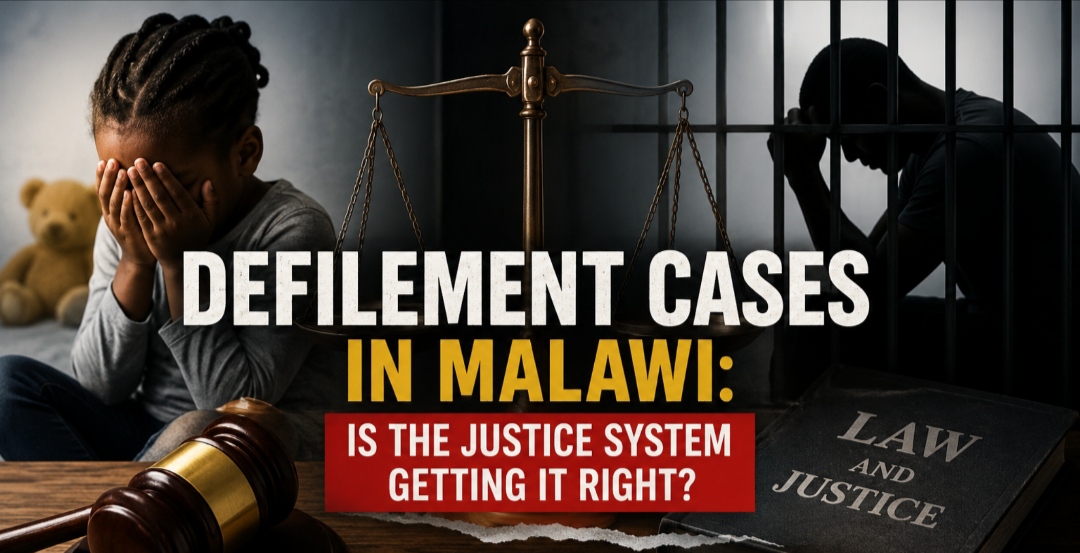
Calls Grow for Greater Scrutiny as Concerns Mount Over Wrongful Convictions, Weak Investigations and the Need to Protect Both Children and the Accused
By Malawi Freedom Network
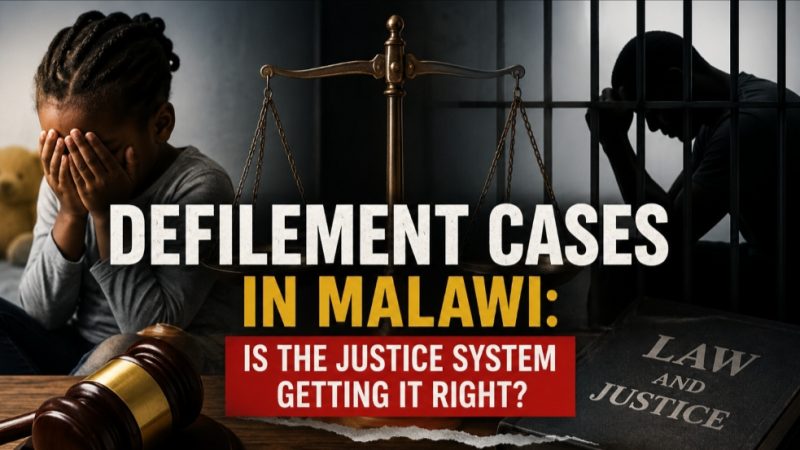
Defilement is one of the most serious offences in Malawi, and rightly so.
Children must be protected from sexual abuse, exploitation and every form of violence. Anyone who sexually abuses a child must face the full force of the law.
But there is another equally important principle that Malawi must never lose sight of: justice must protect the innocent while punishing the guilty.
As concerns continue to emerge from different quarters about the handling of some defilement cases, Malawi needs to have an honest and evidence-based national conversation about whether the system is always getting these cases right.
This is not a call to weaken laws protecting children.
It is a call to strengthen the justice system.
When a serious accusation becomes a life-changing event
Being accused of defilement can completely change a person’s life.
An accused person can be arrested, publicly condemned, lose employment, suffer family breakdown and spend a prolonged period in custody before the case is finally determined.
That is why every allegation must be taken seriously—but also investigated professionally.
The question Malawi must ask is simple:
Are all defilement cases being investigated with the level of professionalism, independence and attention to evidence that such serious allegations require?
If the answer is yes, the system should have nothing to fear from greater scrutiny.
If weaknesses exist, they must be identified and corrected.
Protecting children and protecting the innocent are not competing objectives
There is sometimes a dangerous tendency to present child protection and the rights of accused persons as if they are opposing causes.
They are not.
A child who has genuinely suffered sexual abuse deserves justice, protection and support.
At the same time, a person who has been falsely accused deserves a fair investigation and trial.
Both principles can—and must—exist together.
The justice system should not be designed around securing convictions at any cost.
It should be designed around discovering the truth.
The danger of a weak investigation
A weak investigation can produce two devastating outcomes.
First, an innocent person can potentially be prosecuted or convicted.
Second, a genuinely guilty offender can potentially escape accountability.
The second outcome is particularly dangerous because an offender who escapes justice may remain a threat to other children.
That means proper investigations are not merely about protecting suspects.
They are also about protecting future victims.
Police investigators must therefore gather and test evidence carefully rather than simply relying on an allegation as the end of the investigation.
Statements, timelines, medical evidence where available, witness accounts, forensic evidence where relevant and other surrounding circumstances must be properly examined.
The court must remain the final safeguard
The judiciary carries a particularly heavy responsibility in criminal cases.
A judge or magistrate must assess the evidence independently and determine whether the prosecution has established its case according to the applicable legal standard.
Public anger cannot replace evidence.
Social media pressure cannot replace evidence.
A person’s reputation cannot replace evidence.
And the seriousness of the offence cannot by itself establish the guilt of an accused person.
At the same time, the testimony and welfare of a child alleging abuse must be handled with the seriousness and sensitivity required by law.
The court’s responsibility is not to choose sides. It is to establish justice according to the law and the evidence before it.
Are some people afraid to question the system?
One of the biggest problems in any justice system is when society becomes afraid to ask difficult questions.
Questioning the handling of defilement cases does not mean supporting sexual abuse.
Demanding stronger investigations does not mean attacking victims.
Calling for fair trials does not mean defending criminals.
On the contrary, a justice system that can withstand scrutiny is a stronger justice system.
Malawi should therefore encourage lawyers, civil society organisations, journalists, academics and human-rights institutions to examine the country’s handling of sexual-offence cases using evidence and the law.
If there are genuine cases of wrongful conviction, they should be identified through lawful processes.
If there are cases where offenders escaped justice because of investigative failures, those weaknesses should also be exposed and corrected.
The statistics should tell us the truth
This is where Malawi needs more transparency.
How many defilement cases are reported every year?
How many suspects are arrested?
How many cases reach prosecution?
How many result in convictions?
How many are dismissed or withdrawn?
How long do accused persons remain in custody before cases are concluded?
How many convictions are overturned on appeal?
How many cases collapse because of investigative or evidential weaknesses?
And critically:
How many children who report sexual abuse receive meaningful protection and support throughout the justice process?
Without reliable data, public debate can easily become driven by emotion, rumours and isolated cases.
Malawi needs evidence.
The system should be tough—but also accurate
There is nothing wrong with being tough on defilement.
What Malawi must avoid is confusing toughness with automatic conviction.
A strong justice system is one that catches offenders, protects victims, respects due process and prevents wrongful convictions.
That requires properly trained investigators, competent prosecutors, child-sensitive procedures, adequate forensic capacity and an independent judiciary.
It also requires lawyers who can properly challenge evidence and ensure that accused persons receive a fair hearing.
A judge showing leadership should mean following the law
Judges and magistrates should be encouraged to demonstrate strong leadership in the courtroom.
But judicial leadership should never be measured by how many people are convicted or how severe the sentences are.
It should be measured by whether the court has carefully applied the law, properly evaluated evidence and delivered a reasoned and impartial decision.
Justice is not a competition to see who can impose the harshest punishment.
Justice is about reaching the correct decision.
Malawi must protect children without abandoning justice
The solution is not to weaken Malawi’s defilement laws.
The solution is to make the entire justice chain stronger.
Police must investigate professionally.
Prosecutors must prosecute responsibly.
Defence lawyers must challenge cases properly.
Courts must independently assess evidence.
Children must be protected and supported.
And innocent people must never be sacrificed simply because society is understandably angry about sexual abuse.
This is the balance a mature justice system must achieve.
The national conversation must begin
Defilement is a serious crime.
But precisely because it is serious, Malawi cannot afford careless investigations, weak evidence or miscarriages of justice.
Every genuine victim deserves justice.
Every genuine offender deserves punishment.
And every innocent accused person deserves protection from wrongful conviction.
That is not being soft on crime.
That is what the rule of law demands.
Malawi Freedom Network therefore believes that the handling of defilement cases deserves continuous scrutiny—not to undermine child-protection laws, but to ensure that the system delivers what every citizen ultimately wants:
justice that identifies the guilty, protects the vulnerable and does not punish the innocent.
EDITORIAL NOTE
This article calls for stronger evidence-based investigations and fair trials. It does not suggest that allegations of defilement are generally false, nor does it seek to interfere with any ongoing criminal case. Any specific allegation of wrongful conviction or misconduct should be established through the appropriate legal and investigative processes.
Read also: Salah, Hakimi, Temwa Chaŵinga and Nnadozie Shine Among Africa’s Best at FIFA Awards 2025
Read also: Allan Ngumuya: Four Decades of Gospel, Faith, and Musical Evolution
Read also: Concerned citizen hails Mutharika’s government institutions relocation